 2min preview
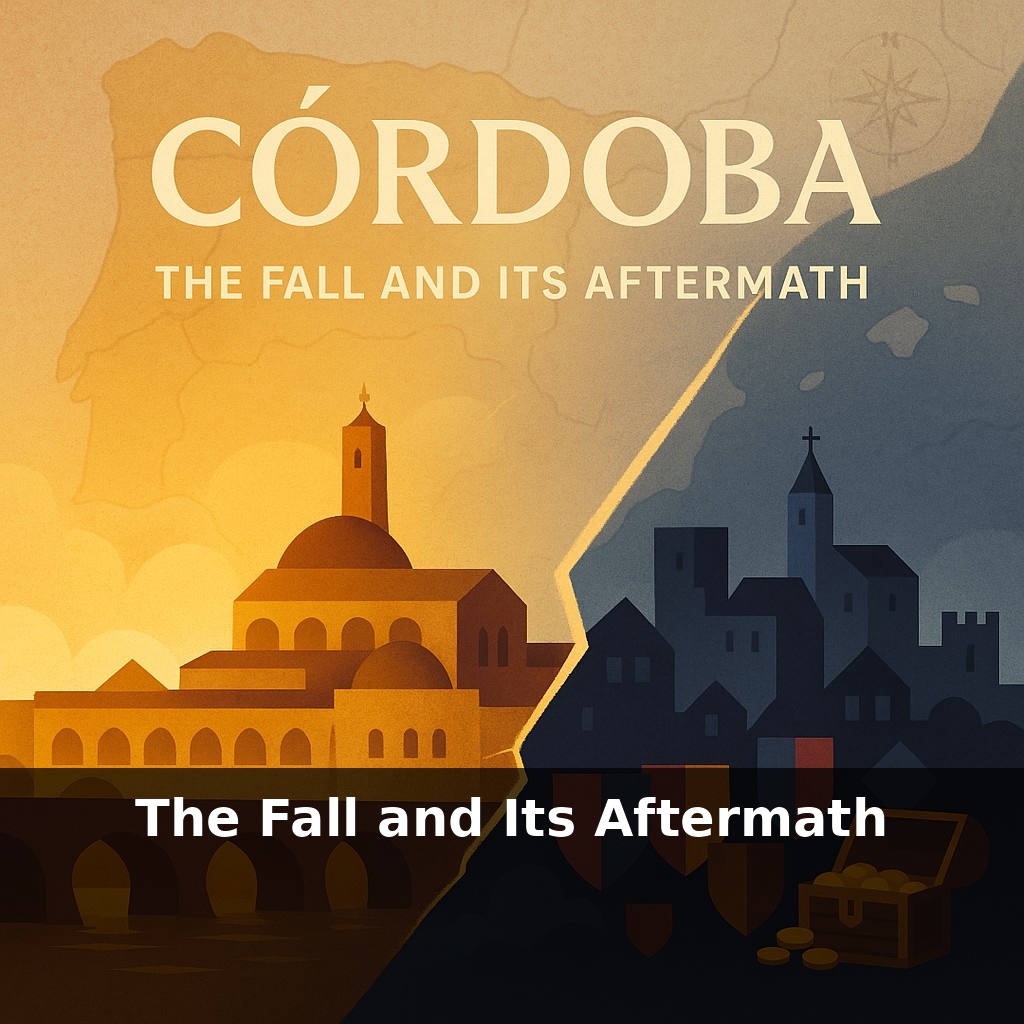
The Fall and Its Aftermath
📝 Transcript
Córdoba once rivaled the great cities of the world—then, within a few generations, its empire shattered into feuding mini-kingdoms. Córdoba once rivaled the great cities of the world—then, within a few generations, its empire shattered into feuding mini-kingdoms. Rival courts hired Christian knights, paid rich gold tributes to the north, as their own poets praised a fading golden age.
By the late 1200s, power in Iberia had flipped: the wealth and initiative now lay with the northern Christian kingdoms, and the remaining Muslim territories were playing defense on every front. New Papal-backed campaigns, improved fortifications, and crossbow units turned the frontier into a grinding pressure cooker rather than a shifting border. Treaties, truces, and forced conversions became as decisive as battles.
Think of this phase like a long chess endgame between uneven players: the side with fewer pieces isn’t immediately crushed, but every move narrows its options. Granada negotiated, paid, and maneuvered to survive, but each decade shaved away land, tax base, and allies. Meanwhile, Christian rulers learned to turn conquest into durable control: repopulation charters for settlers, tax breaks for newcomers, and new legal codes that quietly rewired daily life across the peninsula.
Subscribe to read the full transcript and listen to this episode
Subscribe to unlockSubscribe for $1.99/month to unlock the full episode.
From this course
The Influences of Moorish Spain
8 episodesUnlock all episodes
Full access to 8 episodes and everything on OwlUp.
Subscribe — $1.99/monthLess than a coffee ☕ · Cancel anytime