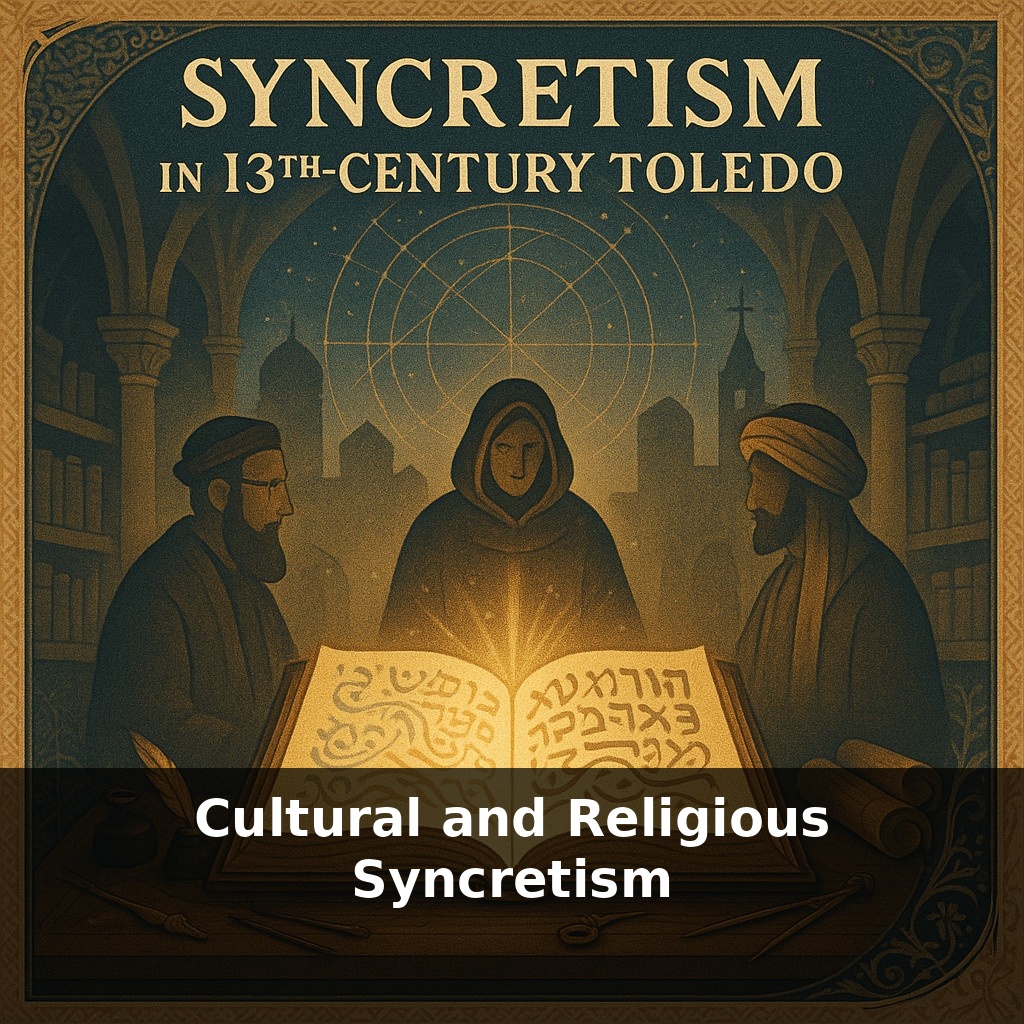
Up to one in eight Spanish words hides an Arabic ancestor. Now step into a crowded medieval street: a rabbi debates law in Arabic, a Christian scribe copies Greek philosophy from a Muslim scholar’s notes. Three faiths, one city—quietly rewriting Europe’s future together.
Walk through a 13th‑century library in Toledo and the shelves feel oddly familiar: medical handbooks that will end up informing French universities, philosophical treatises destined to worry theologians in Oxford, star charts that quietly correct Italian sailors. The twist is that many of these “European” works arrive via Arabic, often copied by Christian scribes from Jewish intermediaries, commenting on Muslim interpretations of Greek originals. Syncretism here isn’t an abstract theory; it’s baked into the page. A single manuscript might list an Andalusi Muslim author, translated by a Jewish scholar, revised by a Castilian cleric, then carried north. Follow that book’s journey and you’re really tracing the routes by which al‑Andalus turns from a frontier province into one of the main engines powering Europe’s intellectual reboot.
Step outside the library and follow the sounds instead of the pages. A muezzin’s call threads through church bells and market cries in early Romance dialects, while street vendors haggle using legal terms shaped in Islamic courts. In workshops, artisans carve Arabic epigraphy beside Christian symbols, not as a manifesto but as a practical style choice, like a craftsman today mixing Gothic arches with glass skyscraper lines. Tax records, city councils, and medical clinics all become shared interfaces where communities learn to “speak” each other’s habits long before they share beliefs.
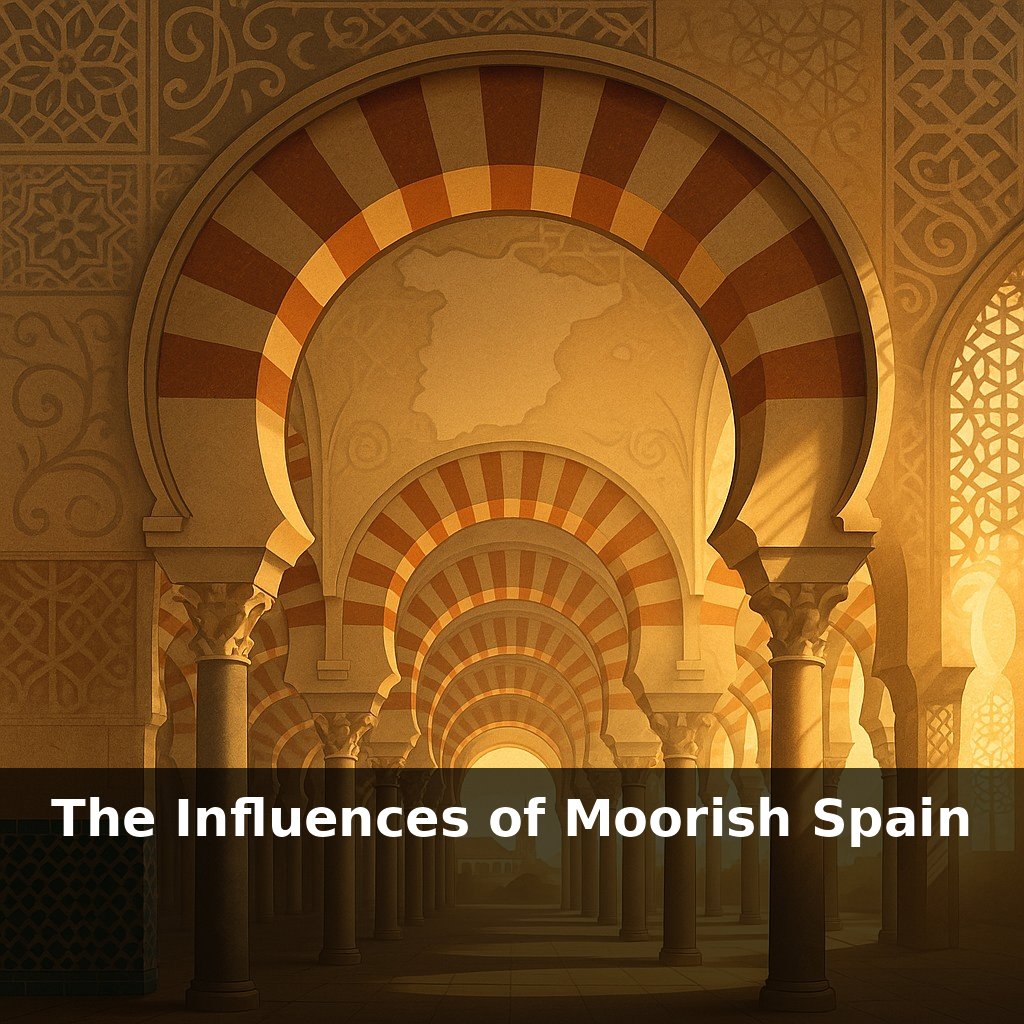
Stand in front of the Alhambra’s walls and you can literally watch cultures negotiating in stone. Early halls wrap you in Qurʾanic verses and abstract geometry; then, after 1492, Christian coats of arms and Latin mottos creep into corners, squeezed into spaces Muslim artisans had already patterned. No one issues a press release announcing a new “hybrid style,” yet within a few decades, that blend hardens into what art historians now call Mudejar: Islamic techniques commissioned by Christian patrons, executed by often‑Muslim or Morisco craftsmen, for a society that officially rejects Islam but craves its aesthetics.
A similar layering happens in law and administration. Muslim rulers in Córdoba initially adapt late Roman and Visigothic practices—keeping some land records, tax categories, and municipal offices—then infuse them with Islamic legal ideas. Later Christian kings, conquering those cities, quietly retain Arabic‑trained secretaries because they know how to run irrigation, collect taxes, and manage multi‑faith populations. Royal charters in places like Toledo or Seville sometimes preserve Arabic technical terms long after Latin has returned as the language of power. Governance itself becomes a palimpsest: each regime writes over the last, but traces remain, influencing how the next set of rulers thinks about property, minority rights, and urban order.
In philosophy and theology, the traffic runs both deep and sideways. Andalusi thinkers such as Ibn Rushd (Averroes) and Ibn Gabirol wrestle with reconciling revelation and reason; Latin Christian readers pick up their solutions and their questions. When Thomas Aquinas cites “the Commentator,” he is in dialogue with a Cordoban Muslim across centuries and languages. Arguments about the eternity of the world, free will, or the nature of God’s knowledge arrive in Paris classrooms with Andalusi fingerprints all over them.
Even daily habits carry this entanglement. Agricultural treatises from Islamic Spain spread techniques for cultivating citrus, rice, and saffron across Christian Europe, reshaping diets and landscapes. Hospitals in Christian cities borrow ward layouts, pharmacology, and triage routines first refined under Muslim rule. Like a layered software stack where new applications still depend on old, unseen code, later European institutions quietly run on Andalusi foundations.
Your challenge this week: when you encounter something labeled “European”—a cathedral ceiling, a legal concept, a philosophical idea—pause and ask, “What would this look like if the centuries of contact with al‑Andalus had never happened?” Then, pick one example and trace it back as far as you can, noting every moment where Muslim, Christian, or Jewish actors in Iberia left a mark on its shape.
Walk into a Spanish kitchen and you can still taste that layered past. Words like “aceite,” “albóndiga,” or “azafrán” aren’t just linguistic fossils; they mark ingredients and techniques that moved with farmers, traders, and physicians across religious boundaries. Follow irrigation channels in Valencia and you find water‑sharing councils whose meeting rhythms echo older legal customs, even though the participants now swear different oaths and report to different crowns. Step into a cathedral sacristy and notice star charts or herbal manuals whose diagrams look oddly familiar if you’ve seen North African scientific sketches.
Think of a modern operating system that still depends on low‑level routines written decades earlier in another language: most users never see that code, but if you stripped it out, everything would crash. In a similar way, much of what we casually call “Spanish” or “European” today quietly runs on protocols refined in workshops, fields, and city halls where Iberia’s three faiths once worked side by side.
Policymakers now eye al‑Andalus less as a golden age than as a complex lab report: high creativity, but also flare‑ups of violence. That ambivalence matters. It suggests future “convivencia‑inspired” projects will look more like carefully tuned sound‑mixers than kumbaya choirs—adjusting legal rights, shared spaces, and digital platforms so no single voice drowns out the rest. As cities grow more mixed, this history may become a troubleshooting manual for multicultural democracies under stress.
Convivencia’s legacy is less a moral lesson than a toolkit. Medieval artisans already knew how to “fork” ideas, remix them, then push a new version into public life—whether in court ritual, crop choices, or music. Today’s debates on migration, language policy, or religious dress echo those negotiations, like a DJ sampling old tracks to test what a future playlist could sound like.
To go deeper, here are 3 next steps: (1) Pull up a side‑by‑side translation of the *Popol Vuh* (e.g., Allen Christenson’s free PDF from BYU) and the Book of Genesis (BibleGateway.com) and spend 20 minutes comparing creation motifs you heard about—note where Mayan and Hebrew ideas overlap or diverge. (2) Watch the first episode of PBS’s *African Religions in the Americas* series on YouTube and pause whenever you see examples of saints paired with Orishas, then cross‑check those pairings with entries on Orishanet.org to see how syncretism reshaped each deity’s role. (3) Open Google Arts & Culture and search “Our Lady of Guadalupe,” then zoom in on at least three artworks from different centuries and read the descriptions to see how indigenous symbolism blends with Catholic imagery—pay attention to which symbols shift over time and which stay constant.