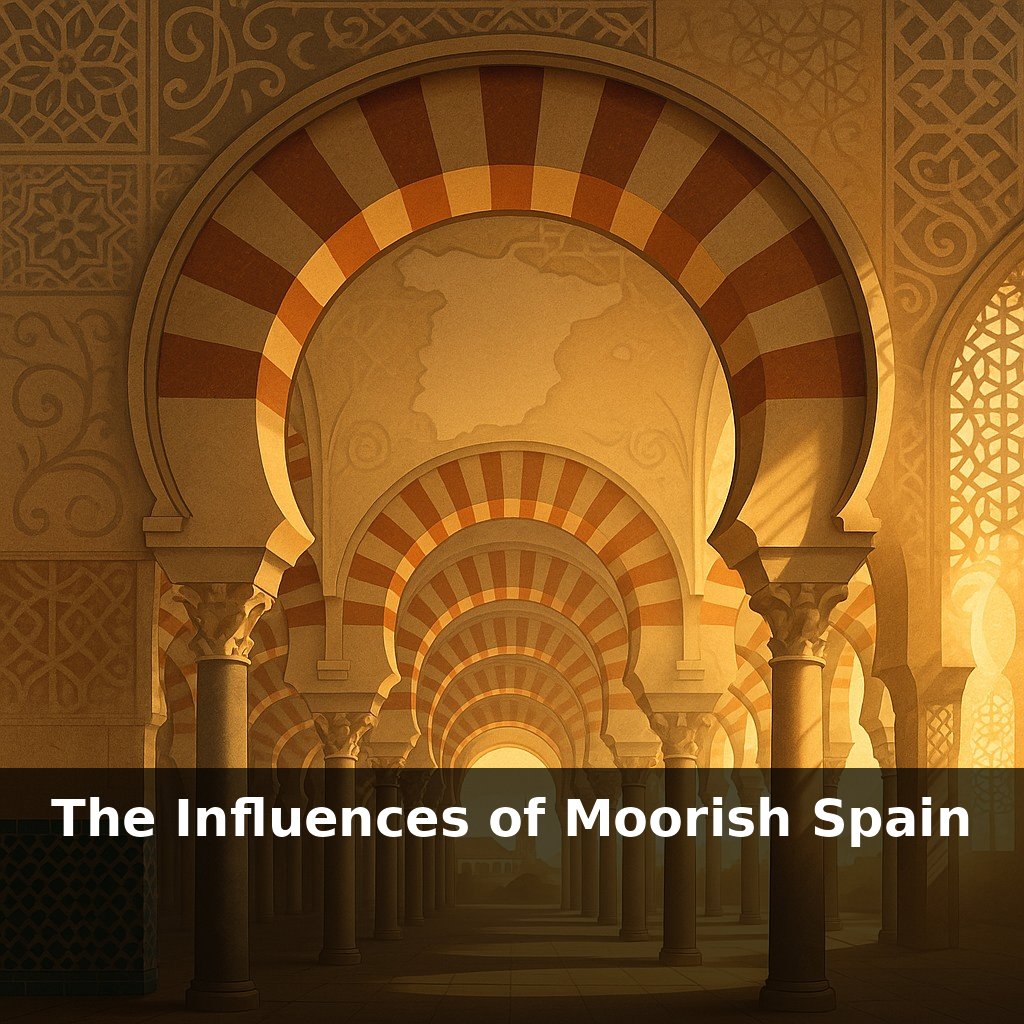
A thousand years ago, while most of Europe’s largest libraries could fit on a single bookshelf, one in Córdoba held hundreds of thousands of volumes. Tonight, we’re stepping into those crowded streets, listening for how that forgotten city still echoes in your everyday life.
That world of ink and parchment didn’t exist in isolation. In Al-Andalus, medicine, music, astronomy, and agriculture overlapped the way open browser tabs spill into each other on a busy laptop. A surgeon might also study astronomy; a poet might debate geometry. Cities like Toledo and Seville became busy transfer stations where Greek philosophy, Arabic commentaries, and Jewish scholarship were translated, argued over, and copied.
This wasn’t harmony without friction. Power shifted, dynasties rose and fell, and tolerance had limits. Yet within those tensions, scholars still compared star charts, refined surgical tools, experimented with new crops, and tested numerical methods. As ideas crossed languages—Greek to Arabic to Latin—they changed shape, picking up new questions and techniques. Many of the habits we think of as “European” learning were quietly co-authored here, in the margins between cultures.
To follow that trail, we need to zoom in on daily life. Think less about grand palaces and more about water channels, market stalls, and clinic benches. In fields outside the cities, engineers refined irrigation so precisely that farmers could “schedule” water the way we now schedule notifications, testing new crops like rice and citrus. Indoors, physicians compiled case notes and surgical diagrams, while mathematicians played with the new positional numerals that made calculation faster and cleaner. Architects, borrowing and adapting older styles, turned geometric insight into stone, tile, and light.
Step inside a house in 10th‑century Seville at dusk. Oil lamps throw patterned shadows across carved plaster; the air smells faintly of citrus and ink. A child recites verses—not just poetry, but lists of stars and rules of grammar set to melody so they’re easier to remember. In the corner, an older relative tunes an oud, experimenting with new modes Ziryab popularized a century earlier. Music here isn’t background decoration; it’s a way of storing and transmitting knowledge, like an audio archive before hard drives.
That mix of sound and study carried into medicine. Surgeons trained with Al‑Zahrawi’s illustrated manual didn’t just memorize procedures; they practiced on animal organs, refining stitches and cauterizations the way craftspeople refine a difficult joint. Hospitals in major cities doubled as teaching centers, where wards were organized by disease and students walked bed to bed, comparing symptoms. The goal wasn’t just to preserve Galen and Hippocrates, but to correct them when observation disagreed, logging case histories over decades.
In workshops nearby, metalworkers did their own kind of experimentation. To produce precise surgical tools, astrolabes, and water clocks, they needed consistent alloys and accurate engraving. That required standardized measures, so market inspectors checked weights and volumes, tying everyday commerce to mathematical rigor. A mis‑cast astrolabe could send a caravan off course or throw prayer times out of sync, so technical errors had spiritual and economic consequences.
Agricultural estates became open‑air laboratories. Court officials reported on which new crops thrived in which soils; failed plantings were data, not just disappointment. Manuals compiled soil classifications, pruning calendars, and grafting techniques, turning local trial and error into portable “how‑to” guides that could travel from Valencia’s orchards to North African oases.
Philosophers and jurists wrestled with what all this knowledge meant. If revelation was complete, how far could reason go? Think of their debates like software patches applied to an inherited operating system of law and theology—expanding functions while trying not to crash the core. Their arguments over logic, free will, and causality didn’t stay abstract: they shaped rules about contracts, medical consent, and even what counted as valid evidence in court.
Step into one of those 300 public baths, not for hygiene but for gossip and problem‑solving. A merchant complains that customers keep haggling over grain quality; a scholar sketches a simple table on a tile, standardizing grades so “good enough” becomes measurable. That habit—turning fuzzy arguments into shared criteria—quietly powered everything from trade contracts to debates about music and law.
In a workshop nearby, a calligrapher and a bookbinder argue over page layout. Margins widen, headings sharpen, diagrams get clearer. They’re not just making texts prettier; they’re optimizing information flow the way a modern UX designer tweaks an app interface so you don’t get lost after two taps.
Artisans and scholars meet again in the mosque courtyard at night. A stonemason tests a new pattern for carved screens, while a jurist wonders whether such dense ornament distracts from prayer. Their compromise—filtering light without blocking it—mirrors a broader question the society keeps revisiting: how to let new techniques flood in without washing away older meanings.
Modern cities chasing “innovation” can treat this era like a prototype rather than a legend. Its real lesson isn’t nostalgia; it’s governance: who funds risky ideas, who owns results, who can participate. Think of today’s research labs as stadiums—rules, referees, and ticket prices decide which “players” get field time. Your challenge this week: map one space you’re part of—school, lab, workplace—as if it were such a stadium. Who’s missing from the field, and why?
The deeper you look, the less this story feels “medieval” and the more it resembles a beta version of our present—messy, experimental, unfinished. Its real legacy may be permission: to let cities act like open‑source projects, to treat debate as a shared toolbench, and to accept that the most durable breakthroughs emerge from arguments no one fully wins.
Start with this tiny habit: When you open your phone or laptop each evening, type just one sentence in your notes comparing something you did today to something people in Al-Andalus might have valued (like learning, poetry, science, or convivencia). Then, look up one new word from classical Arabic, Hebrew, or Spanish that could have existed in medieval Córdoba—just the word and its meaning, nothing more. If you make tea or coffee, glance at a map of Al-Andalus for 10 seconds while you wait.