A neuroscience study found listeners remembered stories best when twists landed at steady intervals—almost like the brain was *expecting* them. Now, you’re racing through a novel. Chapter by chapter, something keeps pulling you forward. You can’t stop. Why does that structure feel so irresistible?
Think about the most gripping thrillers you’ve read: it’s rarely one massive twist that hooks you, but a steady drumbeat of “oh no” and “what now?” moments. That rhythm isn’t an accident—it’s craft. Thriller authors, screenwriters, even animation studios quietly rely on timing: when to upend the goal, when to raise the stakes, when to finally let you breathe.
In this episode, we’ll zoom in on that timing. You’ll see how major turning points tend to cluster at certain percentages of a story’s length, how pacing works like alternating sprints and jogs, and why sentiment “shapes”—those emotional rises and falls—make some tales unforgettable. We’ll connect research on chapter length, screenplay beats, and large-scale sentiment analysis to a practical question: how can you plot your own stories so that readers stay hooked, scene after scene, all the way to the end?
Think of your story not as a straight line, but as a series of doors your reader chooses to keep walking through. Each door is a moment when something *changes*: a new problem, a sharper risk, a hard decision. Research suggests these shifts land best when they arrive at semi-regular intervals, but that doesn’t mean a rigid formula; it means giving your reader a steady sense of movement. Between those doors, you control speed: you can linger in character, sprint through action, or briefly coast. Over time, those choices carve out the emotional contour that makes your story linger after the last page.
Here’s where that research becomes a practical toolkit.
Think first in *percentages*, not pages. If audiences tend to lock onto stories where big shifts land every 12–15% of the runtime, you can reverse‑engineer your own map. Draft your total word count or page estimate, then mark rough “danger zones” where the story risks going flat if nothing truly *changes*. You’re not filling in a formula; you’re setting yourself reminders: “Around here, something in the protagonist’s world, goal, or cost should tilt.”
What actually happens at those intervals can vary wildly. One writer might drop a betrayal; another discovers the problem is much bigger than expected; a third has the hero choose the harder path. The common thread is *irreversibility*: after this beat, the story can’t go back to what it was. That’s what the brain tags as memorable.
Now layer in *pacing as contrast*, not speed. Research on memory and attention shows that contrast—a quiet scene after a storm, a decisive action after long doubt—helps events stand out. So if you’ve just run a tense, high‑stakes sequence, follow it with a shorter stretch that lets characters process, clash in smaller ways, or reveal new information. Then tighten again. Alternation is what keeps the line from becoming emotional monotone.
This is also where your personal taste matters. Some thrillers ride very spiky curves—sharp highs and lows—while others hum with a more gradual build. Both can work, as long as you still provide those semi‑regular “decision clusters” where the reader instinctively leans forward.
Here’s a simple test when revising: take any 10 consecutive pages and ask, “What is different at the end of this span that meaningfully alters pressure on my protagonist?” If you struggle to answer, you may have drifted into static territory. That doesn’t mean cutting all quieter material; it means threading in small escalations—time limits, moral tradeoffs, tightening resources—so that even slower sections are *aimed* toward the next major upheaval.
Think about your favorite scenes, not as “big moments,” but as *choices* about what to spotlight. A thriller author might skip the routine drive to the airport, then zoom in brutally on the 30 seconds where the boarding gate closes in the hero’s face. Same plot outcome, but the focus on a tiny, consequential window makes the beat land harder and feel faster.
One way to design this focus is to trace what *readers* are tracking, not what *you* know. List three threads that matter most—say, the external mission, a strained relationship, and a secret. When a sequence feels soggy, ask: which of these threads is actually moving on the page? If none are, you’ve probably wandered off the story’s living wires.
Here’s where a light tech metaphor helps: treat each thread like a status dashboard. At intervals, you want at least one status to flip from green to yellow, or yellow to red. The more these flips cluster without becoming chaotic, the more your story feels like it’s actively unfolding rather than passively waiting.
Algorithms are already nudging storytellers: some platforms quietly favor episodes that keep viewers watching past specific minute marks. As tools evolve, you may soon drag a slider to “intense” or “contemplative” and watch your engagement curve reshape, with suggested events auto‑generated to fit. Collaborative worlds could branch like shared investment portfolios, each reader following a customized “risk profile” of emotional volatility while still recognizing a common saga.
Your challenge this week: Treat your current project like a live prototype. Pick one story in progress (or outline a new 5‑chapter short). Before writing anything else, sketch a timeline and mark three tentative “irreversible” beats at roughly 15%, 50%, and 85% of the length you expect. Then write or revise *toward* those beats, checking whether each scene either nudges you closer to a marked shift or gives the reader a brief, purposeful breather.
Think of your draft like a kitchen you’re still arranging: each new scene is another utensil you’re deciding to keep, sharpen, or toss. As you revise, notice where curiosity spikes or drifts, then shift “furniture” so attention flows more naturally. You’re not locking in a floor plan—you’re discovering how your story wants readers to move.
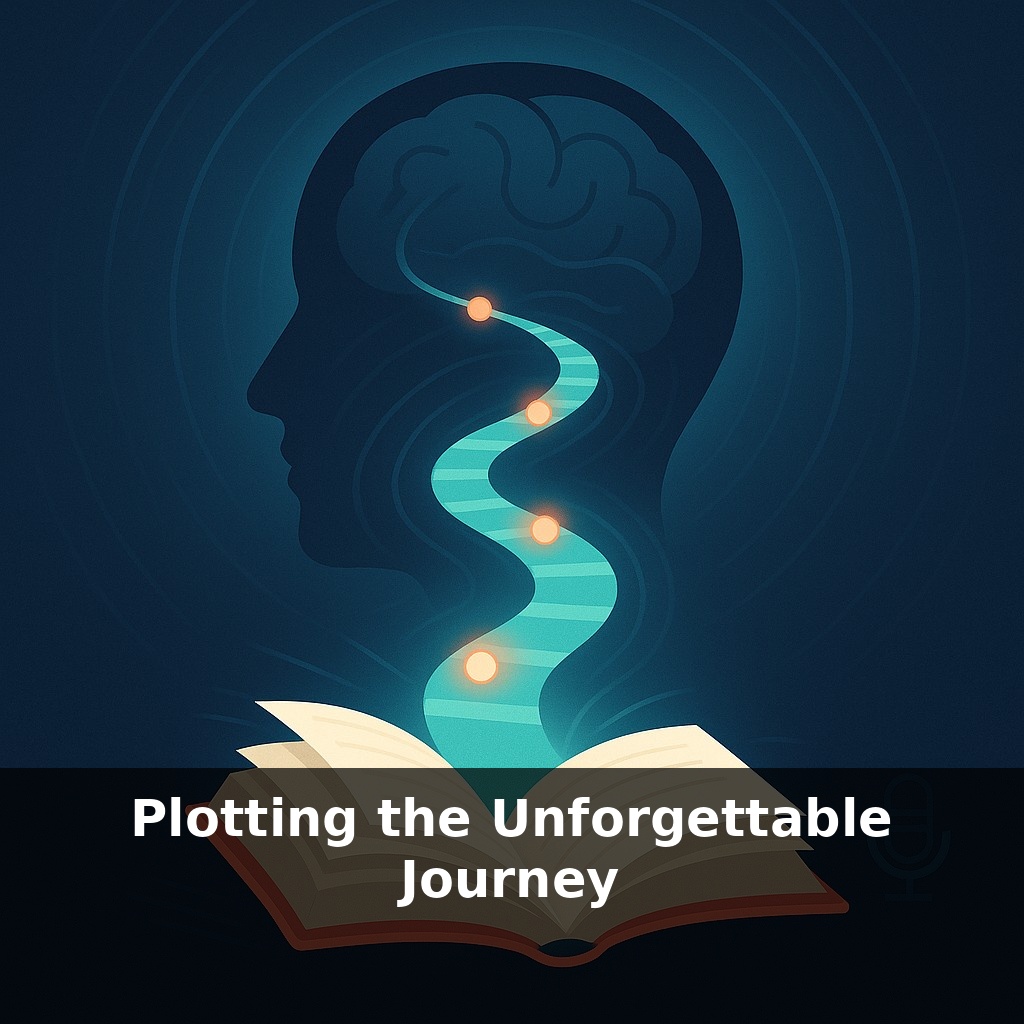
Try this experiment: Pick one character from your current story (or invent one fast) and map their “unforgettable journey” on a single sheet of paper using three columns: “Before,” “Crossing the Line,” and “After.” In “Before,” list three concrete habits, beliefs, or routines that define their ordinary world (e.g., “refuses to leave hometown,” “avoids talking about dad”). In “Crossing the Line,” sketch one vivid, specific scene where they must make an irreversible choice (e.g., buying the one-way ticket, burning the old letters, saying yes to the dangerous job). In “After,” list three ways their daily life and emotional reactions would realistically change because of that one choice. Then read it aloud and notice: does each part feel like it *could only belong to this character*—and if not, tweak until it does.