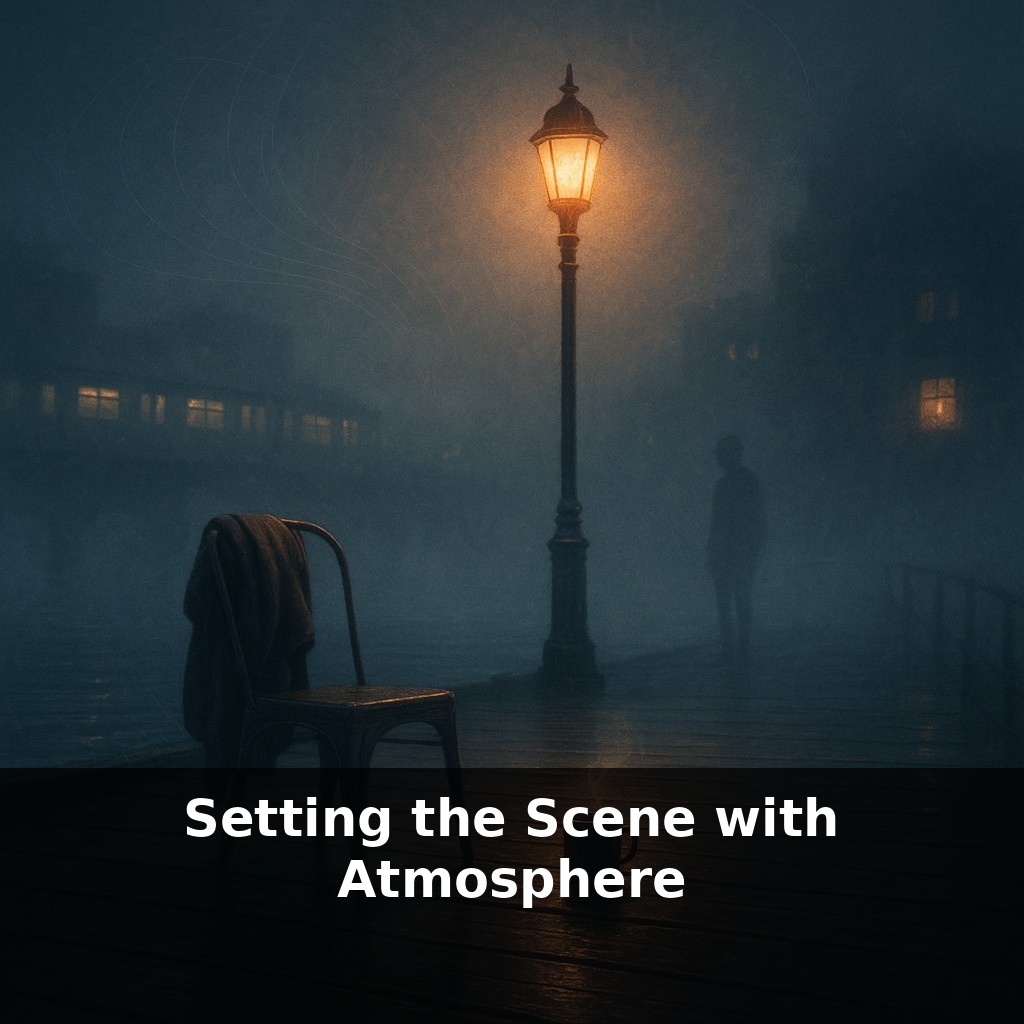
Readers remember about twice as much of a story when they can “see” the place it happens. A foggy pier. A cramped subway at midnight. A kitchen lit by a single buzzing bulb. Same plot, same characters—but the air around them quietly rewires how we feel and what we recall.
Stephen King says he rewrites setting “to make the place a character.” Neuroscience quietly backs him up: when a scene is grounded in concrete streets, rooms, weather, and objects, the reader’s brain starts treating that space almost like somewhere they’ve actually been. But “add more description” isn’t the goal. Description without intention is just decorative wallpaper; atmosphere is renovation. Smart writers use setting to smuggle in tension, theme, and cultural pressure. A sunlit office with a locked bottom drawer. A family dinner where everyone speaks the same language but uses different rules. A rainy city where billboards glow brighter than the moon. Each detail pulls double duty: it tells us where we are, but also what matters here, what’s normal, what’s dangerous. That’s the shift: from “background info” to “story engine disguised as scenery.”
Atmosphere also decides whose story we think we’re in. A bustling market described through the sting of chili smoke and the weight of coins in a vendor’s palm centers the seller’s world; the same street, filtered through a tourist’s jet lag and camera lens, becomes disorienting and loud. Culture, class, and habit all edit what “stands out” in a room. When you choose which details to spotlight, you’re not just sketching scenery—you’re revealing what your characters notice, ignore, or misread. In that sense, setting is selective truth: a curated slice of a larger world that hints at everything just outside the frame.
Think of atmosphere as the silent rules of the room: what’s allowed, what’s risky, what’s impossible. You’re not just placing characters somewhere; you’re deciding what the space itself keeps insisting on.
One lever is *friction*. A crowded festival where phones barely get signal shapes totally different choices than an empty coworking space with blazing-fast Wi‑Fi. In one, losing your friend is a genuine problem; in the other, isolation would feel almost intentional. Friction comes from weather, noise, layout, crowds, or even bureaucracy. Ask: “What does this place make hard? What does it make irresistibly easy?” Then tilt scenes so characters keep bumping into those constraints.
Another lever is *ritual*. Every environment has repeated actions that quietly script behavior. The way a family sets the table. The queue system at a government office. The startup’s Friday demo ritual. When you show these patterned acts in passing, you’re encoding power dynamics, values, and buried conflict without a single speech. Breaking or refusing a ritual becomes an automatic story beat.
Time is your third lever. Not just era, but *time pressure inside the space*. A bakery at 4 a.m. is about production; at 4 p.m. it’s about temptation and leftovers. Hold the same argument in both and it plays differently. Small temporal tweaks—rush hour vs. night shift, monsoon vs. dry season, pre‑election vs. post‑scandal—can sharpen or soften the same plot turn.
Technology is where many stories feel oddly vague. Decide very specifically: what devices are common here, which are rare, and who controls them? A village with one shared generator, a city where delivery drones choke the sky, an underground group communicating only through handwritten notes. Each tech choice rewires how secrets, rumors, and opportunities move.
If this feels like a lot to juggle, borrow a trick from software design: think in “environment features.” For each major location, list 3–5 persistent traits—temperature, noise level, dominant smell, social norm, tech quirk. Reuse them each time we return. Repetition makes the setting legible, which lets small changes scream. The same bar, only today the TV is off and everyone’s whispering—that contrast does narrative work before a word of dialogue lands.
A practical way to test all this is to write the *same* micro‑scene in sharply different environments. Keep the core action identical—say, a character deciding whether to tell an uncomfortable truth—but swap only the “environment features.”
Version one: a cramped rideshare at 1 a.m., rain on the windows, driver humming off‑key, navigation voice interrupting every few seconds. Version two: a glass‑walled conference room at noon, projector fan whirring, muted city noise below, a tray of untouched pastries between colleagues. Same dilemma; the surroundings funnel different options, excuses, and risks.
Another experiment: pick a location you know well—a gym, a night bus, a tiny café—and list five ways its unwritten rules would help or sabotage a secret meeting, a breakup, a theft, a confession. You’ll start noticing how floor material, seating layout, and even where the exits sit quietly steer behavior.
Your challenge this week: take one key scene from your current project and rewrite it twice, changing nothing but place, time of day, and one cultural norm. Then ask: which version naturally generates more pressure and surprise?
As stories spill into AR glasses, haptic suits, and smart homes, your “where” becomes partially programmable. A single scene might glow differently on a commuter’s phone at noon than in a VR headset at midnight. Think less like a novelist decorating a room and more like a systems designer tuning variables: humidity, crowd density, background chatter. Soon, platforms may auto‑remix these based on user data—unless you’ve specified the non‑negotiable story physics of your world.
When you tweak the “rules of the room,” you’re quietly editing character psychology too: bold people go cautious in echoing halls, timid ones flare up in cramped kitchens. Treat each space like a recurring chord in a song—shift the key, tempo, or instrument, and the same notes hint at regret, danger, or finally coming home.
Start with this tiny habit: When you sit down to write, spend 10 seconds typing a single sensory detail about the setting before you write anything else—just one line like “The ceiling fan wobbles and clicks above her head” or “Wet leaves stick to his shoes as he steps inside.” Don’t worry about making it perfect; you’re just planting one vivid image. Tomorrow, add one more tiny detail—maybe a smell or a background sound—and stop there if you want. Keep repeating this, one sensory brushstroke at a time, and let the atmosphere quietly build itself.