A streaming survey once found “clever dialogue” was the second-biggest reason people binged shows. Now, slip into a game where a single line you choose makes a character live or die. In both cases, one thing is quietly in control: how words move between people.
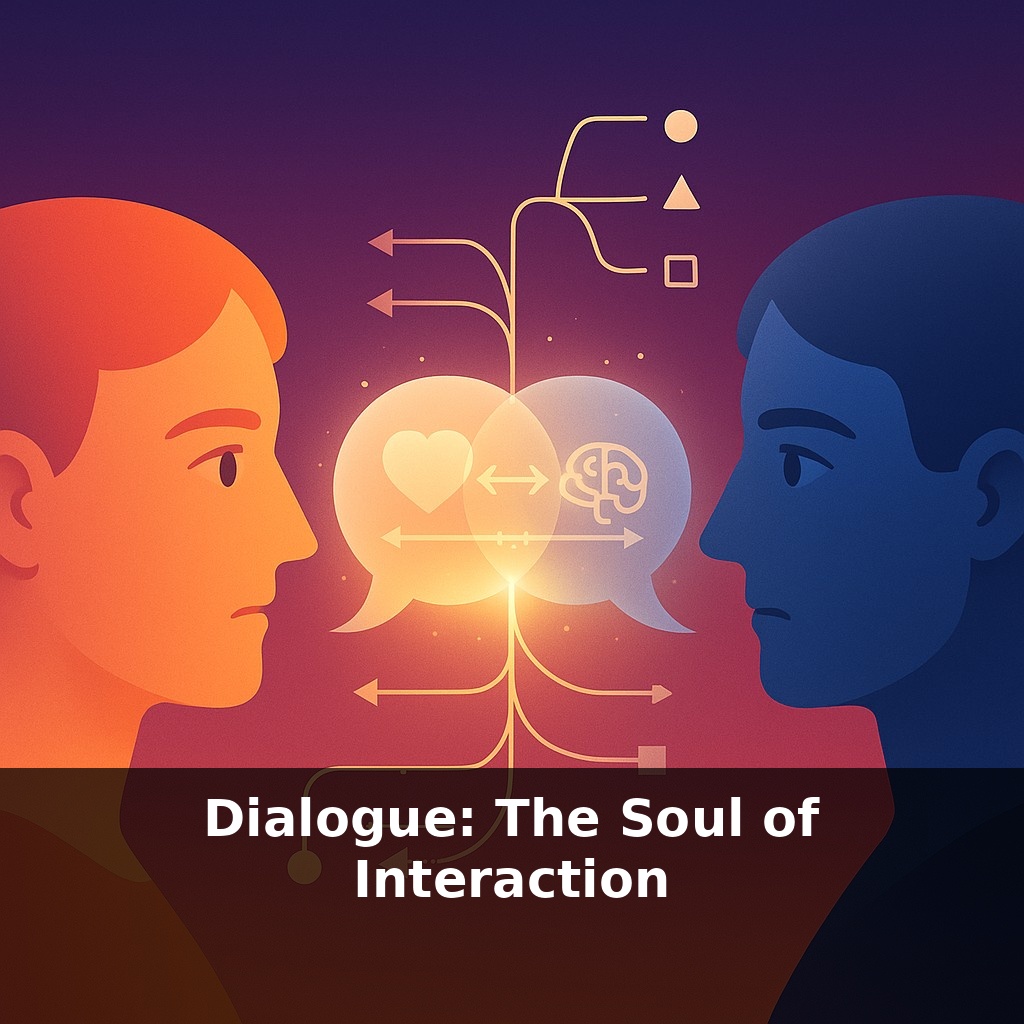
Writers often think dialogue is just “what characters say,” but in strong stories it’s closer to a negotiation: every line is a tiny deal between characters about power, trust, and truth. On the surface, two people might be arguing about dishes in the sink; underneath, they’re really arguing about respect, control, or fear of being left. This gap between surface talk and hidden stakes is where narrative heat lives.
Linguists call this territory pragmatics: not the words themselves, but what those words *do* in context. A flat “Fine” can mean surrender, simmering rage, or quiet relief, depending on who says it, to whom, and when. Interactive stories sharpen this further—because the audience chooses lines, they’re not just watching negotiations; they’re participating in them, testing how far the story’s world will bend before it snaps.
Think of every scene as a micro-ecosystem: status, desire, fear, and history all collide the moment someone opens their mouth. Context_setting is where you quietly load that ecosystem before the “funny” or “dramatic” line ever lands. It’s the choice of who speaks first, what just happened off‑screen, who’s exhausted, who’s distracted, who’s pretending not to care. In games and branching scripts, this groundwork matters even more, because a single chosen line must feel different if spoken after a betrayal than after a rescue. The same sentence can sting, soothe, or stall—context decides which universe we’re in.
Strong dialogue starts *before* anyone speaks, but it lives or dies in the *line-by-line* choices you make once the talking begins. Now that the scene’s ecosystem is loaded, you’re deciding: who advances, who retreats, who dodges, who lies. That’s where beats, objectives, and conflict do the real work.
Think of beats as small turns in the conversation—mini “state changes.” A character begins the scene wanting comfort, then in one exchange pivots to wanting revenge; that pivot is a beat. On the page, you can often spot them where the emotional temperature shifts: a joke falls flat, an unexpected detail drops, someone interrupts, changes the subject, or goes suddenly quiet. In interactive stories, beats often align with choice points: the moment you let the audience swing the scene toward confession, deflection, or escalation.
Under those beats sits each character’s objective: what they’re trying to *get* right now. Not the long‑term goal (“save the kingdom”), but the immediate move (“make her admit she’s wrong,” “hide how scared I am,” “get this guard to look away for two seconds”). When you know every speaker’s objective, you stop writing “generic talk” and start writing tactical lines. The same sentence can be a plea, a trap, or a test depending on the objective behind it.
Conflict isn’t limited to shouting matches. It’s any friction between objectives. If one character needs silence and the other needs answers, you already have conflict—even if all the lines are whispered. In a game like *The Walking Dead*, timed responses intensify this: you’re forced to reveal which objective matters most *right now*—protecting morale, preserving trust, or extracting hard information.
Here’s the practical filter: a line earns its place if it either 1) turns a beat (the situation shifts), 2) advances or blocks an objective, or 3) sharpens conflict (even subtly: a tease, a pause, a too‑careful politeness).
Everything else—small talk that doesn’t bend anything—can usually be cut, condensed, or turned into action.
In practice, this means listening for *pressure points* in a scene. Where does a character’s composure crack? Where do they over‑share, undercut themselves, or suddenly get efficient with words? Those moments are often where unspoken stakes flare up—and where an interactive script can branch in the most satisfying ways.
Concrete example: a cop questions a suspect.
Version A (flat): COP: “Where were you last night?” SUSPECT: “Home.” COP: “Anyone see you?” SUSPECT: “No.”
Version B (pressure): COP: “Where were you last night?” SUSPECT: “You always start like that?” COP: “Like what?” SUSPECT: “Like you already know I’m lying.”
Nothing “big” happens, but trust, fear, and status all shift. In a game, this could fork: double‑down on intimidation, pivot to empathy, or quietly log a hidden “paranoia” variable that colors later lines.
Your single analogy: think of revision like debugging code—every line that doesn’t change the program’s state is a candidate for deletion or refactor.
Soon, you won’t just write lines—you’ll architect conversations that adapt in real time. Think of characters holding private “emotional ledgers”: every choice adjusts trust, fear, curiosity by a few invisible points. AI tools will help track these shifting balances across dozens of scenes, catching contradictions the way spellcheck catches typos. The opportunity (and challenge) is designing voices that stay recognizable even as those ledgers—and the relationships they shape—diverge wildly.
Treat every exchange you write as a tiny experiment: what happens if you cut the safest line, or let a character answer the question they *wish* they’d been asked instead of the one on the page? Like tweaking a recipe’s seasoning, small shifts expose hidden flavors in relationships—and sometimes reveal the dish you were actually cooking all along.
To go deeper, here are 3 next steps: 1) Block 30 minutes this week to read the first two chapters of David Bohm’s *On Dialogue* and jot down 3 ideas you want to experiment with in your next real conversation (e.g., suspending assumptions instead of arguing a point). 2) Before your next important interaction (with a partner, teammate, or client), open a shared Google Doc or Notion page titled “Our Ongoing Dialogue” and invite them to co-add questions, reflections, and disagreements as a living space for the conversation to keep evolving. 3) Pick one recurring interaction in your life (team meeting, weekly 1:1, family dinner) and turn it into a “dialogue lab” by using the free “Conversational Turn-Taking” exercise from the MIT U.Lab resources (u-school.org) to practice listening without interrupting and reflecting back what you heard before responding.