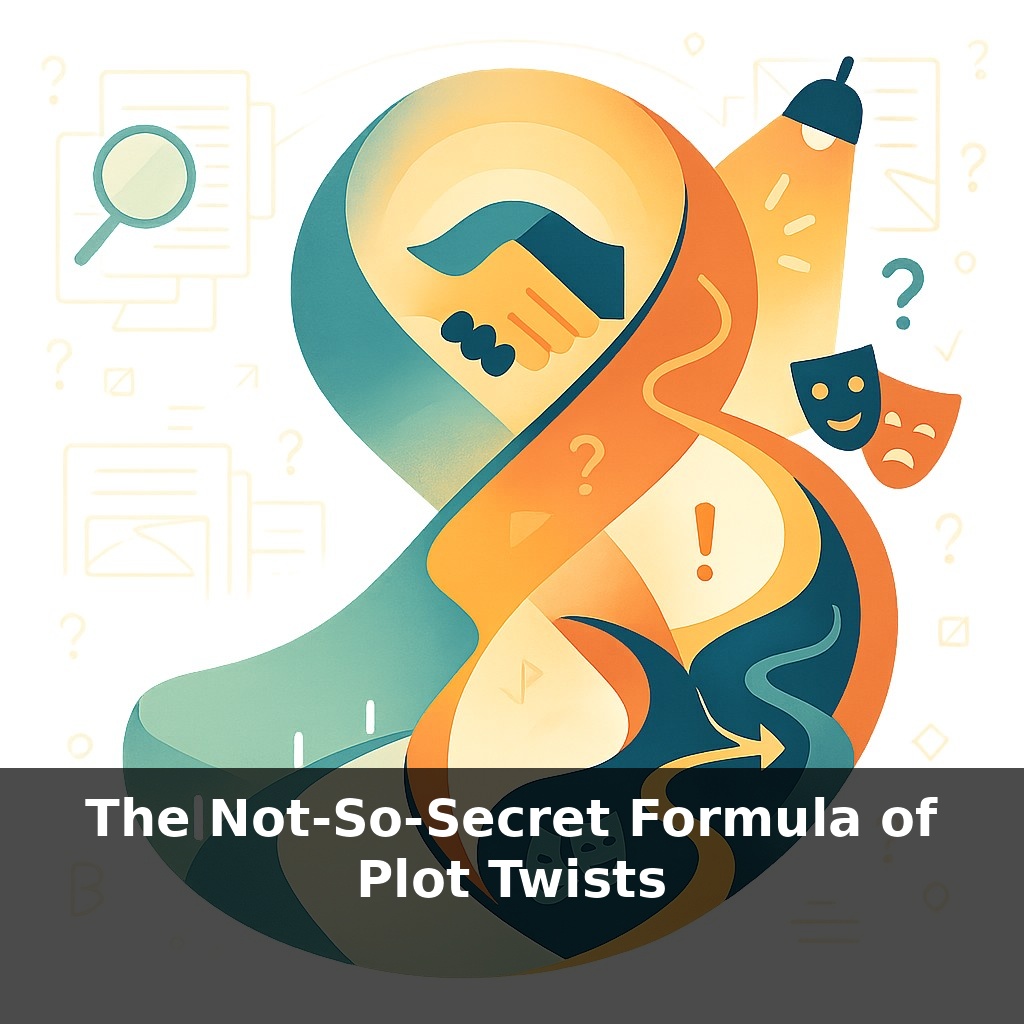
About half the posts on a huge online forum about plot twists are people asking, “Was this twist fair?” A reader gasps, then flips back through pages, hunting for clues. A film crowd goes silent, then laughs in recognition. Somehow, surprise and inevitability just shook hands.
Agatha Christie once said that the trick is to “make the reader want to believe one thing,” while quietly arranging the opposite. That’s the not‑so‑secret formula behind most beloved twists: a tug‑of‑war between what the audience thinks they know and what the story is quietly proving true.
Modern research backs this up. When a twist lands, the brain’s reward centers light up much like they do when you finally recall a name that’s been on the tip of your tongue all day. That jolt isn’t random; it’s payment for careful attention.
Writers, from Sophocles to screenwriters of “The Sixth Sense,” have treated this like a craft problem: where to hide information, how often to reveal it, when to nudge the audience off the scent. In practice, this means designing clues the way a chef plates a dish: nothing extra, nothing accidental, everything placed to be noticed—just a little too late.
The snag is that most writers either smuggle in a twist that feels like cheating or telegraph it so clearly that readers solve it chapters early. The space between those extremes is where craft lives. Psychology calls it schema violation: we carry mental templates for how stories “should” go, and the most satisfying turns bend those templates without snapping them. Historically, storytellers have learned to tune this tension using tools like point of view, pacing of reveals, and even genre promises—because a twist in a cozy mystery must play by different rules than one in a horror screenplay.
If you zoom in on stories that “got you,” you’ll usually find the same quiet architecture doing the heavy lifting. Three beams matter most: what you plant, what you misdirect, and what you hold back.
Planting starts with deciding what the audience is allowed to know at each moment. Instead of thinking in terms of “hiding information,” think in terms of “staging access.” In a murder mystery, the butler’s cut hand might be mentioned once in dialogue, once in a description, and once in a photograph on the mantle. None of these moments shout. Together, they form a faint trail. Christie was a master at this density: any single clue feels trivial, but their intersections form a net.
Misdirection isn’t only about fake clues; it’s also about guiding interpretation. A character may describe an event in emotionally truthful but factually incomplete ways. The reader fills in the gaps according to their own expectations. This is where devices like the unreliable narrator thrive—not by outright lying, but by cropping the frame. In “Fight Club,” for example, the visuals and voiceover conspire to limit what counts as “normal” until the reveal forces a recalibration.
Holding back is less about secrecy and more about order. Reveal the right true thing too early and it looks obvious; too late and it feels arbitrary. Many effective narratives treat information like staged investments: you “pay in” small, tempting facts that generate interest, then “cash out” with a reversal that revalues everything before it. That’s why some films, like “The Sixth Sense,” see audiences return—they want to audit the story’s books and confirm every clue was honestly recorded.
Psychologically, the sweet spot sits between boredom and confusion. Too few cues and the shift reads as random; too many and your reader jumps ahead. One pragmatic tactic: draft the straightforward version first. Then, selectively relocate key facts backward or forward in the story, and adjust emphasis on each mention. Often, you don’t need new content—only a new sequence and spotlight.
Think of your story like a kitchen during dinner rush. You’re not just cooking one dish; you’re timing a whole line of orders so everything hits the pass together. A future revelation about a character’s betrayal, for instance, isn’t just a line of dialogue later—it’s the slightly-too-quick deflection in chapter two, the missing text message in chapter five, the inconsistent alibi in chapter seven. None of these are “the twist”; they’re prep work that makes the final plate feel earned.
One way to stress‑test this is to write a “spoiled” version of your story summary: assume the reader already knows the secret. Then sketch how each earlier scene would play differently from that informed perspective. If too many scenes feel unchanged, you’re under‑seeding your trail. If the new reading makes every moment scream the answer, you’ve over‑seasoned.
Notice how this lens forces you to think in layers: surface action, immediate meaning, and hidden meaning that only lights up on a re‑read.
As XR and interactive worlds mature, audiences may soon “collaborate” with the story engine. Instead of one fixed reveal, branching narratives could track your choices the way a fitness app tracks steps, quietly modeling what you’re likely to infer next. The shock then isn’t just what happens, but realizing the story has been profiling your hunches. Ethical questions follow: how far should narrative systems go in mapping your fears, biases, or secrets to craft a perfectly targeted narrative jolt?
The deeper trick isn’t just building a clever reversal; it’s training yourself to notice where readers lean, then nudging that lean. Start watching how your own expectations wobble in news stories, gossip, even sports commentary. Each narrative feint you spot is a blueprint, waiting to be reverse‑engineered on your next draft.
Start with this tiny habit: When you finish watching or reading *any* story today (even a YouTube video with a twist), pause and whisper to yourself, “What did they make me assume?” Then, jot a single sentence that starts with: “The twist worked because I expected ___ but got ___ instead.” If you’re stuck, focus on just one thing: Was the twist hiding in a character’s desire, a misleading detail, or the story’s genre promise? Over time, you’ll train your brain to spot the exact gears behind great plot twists without feeling like you’re doing “homework.”