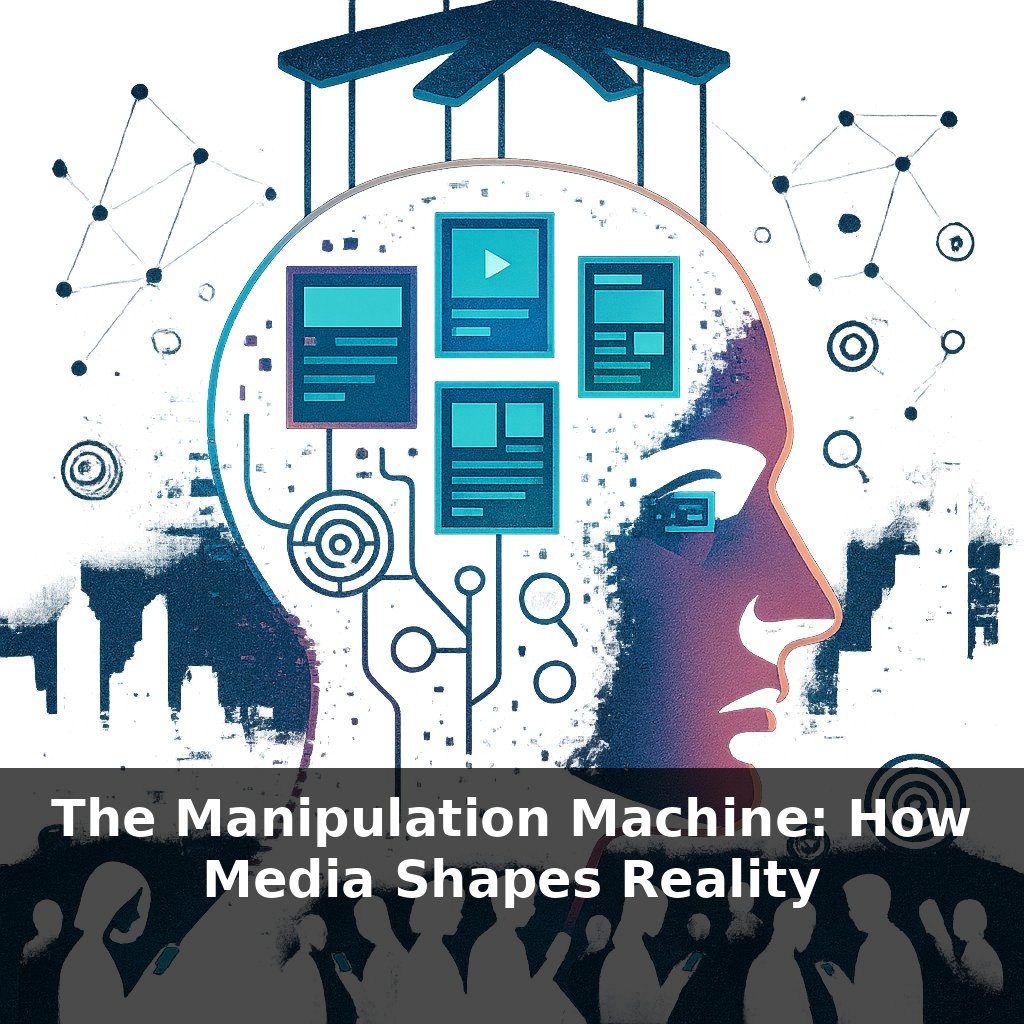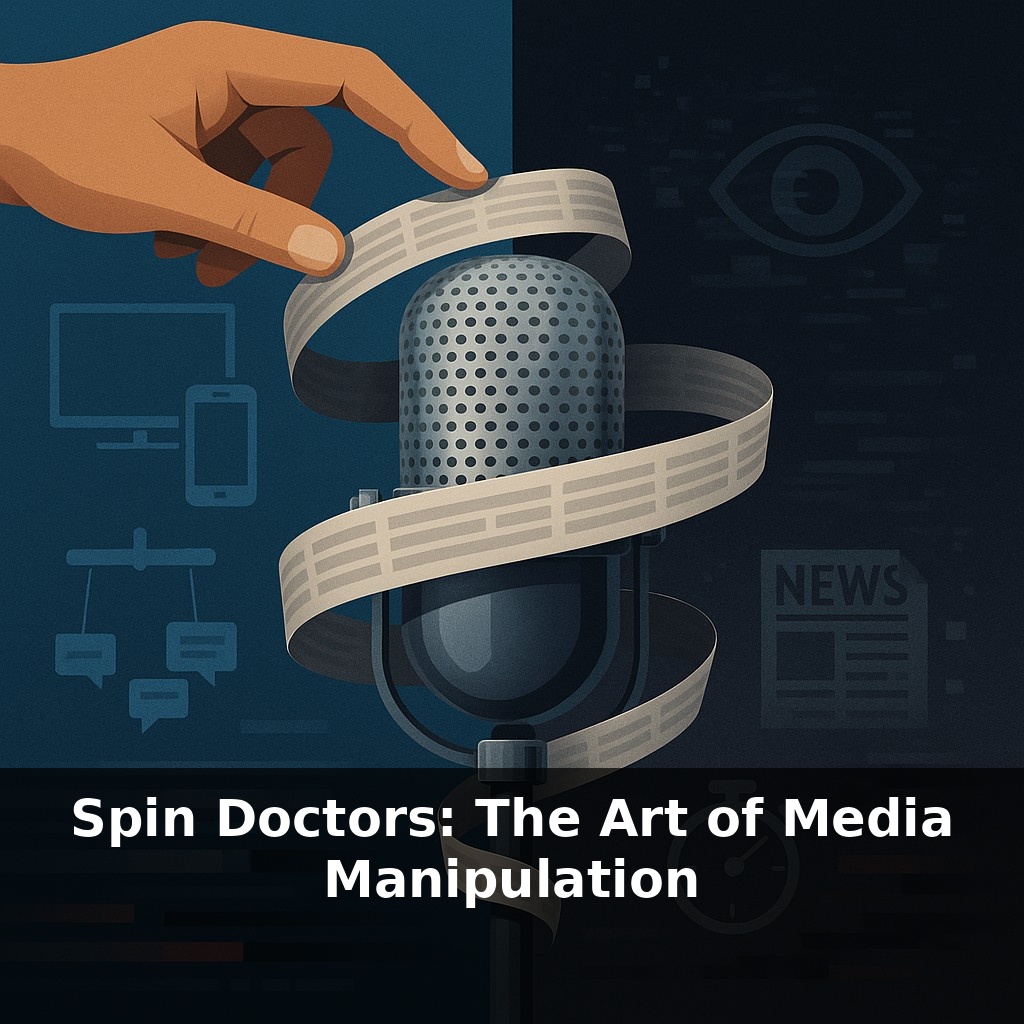
Half of Americans now believe news outlets are trying to mislead them—yet those same outlets shape which stories you hear first, and which vanish. In the next few minutes, we’ll step into that gap between what you’re told and what’s quietly edited out.
If a stranger could script the first eight seconds of every story you hear today, they wouldn’t need to lie to change what you believe. They’d just need to choose which details reach you first.
That’s where spin doctors live.
They don’t storm into newsrooms and bark orders. They send “background memos,” offer ready‑made quotes, and time releases so their version lands before anyone else’s. Campaign staff test dozens of phrases overnight—then feed only the winners into interviews, headlines, and talking points. One word swap can flip public opinion, the way a tiny tweak to a recipe quietly turns a bitter sauce into something you crave.
In this episode, we’ll dissect how framing, agenda‑setting, and language engineering actually show up in your feed—and why your brain is wired to cooperate with them.
You already meet their work in tiny, forgettable moments: a clipped quote in a 12‑second video, a trending hashtag that appears out of nowhere, a “spontaneous” talking point every guest on a panel somehow repeats. Those moves are honed long before you see them. Pollsters test which fears “stick,” consultants study which headlines travel fastest, and data firms quietly profile your habits so messages can be timed to when you’re tired, rushed, or scrolling. The goal isn’t to win every argument—it’s to decide which arguments feel worth having in the first place. In this episode, we’ll slow that process down enough to watch it work.
Listen to a heated debate show and you’ll notice something odd: everyone is arguing—but all inside the same narrow fence. That fence didn’t build itself. Someone chose the question, the guests, the numbers on screen, even the clip that rolls right before the argument starts. By the time voices rise, the most important decision—the terms of the fight—has already been made for you.
Spin doctors operate there, upstream from the “drama.” They don’t just sell a position; they sculpt the mental shelf where that position will later sit. One of their sharpest tools is the shortcut: a compact phrase that smuggles a whole worldview into a few words.
“Death tax” isn’t an argument, it’s a frame in three syllables. So are “job‑killing regulations,” “family values,” “defund the police,” “climate hoax,” “border crisis,” “election integrity.” None tell you what’s actually in a bill, a policy, or a study. They tell you how to feel before you even meet the details.
The shrinking sound‑bite makes these shortcuts lethal. If a candidate only gets eight seconds, those seconds must carry moral judgment, blame, and a solution—without sounding like any of that. That’s why phrases are obsessively A/B tested: one version gets mild nods, another sparks fury, so only the fury survives into speeches and headlines.
There’s a second layer you almost never see: the “starter narrative” planted with journalists, influencers, and aligned groups days or weeks ahead. A memo might say, “Tomorrow’s numbers will show chaos—focus on uncertainty, not specifics.” When the report drops, everyone already has their verbs and adjectives loaded: “turbulent,” “worrying,” “surge,” “collapse.” The facts are technically correct; the emotional weather has been pre‑written.
Micro‑targeting turns this into a custom experience. The same policy can hit your feed as a threat to small business, your neighbor’s as a safety issue, and your uncle’s as a culture‑war flashpoint. Think of it like a software update quietly pushed to different devices: same core code, different interface skins so each user feels, “This was made for me.”
Over time, these repeated cues train your intuition. Certain words become automatic red flags or green lights. You feel like you’re trusting your gut; often, you’re trusting someone else’s carefully engineered echo.
Watch how this plays out in small, ordinary moments. A city announces new cameras on buses. One local radio hit calls it “a safety upgrade to protect riders”; another, airing the same day, introduces it as “expanded surveillance on your commute.” By the time callers weigh in, they’re not debating cameras—they’re defending “safety” or resisting “surveillance,” each reacting to a different emotional doorway.
Or consider a story about a protest. One clip opens with a burning trash can, the lower‑third reading “unrest spills into streets.” Another leads with parents holding handmade signs, captioned “community pushes for change.” Same afternoon, same block, two entirely different mental files created in your head.
A tech analogy fits here: think of each phrase as a default setting. Most people never open the “advanced options,” so whatever’s pre‑checked—chaos or community, safety or spying—quietly governs how the whole issue runs in their mind.
In the next decade, spin won’t just chase the news; it will anticipate you. AI systems can already guess mood from typing rhythm and scrolling speed. Plug that into political messaging and your feed becomes a shifting mirror, reflecting the version of reality you’re most likely to accept. Expect battles over who owns these “persuasion profiles,” demands for audit trails on tailored narratives, and tools that flag when a post is running emotional “scripts” instead of offering genuine information.
Your best defense isn’t tuning out; it’s tuning your attention. Start noticing who gains if a story feels urgent, lopsided, or weirdly personal. Follow the money, the timing, the repeat guests, the talking points that pop up like copy‑pasted recipes. Your challenge this week: treat every “obvious” take as a draft—and quietly ask, “Who benefits if I stop here?”