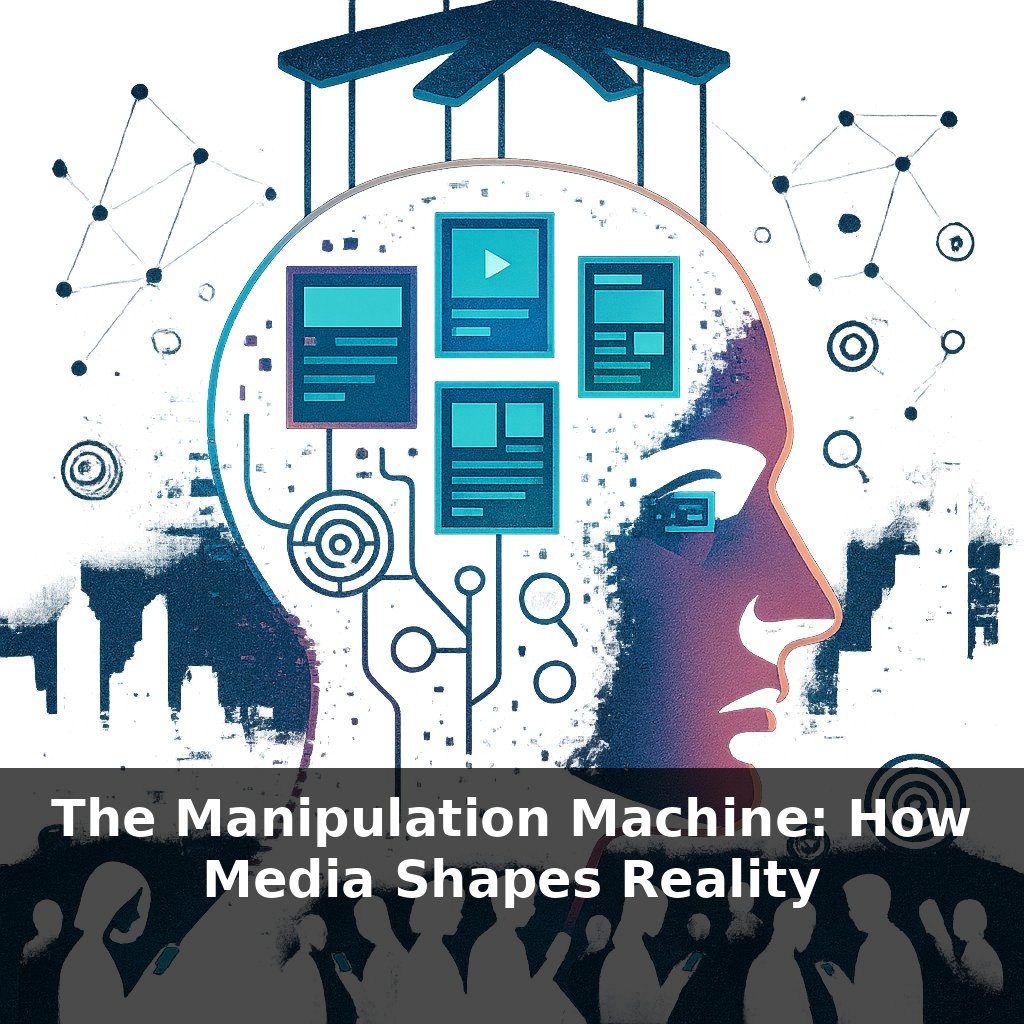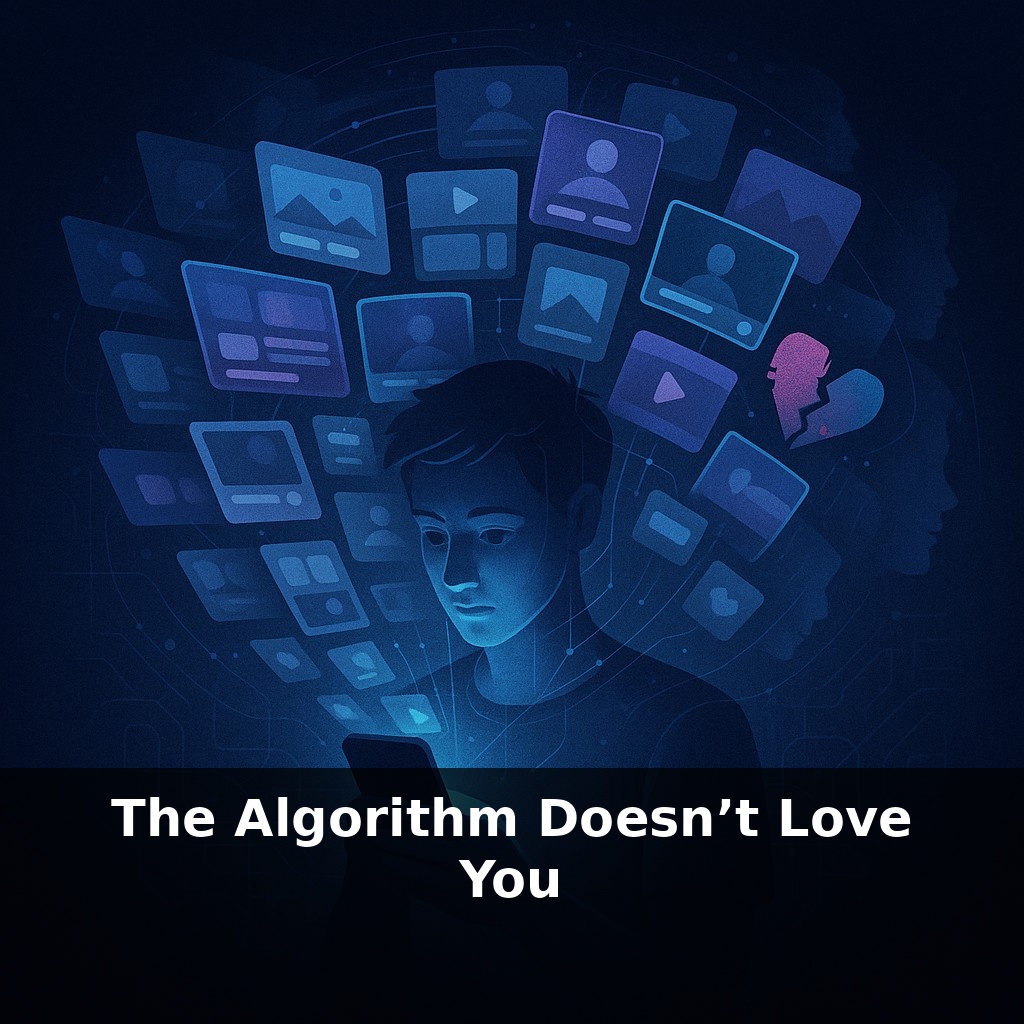
About half of what people watch on YouTube isn’t chosen by them—it’s chosen for them. You tap one video at lunch, and suddenly your afternoon mood, your politics, even your sense of what’s normal are being quietly steered by a system you never actually met.
You don’t open Netflix, TikTok, or Twitter alone. You walk in carrying a dense history of late-night scrolls, half-finished shows, doom-scrolling spirals, and guilty pleasures—and the system remembers every one of them. That history isn’t neutral; it’s a set of levers. Linger on a clip about a conspiracy once, and the next time you’re tired or bored, the odds quietly tilt toward more of the same. The platforms aren’t asking, “What would help you become wiser or calmer?” but “What version of you keeps watching, reacting, refreshing?” Over time, this pressure shapes not just what you see, but when you see it: outrage right before bed, envy during your commute, distraction when you planned to focus. The interface looks like freedom of choice; the patterns underneath behave more like a well-oiled high-frequency trading bot, constantly betting on your next impulse.
Open the apps side‑by‑side and another pattern appears: the same emotional “flavours” follow you from feed to feed. Tap on a scandal on Facebook, and soon YouTube, TikTok, even news alerts harmonise around that mood. What changes isn’t just *which* posts you see, but the emotional diet they create over a day: spikes of shock between emails, quick jokes as you eat, envy-flavoured success stories right after payday. Like a chef constantly tweaking a recipe based on your last bite, the system quietly learns which mix of novelty, outrage, and comfort keeps you nibbling—and adjusts the menu in real time.
Scroll long enough and the pattern flips: it feels less like you exploring content and more like content exploring you. That’s because the system isn’t just predicting *what* you’ll click; it’s running constant experiments on *who* you are willing to become.
Think of Netflix’s thumbnails. You and a friend open the same show page, but you see a brooding close‑up while they see a goofy group shot. That’s not decoration; it’s a test. Change the artwork, watch who bites. Now stretch that logic across TikTok’s 95 minutes a day, or YouTube’s autoplay chain. Every pause, skip, and replay is feedback in a giant laboratory where the dependent variable is your future behaviour.
Crucially, the “success metric” in that lab isn’t your well‑being, it’s measurable engagement. If a slightly angrier version of you comments more, that path gets reinforced. If a more paranoid version watches to the end, that branch is rewarded. Over thousands of tiny nudges, the system doesn’t just cater to your existing self; it incrementally discovers which version of you is most profitable to keep on the hook.
This is where the neutrality myth breaks. Someone chose the objectives: watch‑time, shares, “meaningful interactions.” When Facebook tweaked its goal in 2018, it didn’t add more friends to your life; it added more political outrage to your feed. The math didn’t become evil; the incentive quietly shifted, and the machinery dutifully searched for the emotional fuel that best met it.
Personalisation makes this feel intimate and harmless. “These are my interests. My friends. My humour.” But your “home” feed isn’t a home; it’s a ranked list where most possible posts are silently discarded. Only about 12% of Twitter users drive the bulk of tweets, and ranking systems lean on them heavily, so you end up living inside the loudest 12% while mistaking it for “what everyone thinks.”
In finance, an algorithmic trader continuously rebalances a portfolio to squeeze out tiny gains. Here, the asset being rebalanced is your attention and the risk the system manages is you leaving. The result is a slow, quiet optimisation: not for truth, not for breadth, but for whatever reliably gets you to stay one more minute.
Open Spotify and notice how quickly your “Discover” or “Daily Mix” stops feeling like discovery and more like a tight loop: the same moods, the same eras, the same three genres circling back. That’s not because there’s nothing new out there; it’s because novelty that makes you *skip* is costly, while familiarity that makes you *nod along while doing something else* is a safe bet.
On Instagram, a friend’s baby photo quietly competes with a stranger’s drama‑filled reel. The reel usually wins because your tiny pause on conflict is a stronger signal than your warm glance at the baby. Over thousands of these micro‑competitions, whole categories of content lose the tournament.
And it’s not just feeds. Your podcast app queues “recommended for you,” gently sidelining long, uncomfortable interviews in favour of tight, punchy episodes that don’t risk losing you at minute 30. The result isn’t censorship; it’s an invisible sliding door where low-friction, high-response content glides forward, and everything else never quite makes it into view.
Seventy percent of what people watch on YouTube is recommended, not searched for—and that’s a preview of where everything else is heading.
As generative AI fuses with these systems, your feed stops being a menu and becomes a mirror that talks back. Instead of choosing from existing videos or posts, you’ll get custom‑written stories, AI‑generated friends, and synthetic “news” tuned precisely to your reactions, like a chef adjusting seasoning while you chew.
That raises harder questions: should you be allowed to choose your own feed objective—calm over outrage, breadth over comfort? Will laws force platforms to show you *why* a post appeared, the way food labels list ingredients? And if children grow up mostly inside these invisible experiments, what does “authentic taste” even mean when most of their preferences have been softly, profitably steered?
Your challenge this week: once a day, pause on a feed item and ask, “If a human editor had to stand next to this and say why they chose it *for me*, what would they admit?” Then decide—*knowing that answer*—whether you still want to give it your time.
The twist is that these systems don’t just react to you; they quietly train you back. Skip longform nuance often enough and your patience for depth shrinks, like taste buds dulled by constant sugar. But the same mechanics can widen your range: seek out slower, stranger, less viral corners, and you’re feeding the part of the machine that still responds to curiosity.
To go deeper, here are 3 next steps:
1. Install a tracker like **RescueTime** or use your phone’s **Screen Time / Digital Wellbeing** dashboard to log exactly how many minutes the algorithm gets from you over the next 48 hours, then choose one app to delete or move off your home screen based on that data. 2. Read the first two chapters of **“Stolen Focus” by Johann Hari** or watch Tristan Harris’s TED talk **“How a handful of tech companies control billions of minds every day”**, then pause and pick one “friction move” (e.g., turning feeds to “Most Recent,” turning off autoplay, or disabling push notifications for TikTok/Instagram). 3. Try a “no‑algorithm hour” today: use tools like **RSS feeds (Feedly)**, **Mailbrew**, or a library app like **Libby** to curate 5–10 independent sources you choose on purpose (newsletters, blogs, niche YouTube channels), and make that your only digital content for that hour.