“Most of the news you see online isn’t chosen by you—it’s chosen for you. You open an app for a quick update, and within minutes you’re scrolling through stories that all agree with each other. Different sources, same opinion. How would you know if an entire side is missing?”
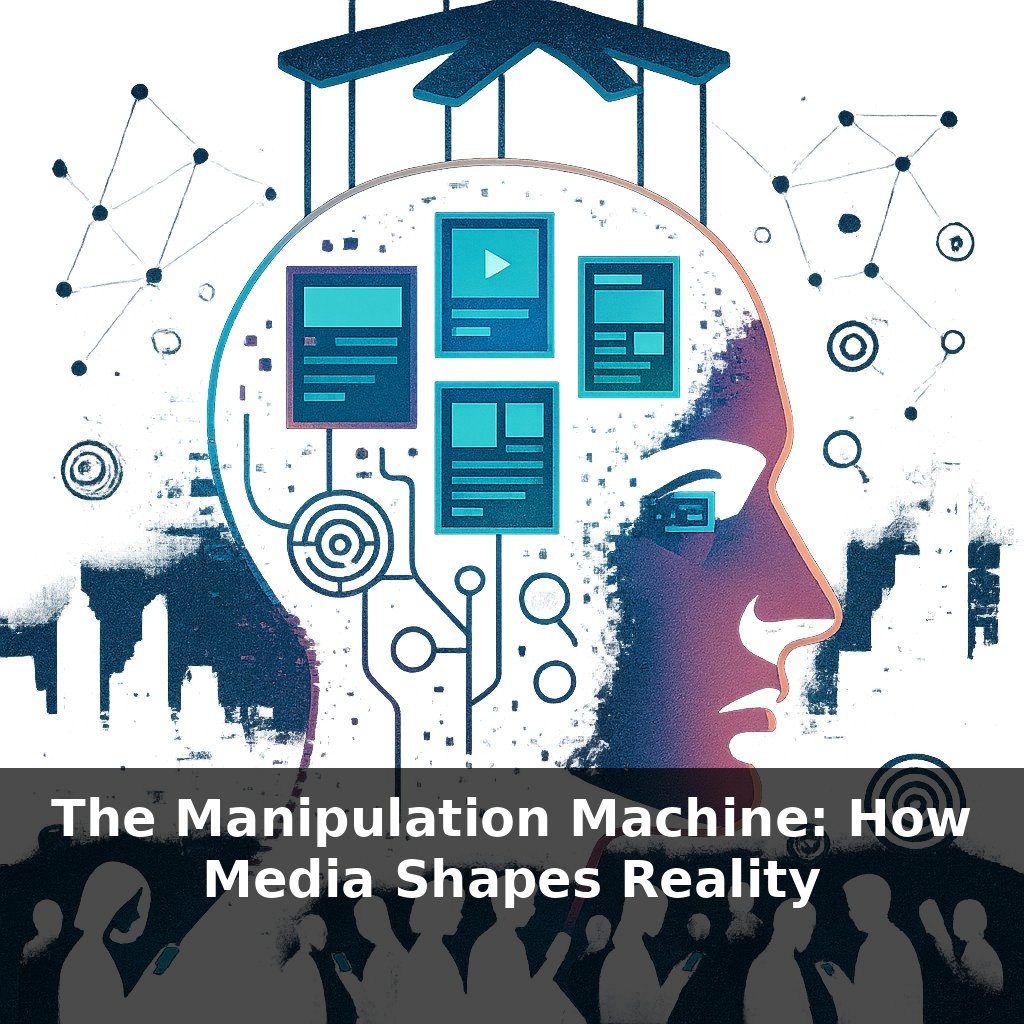
You’re not just in a filter bubble; you’re inside a feedback loop that learns you better than you know yourself. Every tap, pause, and share is treated like a tiny vote: “More of this, please.” The system doesn’t care if what you consume is true, only that you stay. Over time, your feed stops looking like “the world” and starts looking like a mirror that quietly edits out anything that might make you flinch.
Now scale that up: millions of people, each with a custom-edited reality, all convinced they’re seeing “what’s really going on.” That’s how echo chambers become infrastructure, not accidents—shaping elections, protests, even family arguments. The danger isn’t just polarization; it’s the quiet erosion of a shared baseline of facts. When neighbors no longer agree on what happened, how do they argue about what should happen?
Your information diet doesn’t form in isolation. It’s shaped by three forces quietly working together: platforms that predict what will keep you hooked, people you’re connected to, and your own habits about who you trust or mute. Studies of Facebook and Twitter show how quickly this combination sorts us into clusters where most links, jokes, and “breaking news” travel in circles. Political campaigns and advertisers then treat these clusters like pre-sorted audiences—testing which fears, hopes, or identities will make each group click, donate, or vote, while others never even see the same appeals.
Here’s the twist: echo chambers don’t need lies to be powerful. They can run on true facts, carefully filtered. A 2021 Nature study tracking nearly a million Facebook users showed that once a story caught on inside an ideological group, it was about 90% more likely to bounce around that same group than to cross the boundary to others. Each side gets real pieces of the puzzle—but not the same pieces, and almost never at the same time.
That’s why two people can follow “serious news sources” and still end up with completely different mental maps of the world. One feed is full of stories about voter suppression; another, about voter fraud. Both issues exist, both matter, but when only one is constantly amplified, it quietly becomes *the* story. Disagreement hardens, not because one side lives in fantasy, but because each side feels its reality is being denied.
Platforms don’t just reflect this split; they monetize it. Pew’s 2022 survey found that most people who get news from social media say they mostly see like‑minded views. That’s not an accident—that’s an engagement strategy. When you mostly encounter agreement, every rare disagreement can feel like an attack rather than an invitation to think.
Campaigns and consultancies learned to weaponize this. Cambridge Analytica used data from tens of millions of Facebook profiles to slice voters into psychological segments and send micro‑targeted political messages. Two neighbors could live on the same street, vote in the same election, and never see the same arguments about what was at stake. One gets ads that stoke fear, another gets ads that flatter their identity. Both believe they’re reacting to “the facts,” not to a tailored script.
Even recommendation tweaks that seem neutral can tilt the floor. YouTube’s own audit reportedly found most watch time flowed from its recommendations, not from deliberate search. If the next clip is always one click away, whoever controls “up next” quietly shapes which ideas feel normal, fringe, or invisible.
A corporate board might hire two consultants to assess the same risky merger. One consultant only interviews executives who already support the deal; the other talks to skeptical auditors and frontline staff. Both consultants return with “evidence-based” reports—but the first sees momentum, the second sees landmines. Online, many of us are effectively hiring only the first consultant, then feeling baffled that others “refuse to see the facts.”
You can spot this in smaller places too. On Goodreads, book ratings cluster into tight bands: fans of hard sci‑fi mostly see raves for similar authors, while romance readers see an entirely different canon of “must-reads.” Finance forums do it with investing strategies: one subreddit treats index funds as gospel; another insists only options trading is serious. The underlying platforms aren’t telling anyone what to think, yet their sorting creates parallel canons of “obvious truths.”
In that sense, your feed can function like an auto‑tuned playlist that keeps raising the volume on what you already nod along to.
As AI systems learn to anticipate not just what you’ll click but *how you’ll react*, your feed can start to resemble a private stock chart: every spike in outrage or delight becomes a signal to double down on similar content. That’s useful for advertisers—and risky for public debate. Lawmakers are beginning to push for “explainable feeds” and user‑tunable settings, but the real test will be whether we treat these tools like autopilot or insist on learning to fly.
Your challenge this week: deliberately “jam” the machine. Once a day, follow a source you normally skip—an opposing columnist, a foreign outlet, a local expert with few followers. Treat it like diversifying a stock portfolio: small, steady bets outside your comfort zone. Watch how your feed—and your assumptions—shift when you stop letting it trade on autopilot.