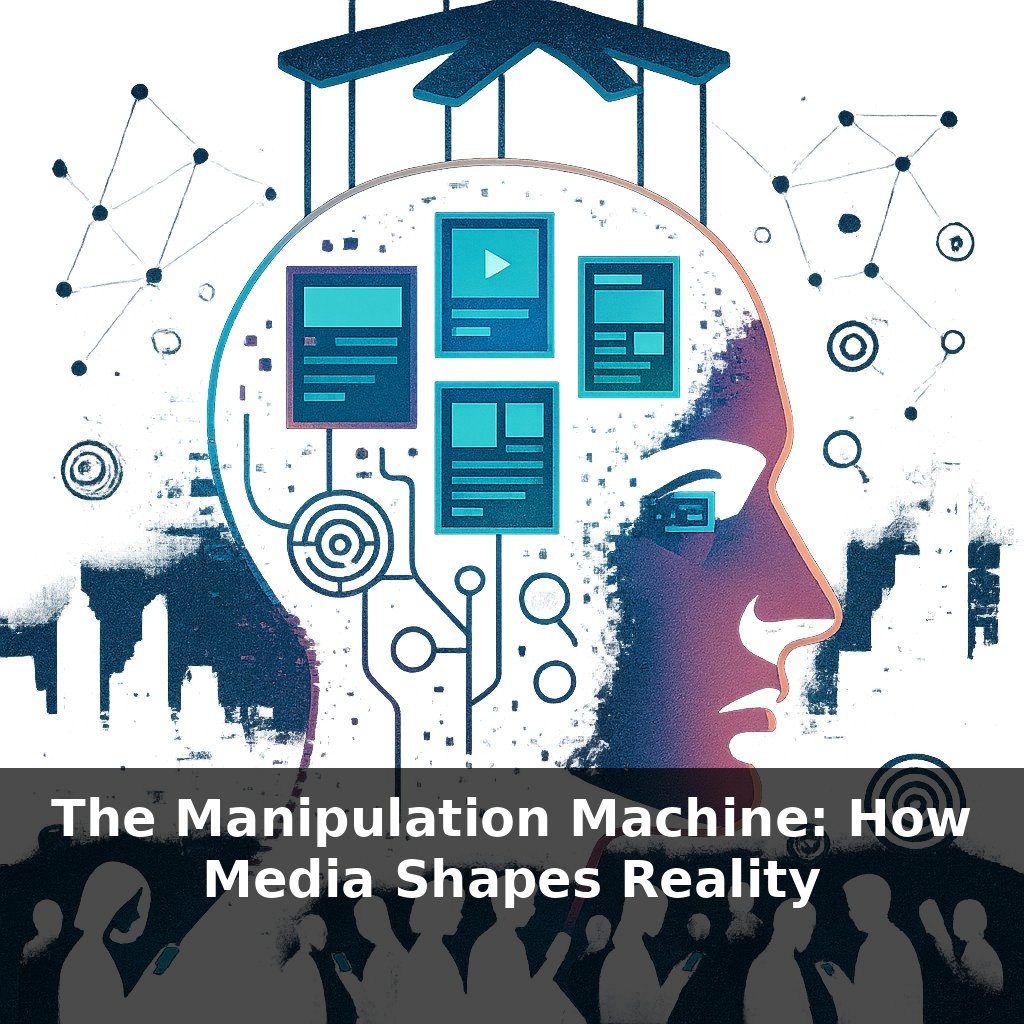
About two-thirds of adults now hear the news through feeds that were never designed to tell the truth—only to keep you there. You open your phone for “just a minute,” and without noticing, an invisible editor starts rewriting what you care about, trust, and fear.
By 2026, most of what you see online may never have passed through a human hand at all. Headlines, reactions, even the faces delivering outrage to your screen could be generated, tweaked, and targeted by systems that learn what moves you—and then manufacture more of it. This isn’t just about fake videos of politicians; it’s about countless tiny, plausible posts that quietly shift what feels normal, urgent, or true.
The “invisible editor” you already live with is being upgraded. It won’t just sort content; it will help create it, remixing old clips, fabricating quotes, and testing hundreds of emotional tones in the time it takes you to scroll past one story. Think of it less as a single front page, more as a negotiation happening in real time over who you become, based on which version of reality you click next.
In the next phase, the stakes aren’t just politics or headlines; it’s every domain where attention can be bought. AI tools will quietly draft comments that sound like tired parents, anxious investors, or outraged fans—and then deploy them at scale. Some of what trends will be genuine; some will be scripted to look like “what everyone’s saying.” Platforms will keep optimizing for engagement, while bad actors optimize for impact. Caught between them, regulators will chase scandals instead of systems, reacting to spectacular abuses while missing the slow, ambient rewriting of social consensus.
Here’s the unsettling turn: the “manipulation machine” isn’t just blasting the same message at millions anymore; it’s quietly running millions of tiny experiments on you.
The next wave of media influence looks less like propaganda posters and more like personalized lab testing. A system can generate hundreds of slightly different headlines about the same event—some angrier, some more sarcastic, some resigned—and watch which one makes *you* pause for half a second longer. That pause becomes a data point. Multiply that by billions of interactions, and persuasion starts to look like a precision-guided weapon rather than a blunt megaphone.
What changes is **scale plus intimacy**. Synthetic text, voices, and faces can be spun up to match specific subcultures, age groups, even hobbies. A 17-year-old gamer and a 55-year-old nurse might be nudged toward the same political outcome—but through totally different narratives, hashtags, and “authentic” influencers that barely overlap. You don’t just get a custom feed; you get a custom *story of the world*.
And because cost has collapsed, you no longer need a nation-state budget to do this. A small group with a few GPUs and some off-the-shelf models can simulate the online behavior of thousands of “local residents,” “concerned parents,” or “market experts.” Their posts can be scheduled to spike around key moments: earnings calls, elections, protests, product launches.
Verification tools will try to keep up—watermarks, content credentials, origin logs—but influence doesn’t always rely on the original artifact. A voice-cloned leak of a CEO hinting at bankruptcy might be debunked in hours, yet the stock could already be whipsawed by screenshots, outraged threads, and derivative commentary that never gets corrected with the same force.
Think of the information ecosystem like a high-frequency trading market: most moves happen faster than human deliberation, and by the time you notice a swing, the algorithms have already cashed in on your reaction.
Your challenge this week: pick one topic you care about—climate, crypto, a local election, anything. For seven days, each time you see a post about it that triggers a strong reaction (excitement, anger, fear, disgust), stop and check: 1) Can you trace where this came from beyond a single account or screenshot? 2) Are multiple independent sources reporting the same underlying facts, or just echoing the *same* post? 3) If this turned out to be misleading, what specific decision of yours would it have nudged—how you vote, invest, or treat someone?
At the end of the week, review your notes and count: how many times did emotionally charged information arrive without a clear, verifiable origin? That number is a rough personal indicator of how exposed you already are to the next generation of manipulation.
A campaign manager in 2030 doesn’t just buy ads; she spins up thousands of synthetic “neighbors” who attend your town’s digital forums, complain about the same traffic bottlenecks you do, and casually “mention” which candidate finally seems serious. None of them are real, but the frustration and relief feel familiar enough that you don’t check too closely.
On the other side, activists deploy open-source tools that flag sudden surges of too-perfect accounts and odd, synchronized talking points. They don’t see every fake, but they can sometimes map when a narrative appears to “pop up” everywhere at once.
Markets will feel this too. A single convincing—but bogus—”analyst” thread about a company’s breakthrough could send a stock soaring before any filings or prototypes exist. Days later, when corrections trickle out, the early movers have already exited.
The race between deepfake creators and detectors is like debugging a huge, legacy codebase: every time you patch one exploit, attackers probe for a quieter, stranger bug no one thought to test.
Synthetic influence won’t stay confined to politics or finance. Expect it in dating apps, workplace tools, even classroom group chats—anywhere your attention is up for grabs. Provenance labels may become as normal as nutrition facts, but knowing *what* something is won’t always tell you *why* it was aimed at you. The real shift is psychological: learning to treat information less like a finished meal and more like raw ingredients you assemble, taste, and sometimes refuse.
Soon, media literacy may look less like spotting obvious fakes and more like reading a weather report: checking where a narrative formed, how fast it’s moving, and who’s likely to be drenched. As more “voices” turn out to be scripts, the scarce resource isn’t content but trust—who’s earned it, how they keep it, and when you choose to withdraw it.
Here's your challenge this week: pick one niche you care about and publish a 90-second “signal-over-noise” video that gives a clear, contrarian take on a trending topic in that space (no fluff, just one sharp insight and one example). Before you hit post, write a 10-word hook that would stop *your* scroll, and use that as your opening line on camera. Then, share the video on two different platforms (for example, TikTok and YouTube Shorts) and, for the next 48 hours, reply thoughtfully to every single comment to practice turning short-form reach into real influence.