Introduction to Mediation
📝 Transcript
In a surprising twist, conflicts that could have ended in front of a judge often dissolve behind closed doors. Over half of serious disputes never see the inside of a courtroom, resolving instead through whispered conversations and innovative dialogue. What triggers this quiet revolution that turns discord into harmony?
In those rooms, something subtle but powerful is happening: the conversation itself is being redesigned. Not by magic, and not by the loudest voice, but by a person whose only job is to make it safer to be honest and easier to be heard. While lawyers argue about rights and wrongs, mediators stay curious about needs, fears, and future plans. Think of two band members who can’t agree on a song’s direction; the mediator isn’t another musician taking sides, but more like a sound engineer adjusting levels so each instrument can finally be heard clearly. In workplaces, families, and community groups, this shift—from “Who’s right?” to “What will work?”—is transforming how people handle breakdowns of trust, power imbalances, and long, tangled histories that no judge could ever fully unpack.
Across the U.S., courts and companies now track these redesigned conversations with the same seriousness they once reserved only for trials. Settlement rates above 60%, months of stress avoided, and relationships kept intact have pushed hospitals, tech firms, schools, and even start‑ups to weave mediation into HR policies and partnership agreements. Instead of waiting for blow‑ups, some teams schedule “maintenance mediations,” like routine dental cleanings for their working relationships—small, intentional check‑ins that prevent minor friction from turning into a root canal for the whole group.
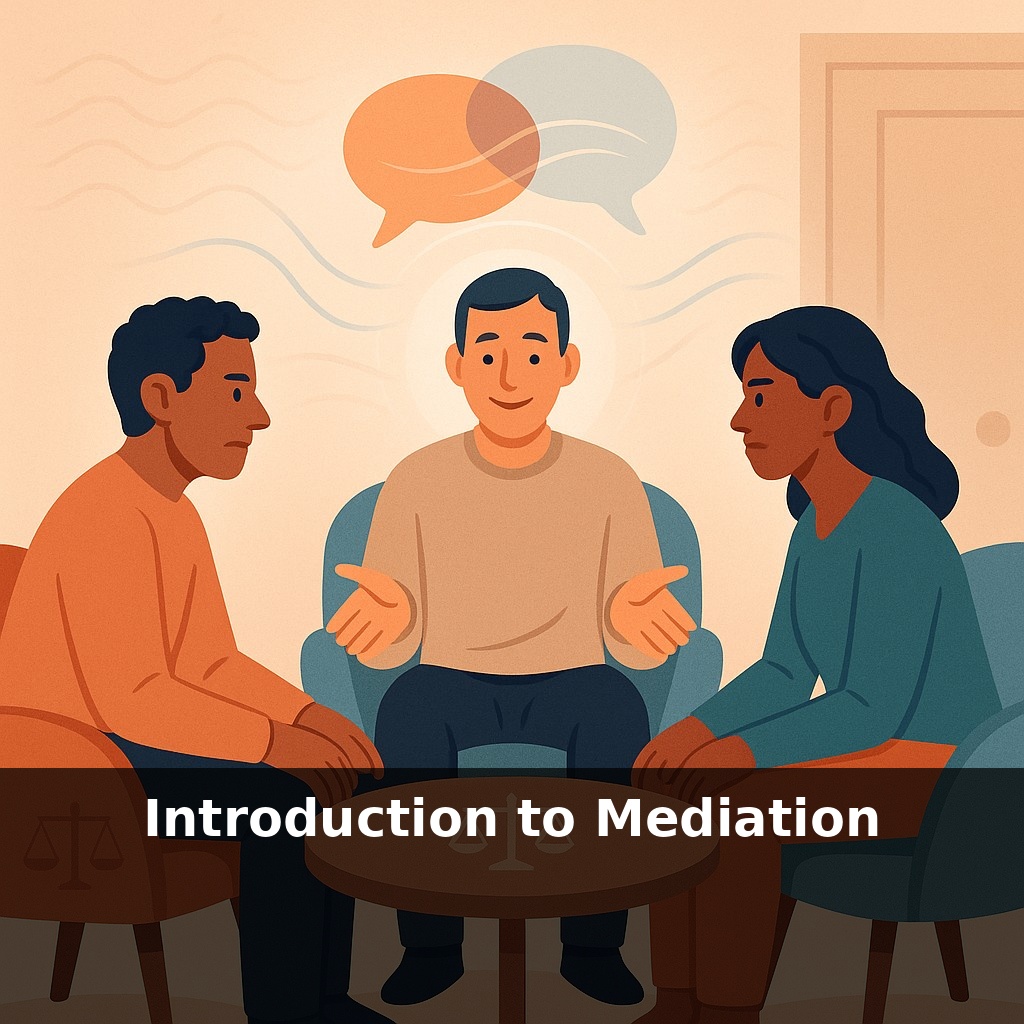
Walk into a mediation and, on the surface, it can look deceptively ordinary: a table, a few chairs, some water glasses, maybe a box of tissues. What makes it different from any other difficult meeting isn’t the furniture or the script; it’s three quiet design choices that change what’s possible in the room: voluntariness, confidentiality, and self‑determination.
Voluntariness means each person is choosing to be there—even if it’s under pressure or as “the lesser evil.” That choice matters. It signals, however faintly, “I’m at least open to exploring something other than war.” When workplaces or courts “mandate” mediation, the more effective programs still protect this: you can be required to try the conversation, but not to agree to anything.
Confidentiality is the second design choice. In legal terms, it’s backed by mediation privilege laws; in human terms, it’s permission to say the things you’d never risk in an email or a public hearing. People test ideas, admit doubts, or acknowledge partial responsibility precisely because they know those words won’t be replayed against them later. The mediator keeps those boundaries explicit: what can be shared, what stays in the vault, and how information moves between joint sessions and private caucuses.
Self‑determination is the third piece—and the one most people underestimate. No one in the room has the power to impose an outcome, so the content of any agreement has to grow out of the parties’ own calculations: legal risk, emotional cost, time, reputation, future connection. That’s why complex commercial disputes, co‑founder fallouts, and international business conflicts increasingly end up here: the people closest to the problem want the freedom to craft solutions that a statute or judge would never think to order—creative payment structures, new roles, joint statements, future business terms.
Behind the scenes, mediators are also tracking process fairness: Who’s speaking more? Who looks cornered? Does someone need a break or separate space to think? The aim isn’t to equalize power in life, but to even the odds enough that both sides can negotiate without being steamrolled. Over time, organizations that normalize this kind of structured, consent‑based dialogue aren’t just solving disputes faster; they’re training everyone involved to treat conflict less like a catastrophe and more like a difficult, but workable, design challenge.
A tech start‑up uses mediation not after a blow‑up, but when two co‑founders realize their visions are quietly diverging: one wants to scale fast, the other to consolidate. In a half‑day session, they sketch options that don’t fit any standard contract clause: a phased exit, advisory role, IP licensing, even a shared announcement to protect the company’s reputation. In a hospital, a surgeon and nurse stuck in months of silent resentment sit down with a mediator to dissect a near‑miss incident; the outcome isn’t blame, but a redesigned handoff checklist and an agreement about how to flag concerns in the next high‑pressure surgery. Community programs do something similar when neighbors clash over noise, parking, or cultural tensions. Instead of fighting through city complaints, they co‑create “living together” guidelines for their building or block. Viewed this way, mediation isn’t just for crises; it’s a way to prototype new agreements whenever old ones stop fitting real life.
Your challenge this week: Spot one place in your own relationships where the “old rules” feel too tight or outdated—maybe how you split chores, make big purchases, or share time between families. Don’t fix it yet. Instead, ask the other person for a short, future‑focused conversation with one ground rule: you’re not debating the past, you’re brainstorming what would make the next six months work better for both of you. Notice what changes when the goal shifts from defending positions to designing a new agreement together.
As mediation tools move into apps, video calls, even VR, “calling a mediator” could feel less like a last resort and more like booking a gym class for your relationships. Couples might schedule shoBuilding on the transformative power of mediation, guided check-ins after major life changes; teams could run quarterly “alignment sprints” to refresh expectations. Over time, the skill of co‑designing agreements may spread outward, like roots stabilizing a hillside, quietly making entire communities more resilient.
As you experiment with these tools, you may notice small “micro‑mediations” sneaking into daily life: pausing before replying, checking assumptions, inviting the other person’s version of events. Like tending a balcony garden, a few steady habits—regular pruning talks, occasional re‑planting of agreements—can turn even cramped relational spaces into something quietly alive.
To deepen your mediation skills practically, consider these focused exercises:
1) Download a free mediation agreement template from mediate.com and customize it for a low-stakes conflict in your life (like a schedule or chore dispute), so you can see how a real mediation structure looks on paper. 2) Watch one full mock mediation session on YouTube from the “Harvard Program on Negotiation” channel and jot down the exact questions the mediator uses to move from positions (“I want X”) to interests (“I need Y”), then practice those same questions in your next disagreement. 3) Grab a beginner-friendly mediation book like “The Mediator’s Handbook” (Moore & Beer) and complete just the chapter on setting ground rules, then use those sample ground rules word-for-word in a short 20-minute “mini-mediation” with a willing friend or family member about a real, but manageable, conflict.
From this course
The Mediator's Toolkit
6 episodesUnlock all episodes
Full access to 6 episodes and everything on OwlUp.
Subscribe — $1.99/monthLess than a coffee ☕ · Cancel anytime