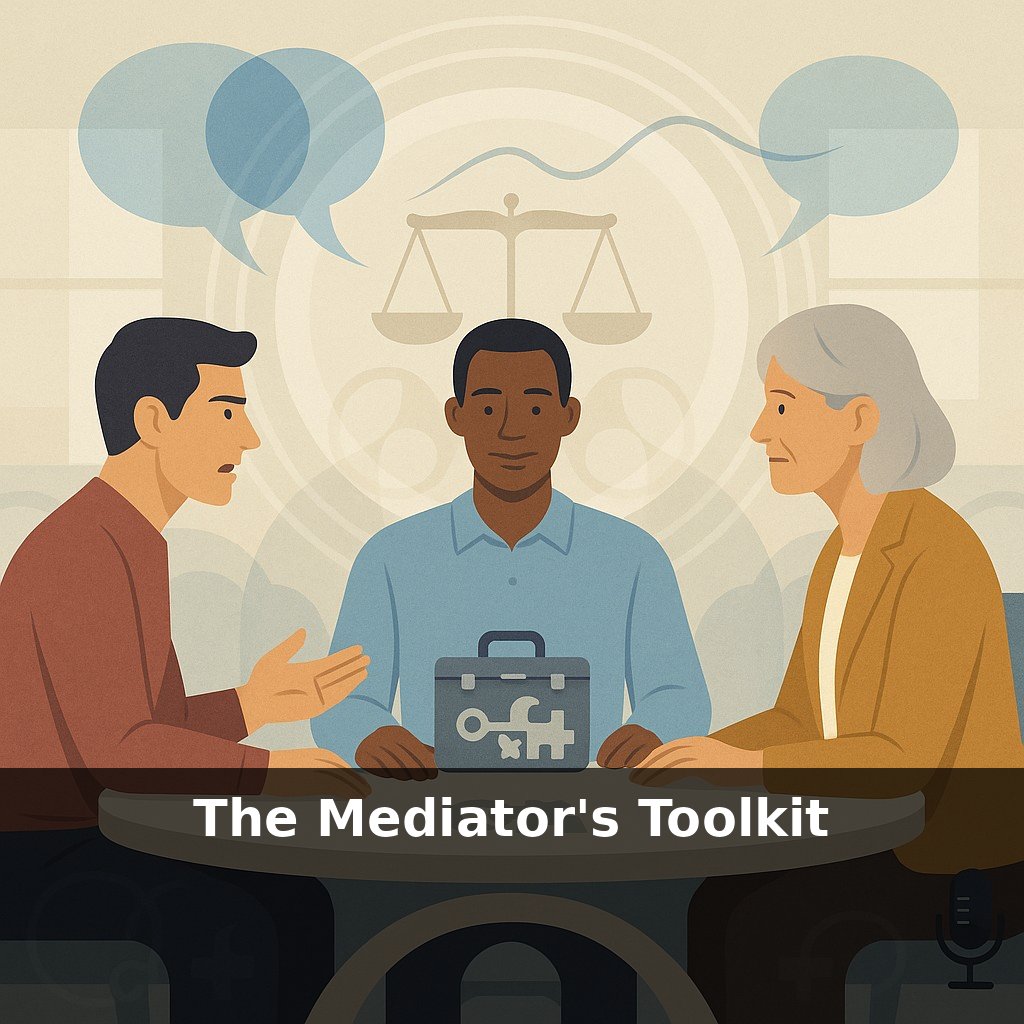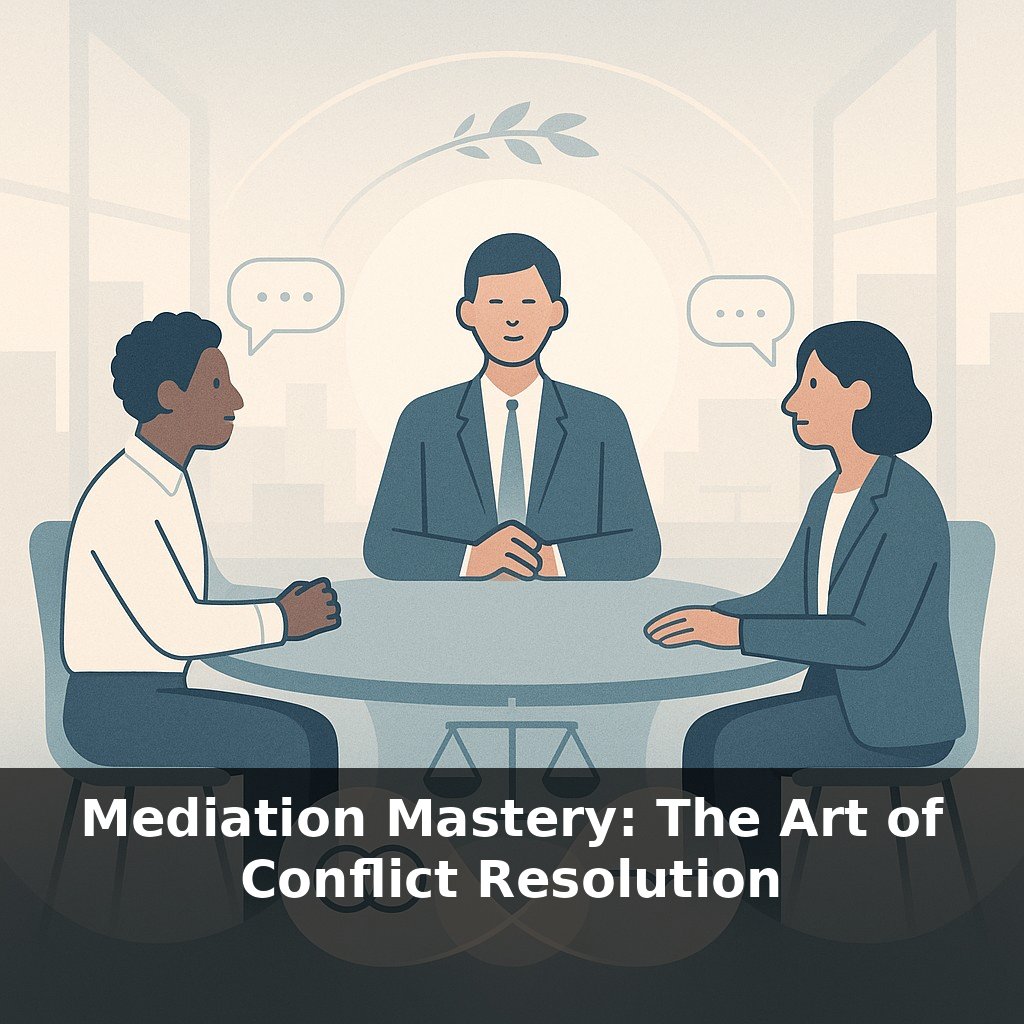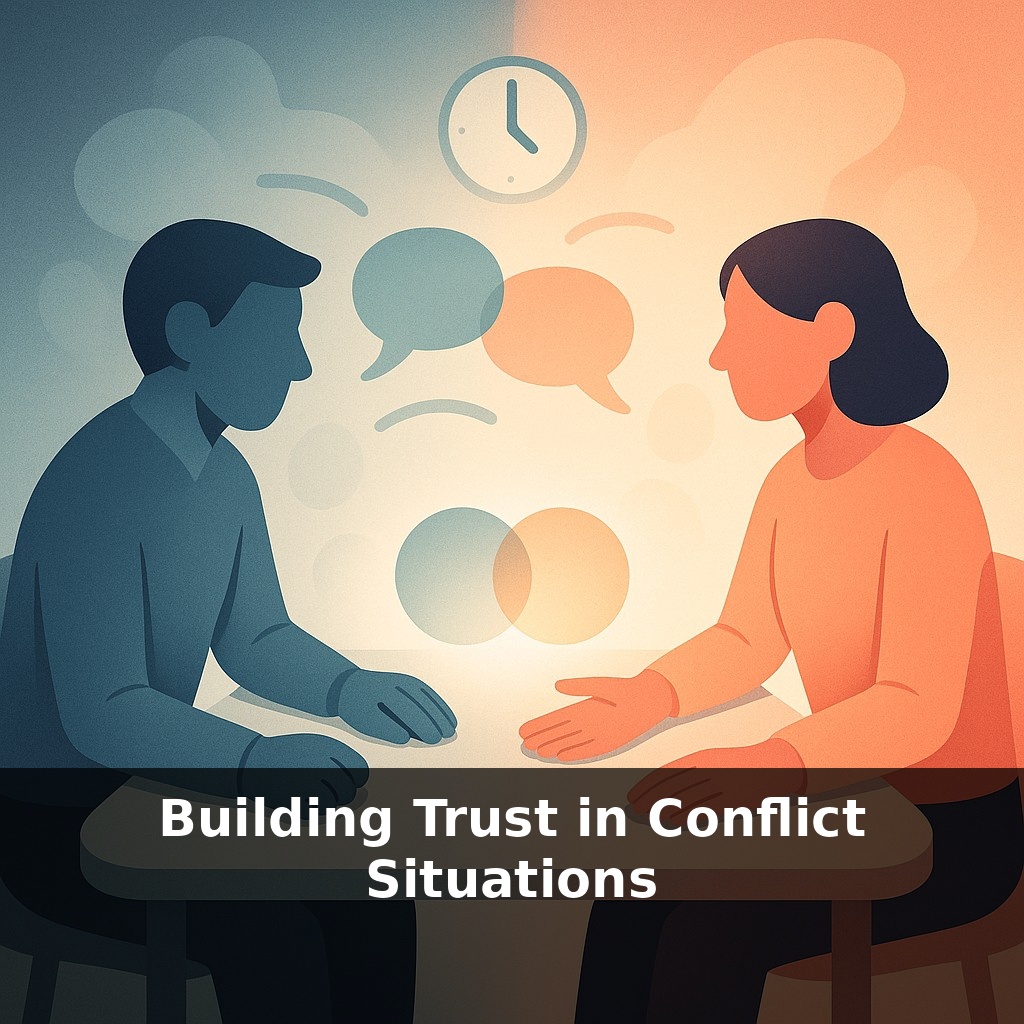
A ten-minute chat before a tough conversation can quietly double how much agreement people reach. Now, you’re in a tense meeting. Voices are tight, shoulders stiff. One sentence from you could shut everyone down—or open the door to trust so real that solutions start appearing.
That quiet 10‑minute opener is just one lever. Skilled mediators often pull several, in a precise order, to shift conflict from guarded to collaborative. In this episode, you’ll learn three moves you can use even without formal authority.
First, how to signal neutrality in the first 60 seconds—research suggests parties are up to 5× more likely to cooperate when they see you as even-handed. Second, how to design a mini “process roadmap” so everyone knows exactly what will happen next; in large online platforms, simply clarifying steps has pushed satisfaction above 80%. Third, how to repair tiny breaches—like a missed follow‑up—before they silently erode confidence.
We’ll ground each move in concrete scripts you can try this week, from team stand‑ups to family decisions, so you can turn tense interactions into spaces where people actually open up.
Today we’ll zoom in on what’s happening under the surface when you use those tools. Neuroscience studies show that when people sense even a slight threat, the amygdala can hijack the interaction in under 200 milliseconds—long before anyone chooses their words. But when they register safety, the prefrontal cortex stays online, and problem‑solving jumps. In one lab setup, simply knowing there was a fair, predictable process cut defensive reactions by about 40%. For you, that means small, visible behaviours—like stating ground rules or summarising both sides in under 30 seconds—can shift brains out of attack mode.
Here’s the counterintuitive part: you don’t build trust by asking people to “trust you.” You build it by making *specific, observable promises* and then delivering on them fast.
Think in three layers.
**Layer 1: Visible structure (first 3–5 minutes).** People check—often unconsciously—three questions: 1) “Is this fair?” 2) “Do I understand what’s happening?” 3) “Can I leave if this feels bad?”
Address them explicitly with short, concrete moves:
- Time boundaries: “We’ll take 20 minutes on this topic, then reassess.” Set a timer where everyone can see it. If you end at 19:30, you’ve just cast a tiny but powerful vote for reliability. - Participation rules with numbers: “Each of you gets up to 3 minutes, uninterrupted, to lay out what matters most. I’ll time it equally.” - Exit option: “If anyone feels stuck, we’ll pause for 2 minutes before deciding next steps.”
You’ve now created 3 checkable promises in under 120 seconds.
**Layer 2: Micro‑behaviours that signal even‑handedness.** Tiny actions move perceptions far more than big speeches. For the next conflict you help with, try:
- Equal airtime: if one person has spoken twice as long, say, “I’d like to hear from Alex for the next 2 minutes, then we’ll come back.” - Parallel questions: ask each side the *same* clarifying question (“What would ‘this went okay’ look like, specifically?”), and keep the wording within a few words.
Aim for at least 5 symmetry moves in a 30‑minute discussion. You’re not just *being* fair; you’re making fairness measurable.
**Layer 3: Calibrated self‑disclosure.** Research on ‘swift trust’ teams shows clarity of role plus small, relevant personal disclosures can speed cooperation within the first 15 minutes. The key is proportion and purpose.
- Role clarity: state, in one sentence, what you *can* and *cannot* do. - Personal cue (10–20 seconds): share something that normalises difficulty, not your full autobiography. For instance: “I’ve facilitated about 40 of these conversations; they’re rarely easy, but they often end with at least one unexpected point of agreement.”
Notice the pattern: every statement is short, verifiable, and tied to the process, not your opinions. Over a 30–45 minute interaction, stack 10–15 such moments. Each is a small, trackable proof that you mean what you say—and that’s what lets people risk saying what they really mean.
When you’re in the heat of a dispute, think in *moves per minute*, not hours of dialogue. For example, in a 30‑minute team conflict, aim to deliver 12–15 small reliability signals. That might look like: stating 3 ground rules in the first 2 minutes, doing 4 symmetry moves (“I’m going to ask each of you this same question”), 3 fast follow‑throughs (“You asked to come back to budget; we’re there now”), and 2 brief summaries that give equal weight to both sides’ concerns.
Watch for *tiny* norm breaks. In one workplace pilot, a manager who consistently started check‑ins 3 minutes late saw noticeable drop‑offs in disclosure within 2 weeks. When she committed to being in the room 5 minutes early for 10 meetings in a row, participation rebounded: people spoke about 25% more, and concrete proposals tripled—from 2 to 6 per meeting.
Your one analogy: trust here is like trail markers on a long hike—placed every 50–100 meters, not just at the start.
Leaders who treat conflict conversations as one‑off events will fall behind those who design repeatable systems. Over the next year, build a *trust-by-default* environment: log kept promises, rotate facilitators, and publish 1–2 page summaries of how difficult issues were handled. In hybrid teams, standardise three things: who speaks first, how turns are taken, and when decisions are revisited. Even simple norms like “72‑hour response on conflicts” can cut escalation rates by 20–30%.
Track one metric: visible reliability. In your next 3 conflicts, write down *beforehand* 3 specific process promises (e.g., equal time, clear next step, recap in email). Afterward, score yourself 0–1 on each. Over 3 weeks you’ll have up to 27 data points—enough to see which behaviours most consistently calm tension and unlock better options.
To go deeper, here are 3 next steps: 1) Print out the **“Ladder of Inference”** worksheet from the book *Crucial Conversations* (or download a free version from VitalSmarts/Crucial Learning) and use it to unpack one recent conflict where trust felt shaky—walk through the steps of what you saw, the story you told yourself, and what you can verify with the other person. 2) Grab the **Nonviolent Communication Feelings & Needs list** (available free on the Center for Nonviolent Communication website) and, before your next tough conversation, circle 3 feelings and 3 needs you want to express so you can enter the dialogue grounded instead of reactive. 3) Watch Brené Brown’s 10‑minute BRAVING segment (from her “Anatomy of Trust” talk on YouTube) and pick **one** BRAVING element—like “vault” or “integrity”—then send a short message to a colleague you’ve had tension with, explicitly practicing that element (e.g., “I realized I shared something that wasn’t mine to share, and I want to own that and recommit to being a vault.”).