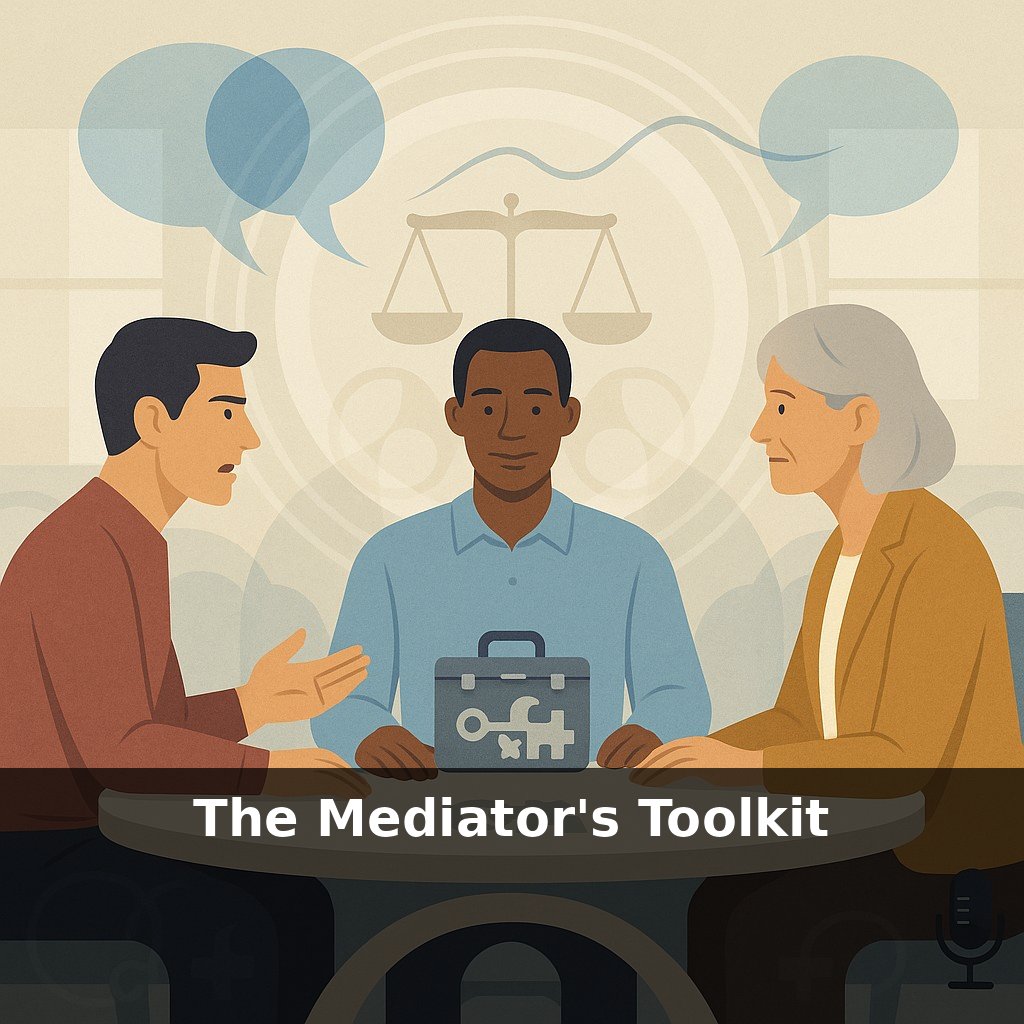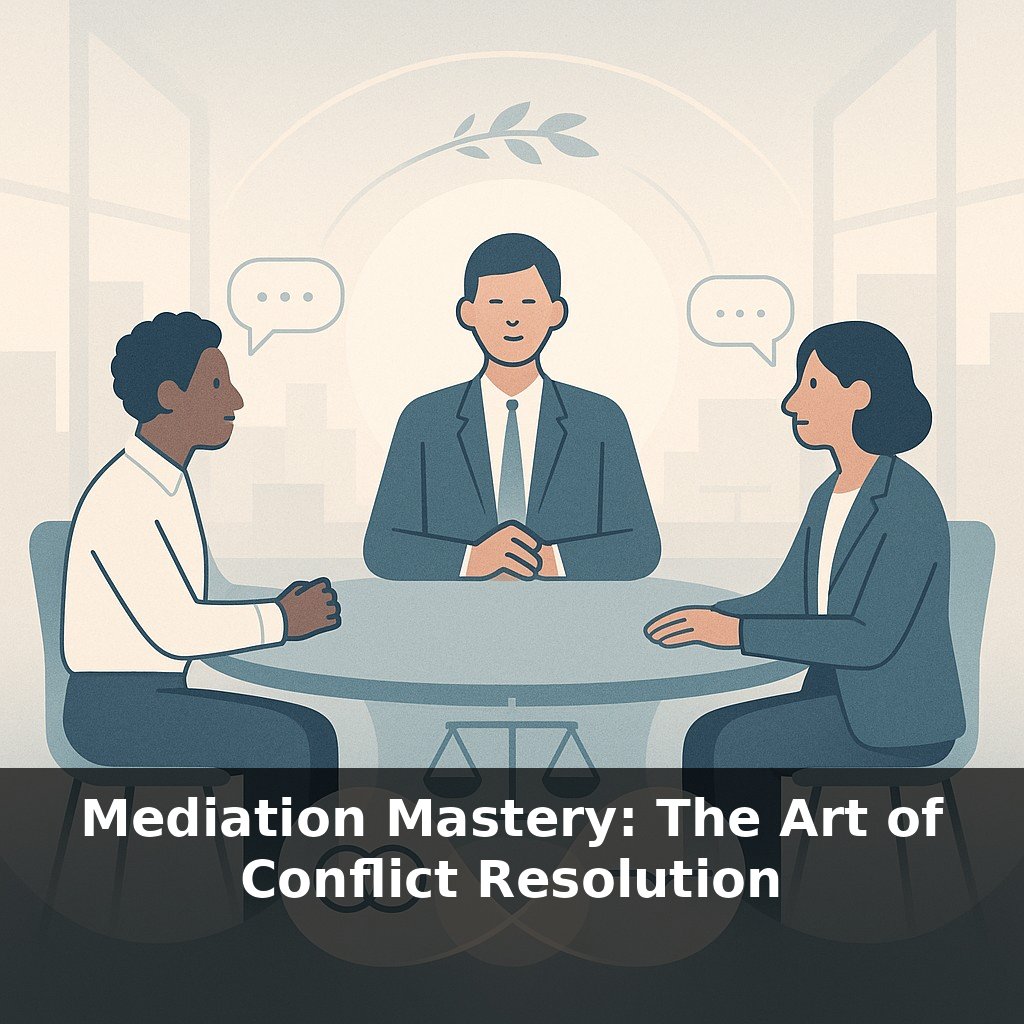
About three out of four civil disputes in the UK now settle in mediation instead of going all the way through court. Yet most people in conflict still cling to “I’m right, you’re wrong.” Today, we step into the room where a single question can quietly flip that script.
About US$54,000 versus under US$9,000. That’s the average cost gap between a court fight and a mediated resolution in the U.S.—and money is only part of the story. The real leverage mediators use is not louder arguments, but better questions that reveal what’s underneath the fight.
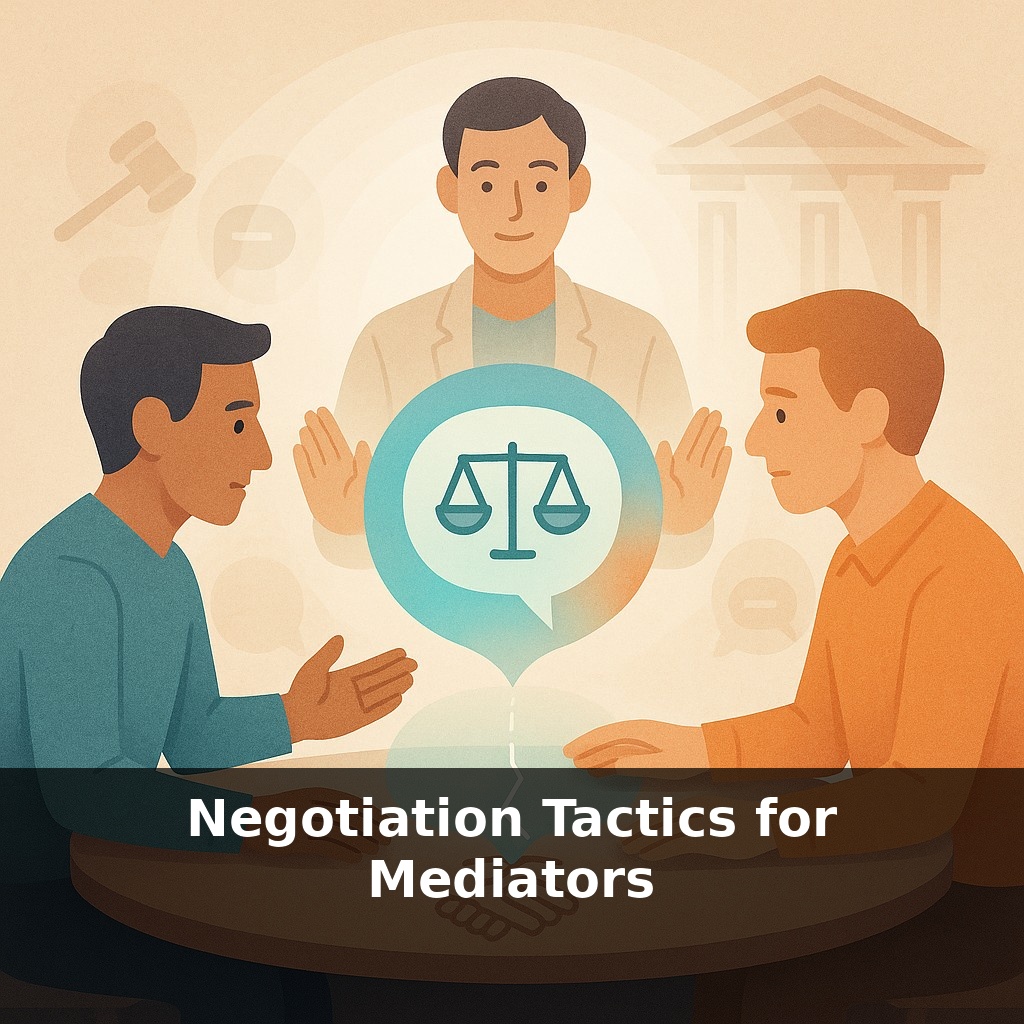
In this episode, we move from “who’s right” to “what would actually work,” using four core levers: uncovering interests, separating people from the problem, generating multiple options, and testing them against objective criteria. You’ll see how a couple stuck in a post-breakup standoff over their dog went from trading accusations to trading options, once the mediator stopped the tug-of-war and laid their concerns side by side like maps on a table. We’ll also peek at how online platforms quietly apply the same logic at massive scale, and what you can borrow for high-stakes relationship conflicts.
In close relationships, the “positions” are often tangled with history, fear, and unspoken expectations: “If you loved me, you’d move,” “If you respected me, you’d change jobs,” “If you cared about this family, you’d give up that friendship.” Mediators treat these as starting points, not verdicts. They notice patterns—who shuts down, who escalates, who keeps score—and use them as clues to the deeper map of security, autonomy, and fairness each person is protecting. Like a hiker reading changing trail markers, they adjust the route in real time, not to decide who’s right, but to find a path both can actually walk.
“Why are you really angry?” is usually the wrong question. It makes people defensive and pushes them back into rehearsed stories. Skilled mediators get underneath those stories without triggering a fresh round of blame.
They do it in three quiet moves.
First, they sharpen *where* the conversation happens. Instead of letting partners argue in a foggy “everything is bad,” they zoom in on具体 moments: “Let’s look at last Thursday night only. Walk me through what happened, step by step.” Micro-timing the conflict reveals patterns that global complaints hide: who felt ignored, who felt controlled, who felt ambushed.
Second, they shift from accusations to impact. When someone says, “You never back me up with the kids,” the mediator doesn’t debate the word “never.” They ask, “When that happened last weekend, what did it *mean* to you?” Meaning is where the real interests live: “It meant I’m alone in this,” “It meant you think I’m a bad parent,” “It meant work will always matter more than us.” Once meaning is on the table, anger starts to look more like information than attack.
Third, they structure curiosity so it doesn’t feel like cross‑examination. Open questions are targeted, not vague:
- Instead of “Why do you want that?” → “What would having that change for you day to day?” - Instead of “Can you compromise?” → “If we fast‑forward six months, what would ‘this is finally better’ look like in practical terms?” - Instead of “Are you willing to be flexible?” → “Where do you feel you *can’t* bend without losing something essential?”
Notice that each question invites a picture of a livable future, not a re‑litigation of the past.
Confidential one‑to‑one conversations are another underused tool. In private, a partner might finally say, “I’m terrified they’ll leave if I don’t agree,” or “I promised myself after my last relationship I’d never give up my financial independence again.” Those are not bargaining chips to be traded; they are design constraints. A good mediator asks permission before bringing any piece back into the joint room, and often paraphrases gently: “You’ve both said financial independence matters; let’s see how we can protect that *and* reduce the sense of distance between you.”
Like a landscape painter adjusting light and perspective until hidden shapes emerge, they keep refining the frame of the conversation until the deeper contours of each person’s needs become unmistakable—even to each other.
A couple arguing about holidays offers a useful test case. One insists on flying to see their parents “every Christmas, no discussion.” The other refuses: “We’re finally building our own traditions.” At first, it’s a binary tug-of-war. Using the micro‑zoom approach, you’d ask for last Christmas in detail: who packed, who cooked, where the tension spiked. You might hear one side describe feeling like a guest in their own life, while the other feels like a bridge between generations that can’t be abandoned.
From there, curiosity about impact turns the knot: “What did staying with your parents signal to you?” “What did staying home signal to you?” When safety and belonging show up in the answers, fresh options open: alternating years, splitting the visit, or creating a “family summit” weekend at another time of year.
Online dispute systems do a cruder version of this with structured prompts: they walk people through timed steps that quietly nudge them from defending demands toward describing tolerable futures.
As AI tools mature, guiding conflict may look less like steering a stormy boat and more like using radar and satellite maps. Real‑time sentiment analysis could flag moments when a couple is flooded or shutting down, prompting calmer reframes or breaks. Cross‑border video sessions may normalize mixed‑culture agreements about money, intimacy, and caregiving. In workplaces, relationship “health checks” might become as routine as financial audits, catching friction early and turning it into joint planning instead of crisis repair.
Your challenge this week: when tension appears, pause before defending your view and ask one precise, future‑focused question: “What would feel like a workable next step for you here?” Treat their answer like a rough sketch. Add one small stroke of your own—an adjustment, a boundary, or an offer—and notice how even tiny edits can redraw the whole scene.