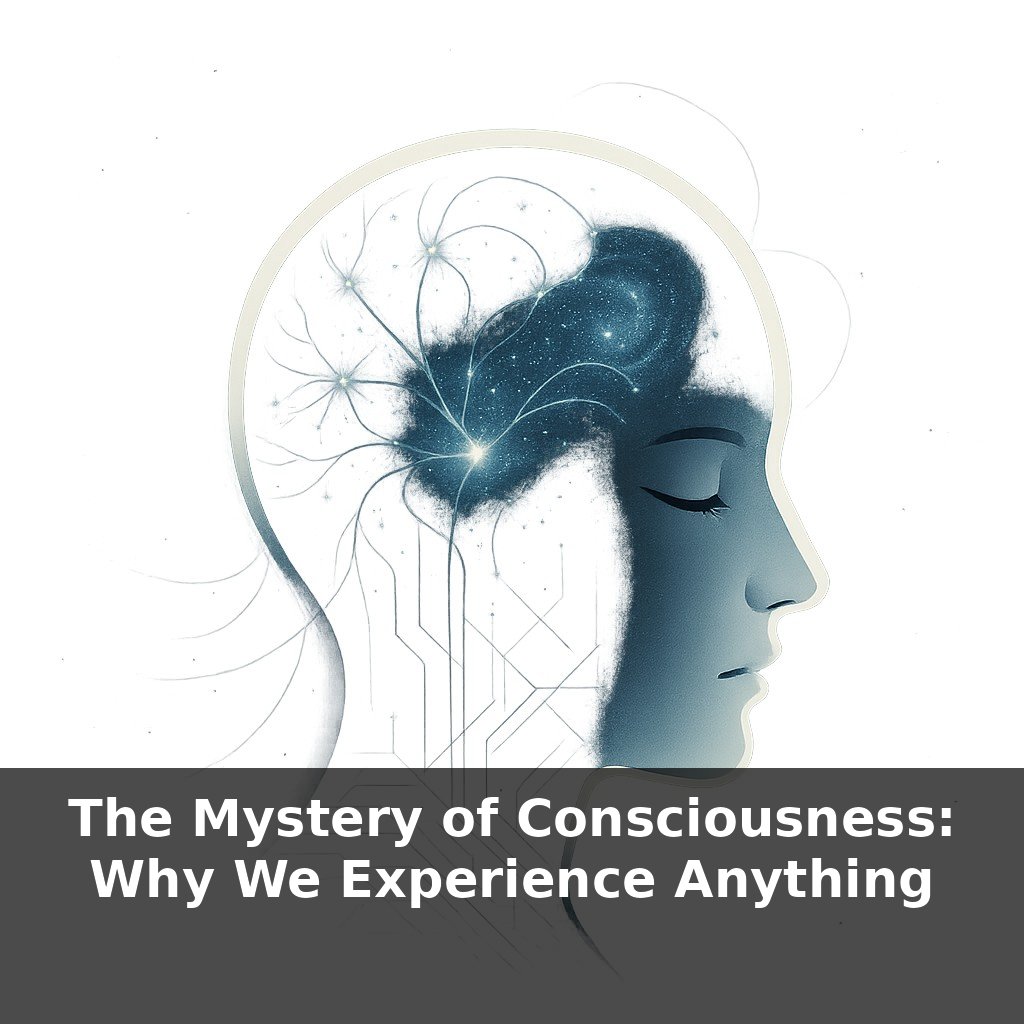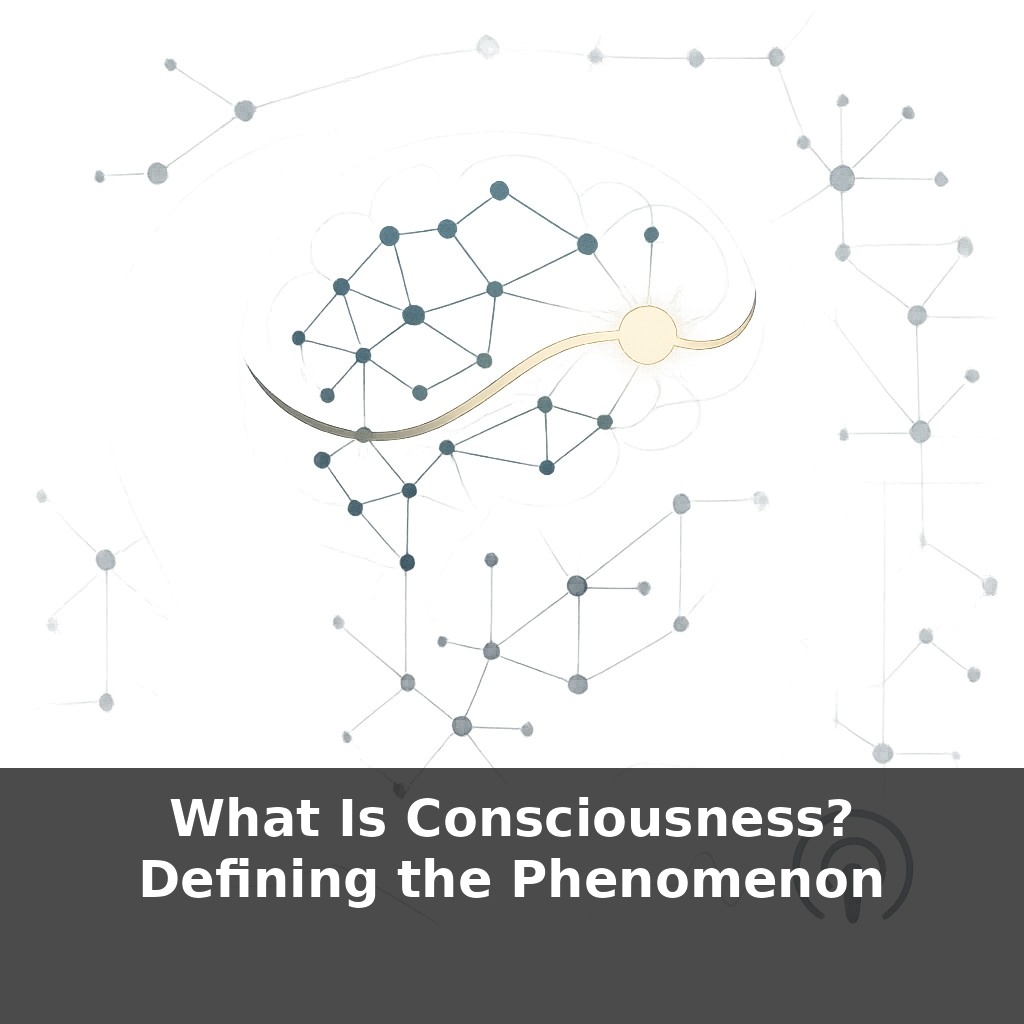
Right now, as you listen, most of your brain is working in total silence—no inner voice, no pictures, no story—yet a thin stream of experience feels like “you.” In this episode, we’ll pull that quiet machinery into the spotlight and ask: what, exactly, is that stream?
Scientists struggle to define consciousness not because it’s mystical, but because it’s oddly familiar and alien at the same time. You know what it feels like to be you, yet the closer we look, the slipperier that “feeling of being” becomes. Is consciousness simply being awake? That can’t be right—people under anesthesia can open their eyes without “being there.” Is it just thinking? Infants and nonverbal patients challenge that idea.
Modern research breaks the puzzle into pieces: how the brain supports basic wakefulness, and how specific experiences—like a sharp pain or a brief memory—light up within that waking state. Some theories say consciousness appears when information is globally broadcast; others say it’s about how tightly information is woven together, or whether the brain is “thinking about” its own activity. Each view tries to answer the same stubborn question: how do physical signals become lived experience at all?
Neuroscientists now probe this elusive “feel of being” with careful experiments. Instead of asking people vague questions about their inner life, they flash images for milliseconds, slip sounds under the threshold of hearing, or gently nudge the sleeping brain and record what happens. These tests reveal that our moment-to-moment sense of being here can fade, fracture, or even briefly misfire, without the body shutting down. It’s as if the brain sometimes “blinks” subjectively while staying online, offering rare windows into how fragile—and measurable—this familiar presence really is.
One way scientists make progress on such a slippery phenomenon is by asking a very practical question: in which situations does it clearly change? Rather than debating in the abstract, they go hunting for borderline cases where that familiar “being here” is dim, distorted, or oddly selective.
Sleep is one such natural laboratory. Across a typical night, your brain cycles through stages where outside sounds barely register, yet rich dream scenes unfold; in others, a loud noise snaps you awake instantly, but you recall “nothing” from just before. Careful recordings show that these shifts track changes in large-scale brain coordination: certain networks loosen their communication, then tighten up again as you approach awakening or vivid dreaming.
Clinical medicine adds starker examples. In so‑called “locked‑in” syndrome, a stroke can rob someone of almost all movement while leaving their inner life intact. In other disorders, a person may open their eyes, track objects, even reach for things, while later showing no sign of having had any inner movie at all. To sort these states, researchers combine bedside tests with brain imaging, watching how patterns of activity reorganize when patients follow a command silently versus when they appear unresponsive.
Then there are rare neurological conditions that split particular aspects of experience. In blindsight, damage to a specific visual area makes people insist they see nothing, yet they can guess the location of a flash or the direction of a moving bar better than chance. Somewhere, early visual circuits are still crunching data; what’s missing is the “there it is” feel. Conversely, in some hallucinations, the brain generates a confident “there it is” without matching input from the eyes or ears.
These contrasts suggest that the familiar sense of presence depends on more than raw sensory traffic or simple arousal. It seems to emerge when distributed brain regions fall into certain organized conversations, with some signals promoted, others muted, and feedback loops fine‑tuning what “makes the cut.” Just as a hospital triage nurse rapidly decides who needs urgent care and who can safely wait, the brain appears to operate a fast, mostly unconscious triage on competing signals—only a fraction ever becomes part of that fragile, reportable “here, now” that we call our conscious state.
Consider a surgical team adjusting anesthesia: too light, and a patient may later report sounds or pressure; too deep, and even loud commands vanish without trace. What changes isn’t just muscle tone, but patterns of long‑range brain communication that clinicians can track within seconds. Sleep labs do something similar on quieter nights, linking specific oscillations to whether volunteers later say, “Yes, I was dreaming right then.”
Everyday slips give more clues. When you “zone out” during a commute, the car stays in its lane, but whole stretches fail to register in memory. In lab tasks, people can correctly respond to flashed symbols they insist they never saw, hinting that useful processing can unfold without entering that reportable “scene.”
A bit like a weather map that suddenly shifts from scattered local showers to a continent‑spanning storm front, EEG and fMRI recordings show brief, system‑wide “ignitions” when a sound, word, or image actually makes it into that limited, access‑ready spotlight scientists are trying to capture.
An odd consequence of this research is how practical it could become. Consciousness might soon be treated less like a mystery and more like a vital sign, read off monitors much as we track blood oxygen. That could reshape end‑of‑life decisions, surgical standards, even how we judge whether an injured person is “still there.” Your challenge this week: notice moments when your inner narrative feels thin or fragmented, like a TV losing signal, and ask what changed in your body or surroundings.
Maybe the most unsettling twist is this: your “inner show” is not guaranteed. It can be dimmed by fever, grief, a song looped too long, or brightened by cold air and caffeine. Your challenge this week: treat that shifting clarity less as a given and more as a rare, unstable channel you’re lucky to tune into at all.