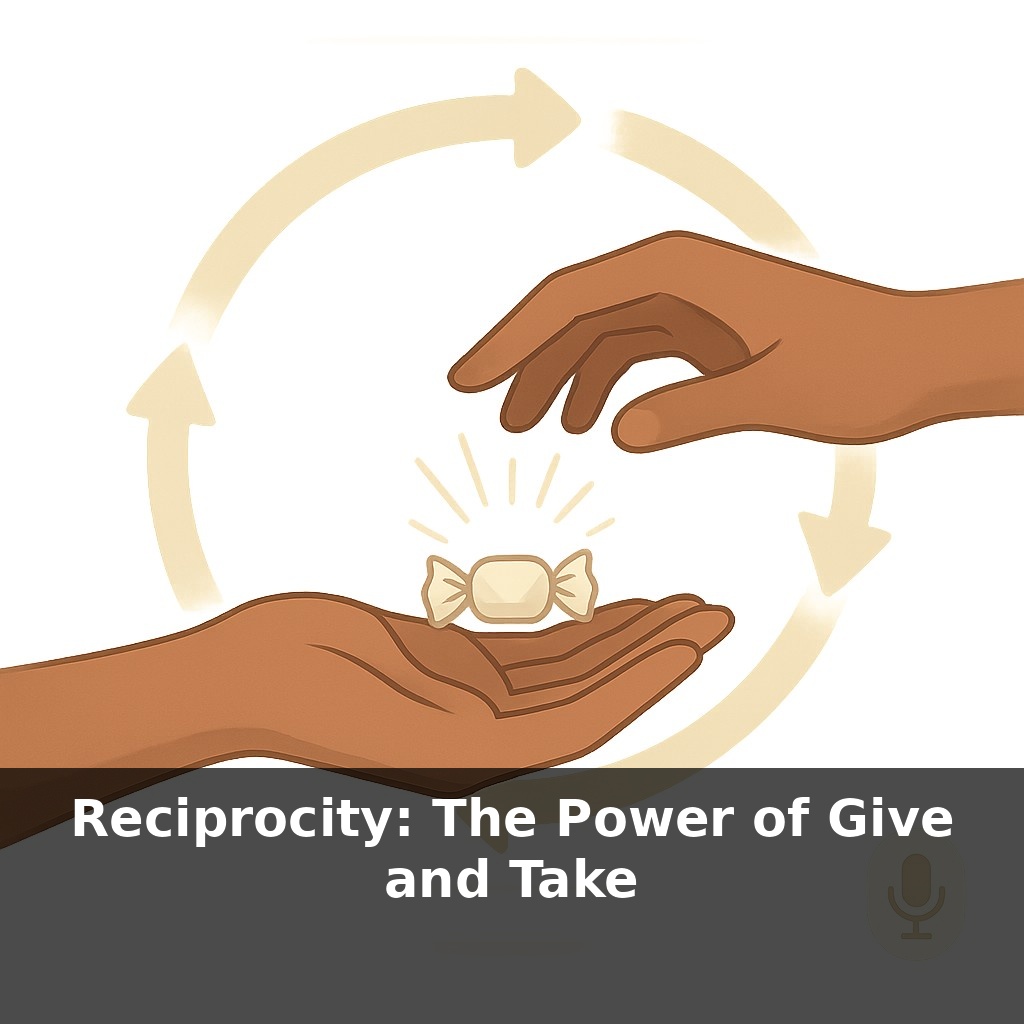
A stranger hands you a tiny gift—a flower, a mint, a sample—and suddenly you feel weirdly pulled toward saying yes. In one famous study, a ten-cent soda nudged people to spend several times more on raffle tickets. Why does giving a little so often unlock so much in return?
That quiet tug you feel to “give back” doesn’t just shape one‑off interactions; it quietly organizes entire systems we move through every day. Walk through a supermarket on a Saturday and you’ll see it in action: those free samples aren’t random kindness, they’re structured bets that a tiny taste today becomes a full cart purchase ten minutes later. Open your mailbox and the same pattern shows up in charity appeals that tuck in address labels or stickers; online, it’s in the way open‑source communities thrive when companies contribute code to the tools they depend on. What looks like generosity is often a long game of relationship‑building. The twist is that our minds rarely label it as strategy—we just feel a pull toward balance, and that pull can scale from a single interaction to whole business models and communities.
In close relationships, reciprocity gets subtler. Friends don’t track who paid for coffee last time in a spreadsheet, but there’s still a quiet expectation that care won’t flow only one way. We notice when a partner always calls in a crisis yet disappears when things are calm, or when a colleague happily accepts help but never stays late for anyone else. Online, creators give away tutorials, templates, or code, trusting that some fraction of people will subscribe, share, or support. The pattern shifts from immediate payback to a slower rhythm of give‑and‑take that signals, “I’m in this for the long term.”
While everyday reciprocity feels automatic, the research shows it has “dials” you can tune: timing, surprise, and sincerity.
First, timing. Acts that come *before* a request land very differently from ones that clearly follow it. When a restaurant server leaves a mint with the bill, tips reliably increase; when they add a second “just for you,” tips jump even more. The key isn’t the sugar, it’s that the gesture happens *before* the customer decides what to give back. In close relationships, proactive effort (“I picked this up because it made me think of you”) carries more weight than reactive effort (“I got this because you did X for me yesterday”).
Second, surprise. Expected perks feel like part of the deal; unexpected favors feel like true generosity. A company that quietly upgrades a customer’s shipping once in a while, without fanfare, often earns more loyalty than one that loudly advertises “VIP treatment” and then delivers the bare minimum. In friendships, the same principle shows up when someone checks in out of the blue on a hard day you didn’t announce.
Third, sincerity. People are astute at sensing when a “gift” is just a hook. That’s where weaponized reciprocity backfires. If a colleague helps only when a performance review is near, or a partner gives compliments only before asking for something big, the invisible ledger flips: instead of feeling grateful, we feel used. Research suggests that when people perceive an ulterior motive, the norm to repay weakens or even reverses—they may actively resist to reclaim a sense of autonomy.
Culture matters too. In some workplaces, help is freely traded and asking is encouraged; in others, hierarchies make upward reciprocity (from junior to senior) feel riskier. Online, public platforms introduce an audience: a quick “thanks for this thread, here’s what I’d add…” can both repay value and signal you as a generous contributor, making others more inclined to help you later.
And reciprocity isn’t always symmetrical. Emotional support might be “repaid” with practical help; a warm introduction might eventually boomerang back as unexpected protection, advocacy, or opportunities from someone else entirely in your network.
A junior designer stays late to polish a slide deck their manager presents the next morning. No one agreed to anything, yet a week later, that same manager quietly pulls the junior into a high‑visibility meeting. Nothing was owed, exactly, but the relationship “remembered” the earlier extra mile and answered with access instead of applause.
In another context, think of a small online community where one member always writes thoughtful feedback on others’ posts. Over time, that person becomes the first name people tag when they’re stuck, and the first one everyone rallies around when they launch a project. The return isn’t just more comments; it’s a protective circle of attention and goodwill.
You can see similar patterns in mentoring chains: a senior engineer invests in an intern, who later becomes a hiring manager and starts favoring that company for contracts. What began as a few conversations quietly compounds into reputational “interest” that pays out years later, across roles and organizations.
Reciprocity’s future may look less like favors between two people and more like a networked web of exchanges. As AI learns when we’re most receptive to help, we’ll face offers that feel eerily “just in time,” blurring care and calculus. Companies will be judged on how well they “give back” to ecosystems—users, creators, even competitors. And in remote life, tiny digital gestures—a forwarded lead, a quick Loom explainer—could quietly become the new social infrastructure.
So the real question becomes: what kind of trail do you want your gestures to leave behind you? Think of each thoughtful nudge—sharing context, fixing a quiet problem, crediting others in public—as planting tiny signposts. Over time they sketch a map of who you are, so that when stakes rise, people already know which way to walk.
Try this experiment: For the next 7 days, pick one person you regularly interact with (a coworker, friend, or client) and intentionally do one *unrequested*, clearly useful favor for them that matches something they’ve mentioned needing—like sharing a tailored resource, making a thoughtful introduction, or taking an annoying task off their plate. Don’t mention reciprocity, and don’t hint that you expect anything back—just be specific: “I remembered you’re struggling with X, so I did Y to help.” Track how their behavior toward you changes over the week (responsiveness, warmth, willingness to help, openness), and notice whether they initiate any unexpected help or opportunities for you.