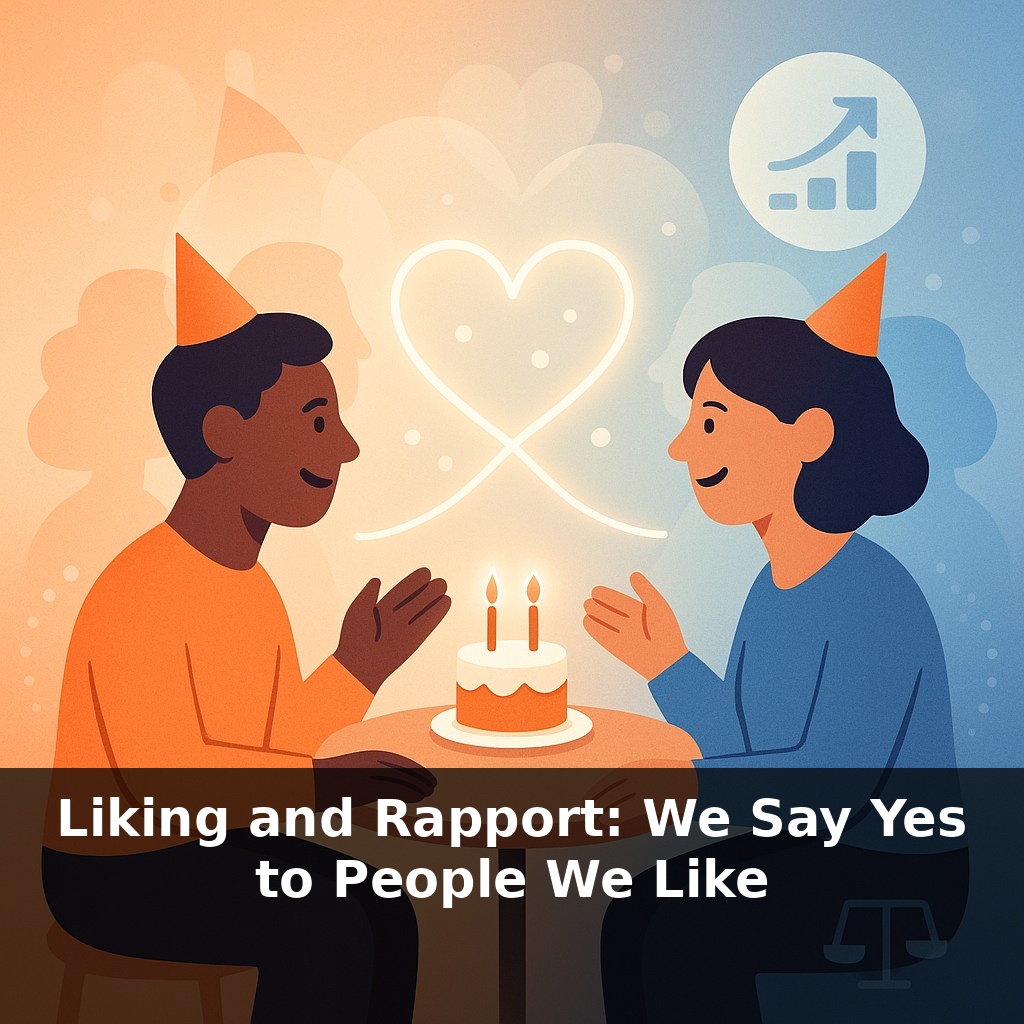
One tiny detail—sharing a birthday—can quietly nudge people to give more in a negotiation. Now jump to a sales meeting where two almost identical pitches get wildly different results, just because one presenter feels warmer and more familiar. What’s really driving that gap?
“Similarity boosts compliance by 27%.” That’s not a soft-skill slogan—that’s a meta-analysis of 42 studies. So when one salesperson casually mentions growing up in the same state as you, and another dives straight into specs, the first one is already playing with stacked odds.
But liking isn’t just about being “nice” or smiling more. It’s a set of cues your brain tracks rapidly: Do they seem like my kind of person? Do they see me? Are they subtly signaling, “I’m on your side”? You’ve felt it when a new colleague instantly “gets” your sense of humor, or a doctor remembers a tiny detail from your last visit and you suddenly trust their recommendation more.
In this episode, we’ll unpack how perceived similarity, genuine regard, and small signals of warmth quietly tilt decisions—often before a single argument lands.
So where does this actually play out in real life? Consider a doctor explaining treatment options, a manager pitching a risky project, or a friend asking for a big favor. The data show that when we feel a quiet, authentic connection, our brains treat their words less like a sales pitch and more like advice from “our people.” That’s why world-class salespeople obsess over tiny personal details, and why first impressions in the first 7 seconds can tilt outcomes. In relationships and business alike, the messenger’s human presence often steers decisions as much as the message’s logic.
You’ve already seen how quickly our brains sort people into “mine” or “not mine.” Now zoom in on what actually flips that internal switch from neutral to “I like this person; I’ll listen.”
One big driver is micro-attunement: the subtle way someone tunes themselves to you in real time. Think of a conversation where the other person matches your pace—speeding up when you’re excited, slowing down when you’re reflective, pausing when you hit something sensitive. That moment-to-moment adjustment tells your nervous system, “They’re tracking me,” which makes later requests feel less like pressure and more like partnership.
Another is selective vulnerability. Not oversharing, but revealing something slightly imperfect or human—a small mistake they learned from, a genuine uncertainty, a personal stake in the outcome. When this comes after competence is clear, it actually increases credibility: “They’re capable and real,” not a polished script.
Then there’s “identity echoing”: reflecting back the parts of someone’s self-image that matter most to them. A manager who says, “You’re the kind of person who cares about craft, not just deadlines” is doing more than flattering; they’re aligning their ask with how you already see yourself. That identity match can carry more weight than a spreadsheet of pros and cons.
Digital communication adds its own layer. Tiny behaviors—responding to messages with clear timestamps, using short voice notes instead of long walls of text, turning cameras on early in video calls and greeting people by name—compensate for the missing physical cues and keep the interaction feeling human rather than transactional.
And timing matters. Making a small, easy-to-grant request right after a shared laugh, a solved problem, or a moment of being understood leverages a peak in positive affect. The “yes” that follows isn’t random; it’s riding a wave your prior behavior created.
Your challenge this week: In three different interactions—a colleague, a client, and someone in your personal life—deliberately try one new behavior from above: micro-attunement, selective vulnerability, or identity echoing. Don’t announce it, don’t overdo it. Just observe: Does the tone shift? Do they open up more? Are they more receptive when you later need something? By the end of the week, pinpoint which behavior felt most natural to you—and where it quietly changed the outcome.
A software founder once told me he thinks of his onboarding emails “like a first coffee, not a brochure.” Instead of blasting new users with features, he opens with a quick story about struggling with the same problem they have now, then asks a single, specific question about their workflow. Reply rates tripled—not because the product changed, but because the relationship frame did.
In a hospital study, one group of surgeons added a 40‑second script before procedures: they said each patient’s name, one personal detail, and invited questions. Same surgeries, same risks—but post‑op satisfaction scores jumped, and follow‑through on instructions improved.
Think of it like updating software in the background: you’re still running the same core arguments, but subtle rapport cues quietly upgrade how those arguments are processed. A tough performance review delivered by someone who has previously noticed your strengths, or remembered a small preference, lands as guidance rather than attack.
As biometric sensors shrink and social data piles up, “rapport” stops being a fuzzy feeling and becomes something you can measure—like a financial dashboard for your relationships. Early tools already flag stress in your voice or disengagement in your posture; next‑gen systems may suggest micro‑adjustments in real time. The paradox: as tech exposes shallow flattery, the rare skill will be using these insights to be more human, not more scripted.
In the end, rapport is less a trick and more a long game. Each honest check‑in, each remembered detail, is like a small deposit in a trust account that quietly earns compound interest. Over time, those deposits turn hard conversations into joint problem‑solving and stretch moments of doubt into chances to say, “Let’s figure this out together.”
Try this experiment: For the next 24 hours, consciously mirror one person’s pace, posture, and key phrases in a conversation (without overdoing it) and notice how their warmth or openness shifts. Before you talk, quickly find and genuinely comment on one specific similarity you share (same hometown, hobby, favorite food, sports team) instead of using a generic compliment. During the conversation, sprinkle in their name 2–3 times and watch for changes in eye contact, smiles, and how much they share. Afterward, compare how easy it was to get a “yes” (agreement, help, or next-step commitment) versus similar conversations where you didn’t use these liking and rapport tools.