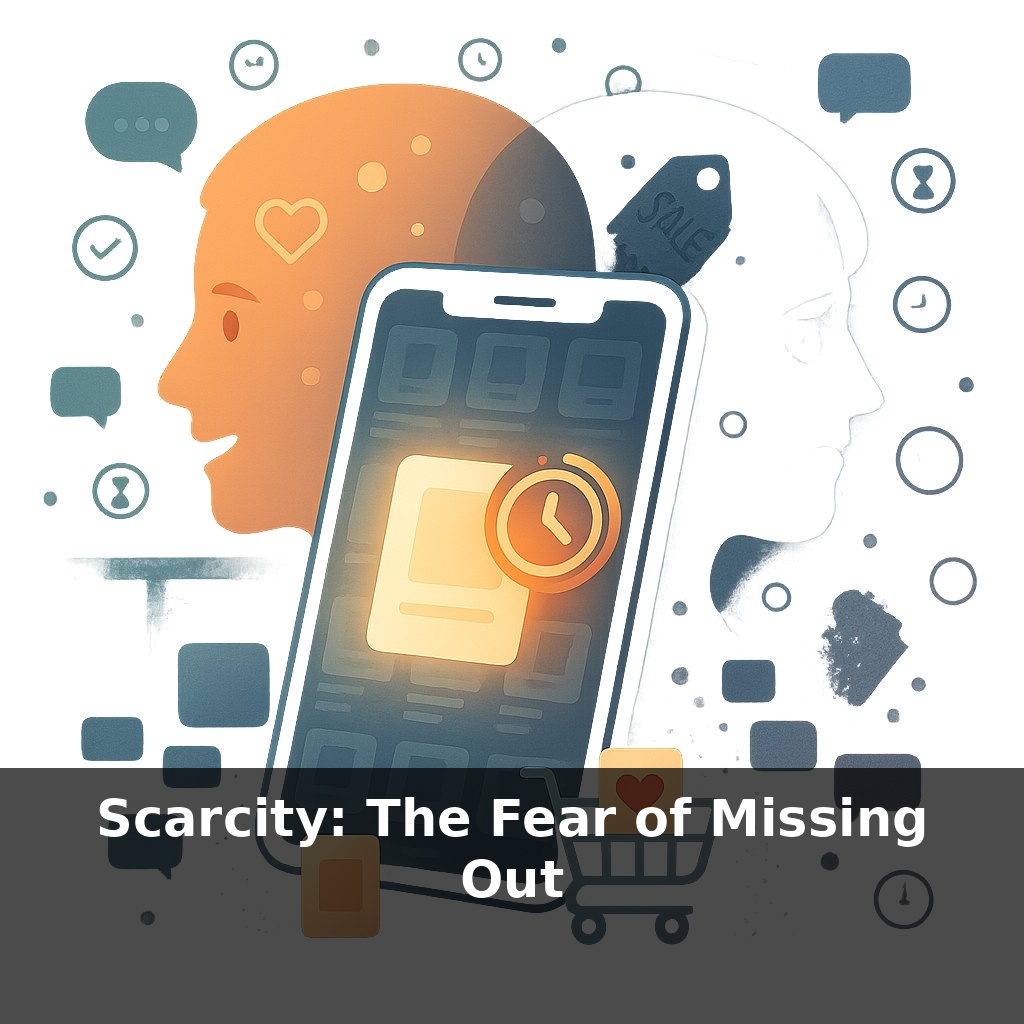
About half of shoppers say a “limited-time offer” nudges them to buy—yet most deals quietly return a week later. You’re scrolling, the clock is ticking, and suddenly that random gadget feels urgent. Why does “almost gone” flip a switch in your brain faster than “actually useful”?
64% of people admit they’re swayed by “limited-time” deals—yet most also say they later regret at least some of those rushed buys. That mix of excitement and “why did I do that?” is the emotional fingerprint of scarcity and FOMO working together.
But this isn’t just about sales banners or countdown clocks. Scarcity shows up in social life too: the friend who only texts when they’re busy, the crush who replies once a day, the “members-only” group chat you’re not in. We often chase what feels rare, not what’s actually good for us.
In relationships, attention, affection, and availability can quietly turn into “limited editions.” When someone pulls back, our brain may flag them as more valuable, even if nothing else changed. Understanding that shift is your first defense against confusing “hard to get” with “good for me.”
Scarcity doesn’t just change what we buy; it changes how we behave around people. When someone suddenly becomes “busy,” cancels plans, or starts replying less, our brain can quietly shift into chase mode. The same thing happens with social circles: an invite-only group chat, a “close friends” story we’re not on, a partner who keeps parts of their life off-limits. That gap between what we want and what we’re allowed to have adds psychological pressure. We’re not just choosing anymore; we’re trying to prove we deserve access—and that’s where our judgment can start to blur.
Marketers have tested this scarcity effect with products; people test it—consciously or not—with their presence. In Worchel’s cookie study, nothing about the cookie changed; only the number in the jar did. Relationships can work the same way: the “cookie” (someone’s actual character) stays constant, but the perception of access shifts.
That’s why someone who texts normally for months, then suddenly becomes elusive, can start to feel more “valuable” without becoming any kinder, more compatible, or more invested. Your brain is reacting to the shrinking jar, not the cookie. Loss aversion quietly kicks in: you’re less focused on “Do I like how I’m treated?” and more on “I don’t want to lose this.”
Online dynamics amplify this. A partner posting with others but not you, a friend adding some people to “close friends” while you stay outside, a creator hosting “invite-only” livestreams—these aren’t just social choices; they’re signals about who gets access. Being on the outside can trigger a subtle status alarm: “What do they have that I don’t?” That question can pull you toward proving yourself instead of protecting yourself.
Scarcity also shows up in timing. The person who’s only free at midnight, the friend who’s “slammed” for weeks but somehow appears in everyone else’s stories, the ex who reappears only when your life is going well—each is offering sporadic access. Your calendar can actually become the battlefield where worth and priority are negotiated.
In markets, engineered scarcity can inflate bubbles—think hyped IPOs or crypto runs where even professionals jump in late because “everyone else is getting rich.” Socially, similar waves appear: the new private community, the “hot” creator everyone’s DMing, the dating app match who seems to have endless options. When you feel drawn to compete, it’s useful to ask: “Am I choosing this person or just reacting to the crowd around them?”
The hardest part is that some scarcity is real: time, attention, emotional energy. Not everyone can be equally close to everyone. The key shift is moving from “How do I get picked?” to “Given my own limited resources, who has earned more of me?”
Think about three patterns you might recognize. First, the “vanishing texter”: they reply instantly for days, then go silent for 24 hours and drop a short, charming message. Nothing concrete is offered—no plan, no commitment—but the inconsistency makes each tiny reply feel like a win. Second, the “VIP friend”: they often say, “We HAVE to hang out,” then only confirm if no “better” plans appear. Their time looks premium mainly because it’s unpredictable, not because shared moments are truly meaningful. Third, the “exclusive ex”: they’re distant for months, then suddenly watch your stories, like old photos, and send a late-night “miss you.” The contact is rare enough that it feels loaded, but if you zoom out, the pattern is all take, no steady give. A useful comparison from tech: a glitchy app that works just often enough to keep you trying. The issue isn’t your patience; it’s that the system is designed around your repeated attempts, not your satisfaction.
As algorithms learn your habits, they can quietly script when and how you feel left out—like a thermostat that lowers the heat just enough to keep you hovering near discomfort. Personalized drops, private betas, and invite-only chats can start to feel less like options and more like tests of your worth. The deeper question becomes: who controls the dial? Future tools may need “scarcity labels,” the way food has ingredients, so you can see when urgency is organic and when it’s engineered.
Noticing these patterns doesn’t mean you must reject anything rare; it means you can choose it on purpose. Before jumping, you might ask, “Would this still matter if everyone had access?” Let your answer, not the timer, lead. Like choosing a playlist, you can skip tracks that spike your heartbeat but drain your mood, and replay what actually leaves you calmer and more connected.
Start with this tiny habit: When you feel that quick jolt of “I’m going to miss out if I don’t jump on this” (like a 24-hour sale, a limited spot workshop, or a friend’s invite you don’t actually want), quietly say to yourself, “Pause—what do I really want a week from now?” and take one slow, deep breath. If the urge still feels huge, quickly glance at your calendar and ask, “What would this replace that I already care about?” Then, if it still feels right, you can say yes—otherwise, give yourself permission to pass and notice the relief in your body for just three seconds.