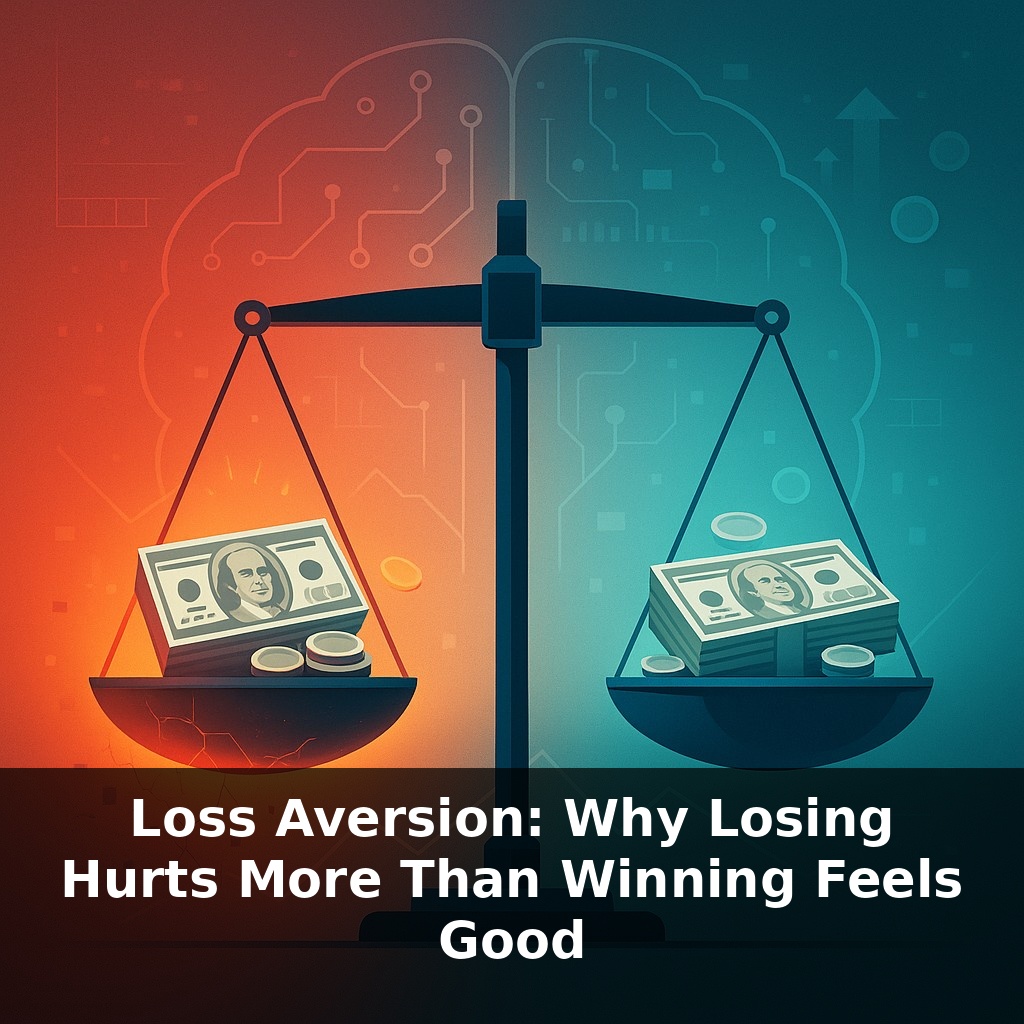
Losing a hundred dollars hurts about twice as much as winning a hundred feels good. Yet every day, you say “no” to raises, better investments, and smarter bets without noticing. In this episode, we’ll explore why your brain fears losses so fiercely—and how that quietly costs you.
You’ve seen how loss aversion tilts the scale in your head; now let’s watch it quietly rearrange your money in real life. It shows up when you keep a sinking stock because selling would “lock in” the loss, or when you pay extra for an extended warranty on a gadget that’s statistically unlikely to break. It nudges you to reject a fair 50–50 bet unless the upside is almost twice the downside—and that same instinct can push you to skip promotions that require short-term risk, or delay investing because markets “feel” dangerous. Companies, policymakers, and product designers know this. From automatically enrolling you in retirement plans to how apps frame fees and discounts, modern systems are built around your bias. In this episode, we’ll trace those designs, see how they exploit or protect you, and map out ways to turn this built‑in fear of losing into a tool rather than a trap.
That built‑in fear of losing doesn’t just influence your choices; it reshapes the worlds of investing, shopping, and even saving for retirement. Designers quietly ask: “How would someone act if they hated losses?” and then arrange defaults, buttons, and nudges around that answer. That’s why some apps hide the “sell” option behind extra taps, while others highlight “limited‑time” discounts in bright red. Loss aversion turns into a kind of economic gravity: you don’t see it, but prices, policies, and product features orbit around it. In this episode, we’ll follow the money and see who’s using that gravity for you—and who’s using it against you.
Most people won’t accept a coin flip where they lose $100 unless they can win about $200. That same 2‑to‑1 ratio quietly shapes how banks, apps, and employers present choices to you—and how you react.
Start with investing. The disposition effect means many investors cling to losers and sell winners. But zoom out: that pattern doesn’t just hurt your portfolio; it also feeds trading volume and fee revenue. Brokerages once lived off this churn. Today, even with “zero‑commission” trading, they can profit through payment for order flow and margin interest—both amplified by your reluctance to crystallize a loss and your eagerness to “let winners ride.” Your emotions generate trades; the system monetizes the friction.
On the other side, retirement systems increasingly try to protect you from your own loss sensitivity. Automatic 401(k) enrollment works not only because of inertia, but because opting out “feels” like giving up future money, while opting in would have felt like losing current cash. Target‑date funds then bundle this with another layer: gradual risk reduction over time, so you’re less likely to see gut‑wrenching short‑term drops that might scare you out of the market entirely.
Marketers lean heavily on loss‑framed messaging: “Don’t miss out,” “Last chance,” “Only 3 seats left.” The point isn’t just urgency; it’s to flip a neutral decision into one where inaction looks like a loss. Free trials with auto‑renew work similarly. Day 1, you gain something; day 7, cancellation feels like forfeiting access, not saving money. That’s why cancellation flows are so sticky: every extra click amplifies the tiny sting of “giving something up.”
Even negotiations and salaries are framed around loss sensitivity. Employers know cutting nominal pay is radioactive, so they often freeze raises, trim bonuses, or change titles instead—small restructurings that avoid triggering a visible “pay cut.” You may accept a worse total package if it’s sliced into softer, less loss‑shaped pieces.
Your challenge this week: notice every time a company makes “doing nothing” the path of least psychological pain. Is the default choice actually best for you—or just best for them?
A streaming service quietly raises prices, but throws in a “new exclusive series.” Many subscribers stay, not because the show is irresistible, but because canceling feels like giving something up. Gyms do something similar: heavy sign‑up bonuses, light usage. Once you’ve paid, walking away feels like waste, so you keep the membership and skip the workouts.
Even governments leverage this. Tax refunds are framed as “getting money back,” but over‑withholding means you gave the state an interest‑free loan. Many prefer that “bonus” to the feeling of owing a bill in April.
Loss sensitivity also shapes tech design. Social apps send “You missed 5 updates” emails. You’re not being offered something new; you’re reminded of what you’re supposedly falling behind on. That’s the nudge back into the feed.
Think of a sports fan replaying a championship loss more intensely than any win. Markets, apps, and policies are scripted for that fan—not the rational calculator we like to imagine.
Future money tools won’t just track your risk; they’ll sense your pain point. Robo‑advisors may quietly cap how much red you see in a day, like dimming harsh stage lights so the show goes on. ESG platforms could frame impact as “avoiding harm” to match how your brain tallies losses. Regulators will face a moving target: AI that learns exactly which canceled discount or vanishing seat makes you flinch. The frontier question isn’t “What do you want?” but “What loss will you silently tolerate?”
Loss aversion won’t vanish, but you can learn its shape. Treat it like a strong river current: dangerous if you ignore it, useful if you steer with it. When choices feel oddly “heavy,” that’s a clue your mental scales are tilted. The real skill with money isn’t feeling less—it’s noticing when the fear of losing is louder than the life you’re aiming for.
To go deeper, here are 3 next steps: (1) Install a free investing simulator like Investopedia Simulator or Wall Street Survivor and run a 7‑day experiment where you *must* execute at least one sell and one buy each day, then journal which moves felt hardest and compare that to the actual numbers. (2) Read the section on loss aversion and the endowment effect in Daniel Kahneman’s *Thinking, Fast and Slow*, and while you read, keep your brokerage or savings app open and tag at least three “I’m just holding it because I hate losing” positions. (3) Use a commitment tool like StickK or Beeminder to set a concrete “pre‑commitment rule” (for example, “I will rebalance my portfolio to 60/40 stocks-bonds every quarter regardless of recent losses”) and put real money or a social penalty on the line so the system—not your emotions—makes the next hard decision.