Most people would rather waste years of effort than admit a project is dead. A tech CEO keeps pouring cash into a failing app. A couple forces themselves through a miserable vacation. Why do we cling harder the worse things get—and how do you know when to finally walk away?
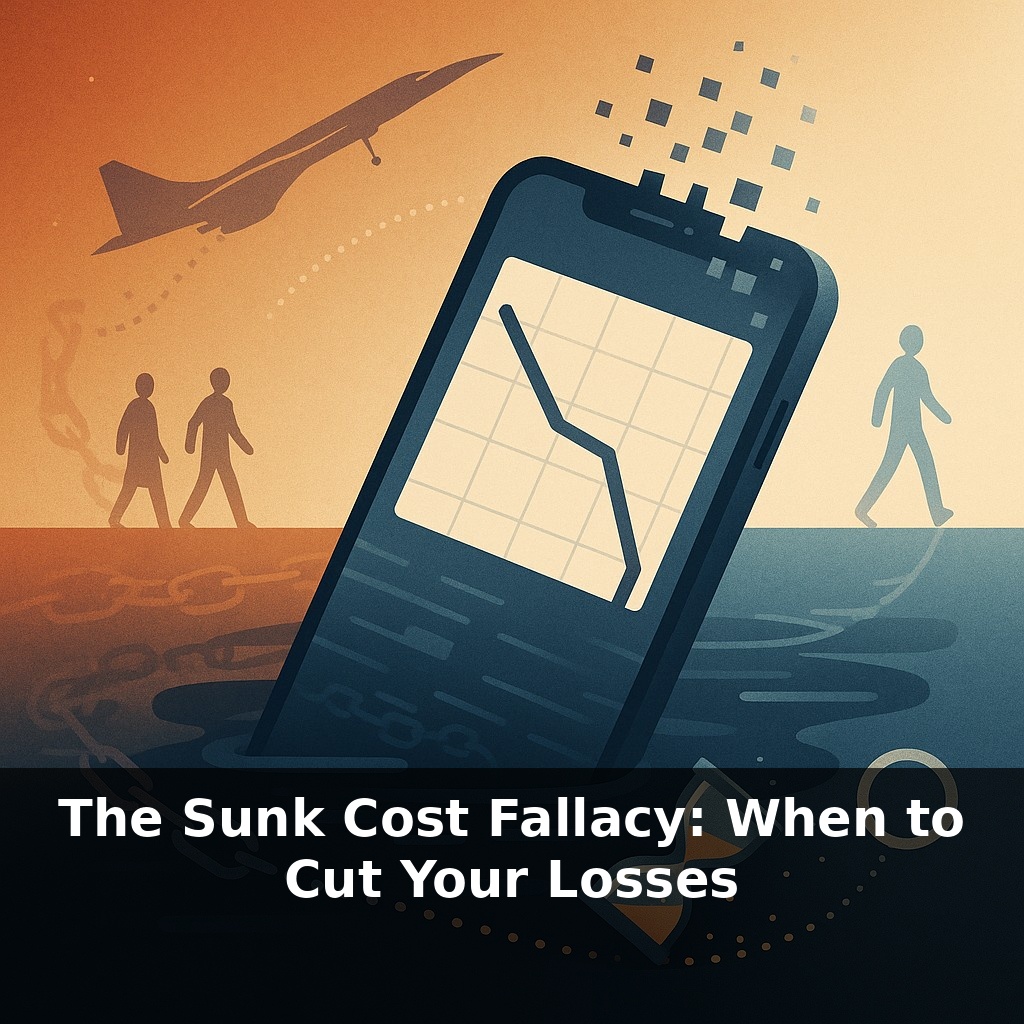
A famous airplane once taught governments a multi‑billion‑pound lesson in quitting too late. The Concorde was an engineering marvel—and a financial disaster. Years after it was obvious the numbers would never work, politicians still poured money in, partly because “we’ve already spent so much.” That same logic quietly shapes everyday choices: keeping a subscription you barely use because it auto‑renewed, holding a losing stock because “it’ll come back,” or dragging yourself through a degree you hate because you’re “too far in to stop now.” Sunk costs don’t just trap giant projects; they entangle careers, relationships, and daily routines. The uncomfortable truth: being committed and being stuck can look identical from the inside. The difference is whether you’re protecting your future—or merely defending your past.
Research shows this pull toward the past isn’t just a rare glitch—it’s the default. In lab studies, nearly three out of four people escalate commitment when more rational options are available. In everyday life, that means staying late on a doomed work project, clinging to an investment that keeps sliding, or forcing yourself through a hobby you no longer enjoy simply because you “already started.” What’s tricky is that experience and effort really do matter in many domains. The mind then overgeneralizes: it treats every retreat as failure, even when walking away is the most productive move you can make.
Money and effort aren’t the only things that keep us locked in; our identity gets tangled up too. Once a choice becomes part of who you are—“I’m a founder,” “I’m a loyal employee,” “I’m a value investor”—backing out feels less like changing a strategy and more like changing a personality. That’s why people will defend a doomed path even when the numbers are clearly against them: they’re not just protecting an investment; they’re protecting a story about themselves.
The data suggests this isn’t a fringe problem. Across dozens of lab experiments, most people keep doubling down even when they know the odds. In the real world, investors hold losing funds for years longer than winners, giving up performance they could have earned elsewhere. Corporations sit on bad acquisitions, hoping for a turnaround that never comes, while opportunity after opportunity passes by. What’s lost isn’t only money—it’s focus, optionality, and time that could compound in better directions.
Two forces amplify this. First, social pressure: nobody wants to be the manager who “wasted” millions or the friend who “gave up” on a long relationship. Second, emotional bookkeeping: we unconsciously chase an imagined break‑even point, as if enough persistence will magically convert regret into redemption. But reality doesn’t keep score that way. Future outcomes don’t care how much you suffered to get here.
A more useful lens is opportunity cost: compared to your next‑best option, what does staying actually buy you? In careers, that might mean asking whether one more year in a role adds skills or just stalls you. In products, whether another feature release increases traction or only postpones a necessary pivot. In finance, whether holding the loser still beats the alternatives after taxes, fees, and risk.
In practice, the most rational choices often feel emotionally wrong in the moment. Writing off a project, selling a stock at a loss, or changing majors mid‑degree can look like retreat. But viewed over a longer horizon, these “retreats” are more like a chess player sacrificing a piece to win the game: you’re trading a small, visible loss for a larger, invisible gain in future flexibility, energy, and returns.
A musician spends months recording an album that still doesn’t land: streams are flat, shows are half‑empty. One option is to keep rerecording the same songs, hoping the world will “catch up.” Another is to ask: if I started from scratch today, would I choose this sound, these venues, this release plan? That question shifts attention from the sunk studio time to the next creative move.
In medicine, a good clinician might stop a treatment that required painful weeks of side effects once new data shows it’s not helping. They don’t defend the old protocol; they pivot to the therapy that has the best odds now. Financial decisions can borrow that mindset: instead of nursing an underperforming fund, you reassess your entire portfolio as if you were investing fresh cash today.
Even careers benefit from this reframing. Rather than “I’ve already spent seven years here,” you can ask, “Would I apply for this same job again—on these terms?” If not, that gap marks a place to adjust course rather than double down.
As AI quietly embeds itself into calendars, banking apps, and workplace tools, you may start getting prompts that feel like a cool‑headed friend tapping your shoulder: “If you weren’t already doing this, would you start now?” Future dashboards could surface silent trade‑offs: a stalled side project crowding out sleep, a legacy feature blocking bolder bets. The cultural skill will be less about collecting achievements and more about editing—dropping old plots to make room for better chapters.
Quitting well is its own skill. Instead of asking, “Was I wrong before?” try, “What experiment do I want to run next?” Treat choices like drafts, not verdicts: you can revise the chapter without deleting the book. Over time, the habit of graceful exits turns past decisions into raw material, not chains, and makes room for better bets to actually find you.
To go deeper, here are 3 next steps: (1) Grab Annie Duke’s book *Quit* (or her Longform podcast episode) and complete her “kill criteria” exercise for one real commitment you’re unsure about—set specific measurable signs that will tell you, in advance, “I will walk away when X happens.” (2) Install a decision journal tool like Notion or Evernote and, for your biggest ongoing project, log the original reason you started it, how much time/money you’ve put in, and what *future* benefits you realistically expect—then schedule a 30‑minute “stay or go” review in your calendar for 30 days from now. (3) Use a financial app like YNAB or Mint to pull up a 90‑day spending report and highlight any subscriptions, hobbies, or investments you’re “sticking with because you’ve already paid so much”; cancel just one of those today and redirect that money into a separate “Fresh Starts” savings bucket so you can practice cutting losses and funding better opportunities.