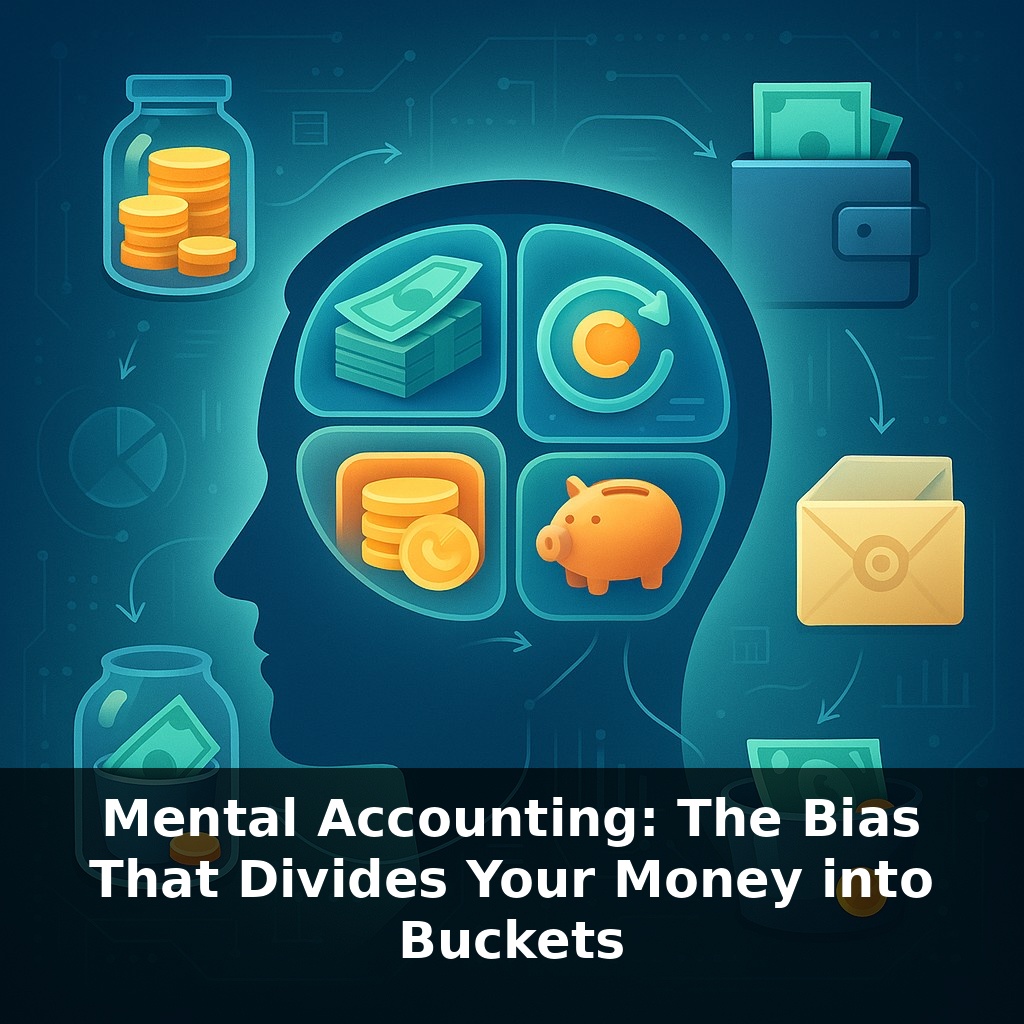
About half of people refuse to replace a lost concert ticket—but will happily buy a new one after losing the same amount in cash. Same money, same loss, totally different decision. Today we’re stepping inside that gap, where your brain quietly splits your money into secret buckets.
You probably already have these buckets running in the background: “rent money,” “fun money,” “savings I must never touch,” “that random cashback I can blow guilt‑free.” None of this shows up on your bank statement—but it quietly shapes when you feel rich, when you feel broke, and what feels “allowed.” Technology amplifies this. A budgeting app turns categories into digital envelopes. A Starbucks balance or gaming wallet feels less like real cash and more like store credit waiting to be spent. Even employers help carve new buckets with stock grants, bonuses, and “points.” In this episode, we’re not asking whether these divisions exist—we’re asking when they help, when they hurt, and how companies and governments are already designing around your invisible buckets, often more intentionally than you are.
Marketers and policymakers quietly exploit these buckets all the time. A tax refund arrives and feels like “found money,” so retailers time big sales to meet it. A “one‑time signing bonus” feels less serious than a higher base salary, even if the total is identical. And that discount code for an online store? It nudges you to open a new mini‑account in your head labeled “must use before it expires.” The strange part is that the math doesn’t change—only the story around the money does. And stories, not spreadsheets, are what your brain listens to first.
Think about where mental accounts come from. They’re not random glitches; they’re shortcuts built on three powerful stories your brain loves:
First, the **source story**: *how* you got the money. A paycheck feels “earned” and serious; a cash gift feels light and temporary. In Thaler’s ticket study, losing a ticket “used up” the entertainment budget, while losing cash didn’t feel tied to that category yet. That source tag changes whether you feel justified spending again, even when the dollar loss is identical.
Second, the **purpose story**: what the money is “for.” Labeling something as “down payment” or “vacation” doesn’t just organize your thoughts—it recruits identity and emotion. You’re no longer someone with $5,000; you’re “a future homeowner” or “someone who travels every year.” Violating that story (“raiding” a trip fund to pay bills) feels like betraying a version of yourself, so you resist, even when it’s financially rational.
Third, the **timing story**: *when* the money enters or leaves. A $200 raise baked into your salary disappears into the background. A $200 quarterly bonus sets off fireworks. Same annual income, totally different narrative. That’s why employers, apps, and platforms often chunk money into salient events—payout days, streak rewards, level‑ups—because each event opens or closes a mental account with its own rules.
Technology adds two more twists.
One: **liquidity illusions.** Tap‑to‑pay, one‑click checkout, and in‑app balances make some accounts feel frictionless and others “locked.” You might hesitate to move cash from savings but casually drain a gaming wallet—even if both came from the same debit card last month.
Two: **granularity overload.** Modern tools let you slice finances into ever finer categories: separate pots for groceries, dining out, coffee, deliveries, “treats.” That looks like control, but each micro‑bucket can become its own justification engine: “I still have $18 in *this* category, so it’s fine,” while your overall cash position deteriorates.
The paradox: the same mental accounts that help you protect rent or long‑term savings can quietly sabotage big goals when they’re misaligned. The real skill isn’t deleting these buckets—it’s deciding **which** stories deserve their own account, and which should be forced to compete on the same stage.
Think about how this plays out in small, everyday choices. You might decline dinner with friends because your “going out” category feels tight—then order delivery twice that week from a different app wallet that feels untouched. Same total cost, different stories. Or you’ll grit your teeth and pay high interest on a credit‑card balance while letting cash sit in a vacation pot that “must not be touched,” even though a temporary dip would save you money.
Companies lean into this. A fitness app might sell “class credits” instead of charging per session. Once the credits are bought, people treat them like chips at a casino—easier to spend than cash, easier to rationalize: “I already paid for these; I should use them.” Some banks now let you create named goal‑based pockets inside one account. That’s mental accounting on purpose: the label does motivational heavy lifting, but it can also lock you into rigid rules you never consciously chose.
Mental buckets will multiply as money gets chopped into smaller, faster flows: creator payouts, micro‑royalties, in‑game earnings, cashback drips. Each stream invites its own story, and those stories can drift apart. Your “serious” account might be spotless while side‑income leaks away like paint water. AI tools could become editors for these stories—spotting contradictions, suggesting better labels, and nudging you when today’s script sabotages tomorrow’s plot.
The real opportunity is to redraw the lines. Instead of letting apps or pay schedules choose the stories, you can group cash by **risk** (stable vs. speculative) or **time** (this week, this year, next decade). Your challenge this week: treat every inflow as if it hit one giant pool first—then deliberately assign it, like drafting players onto a team.