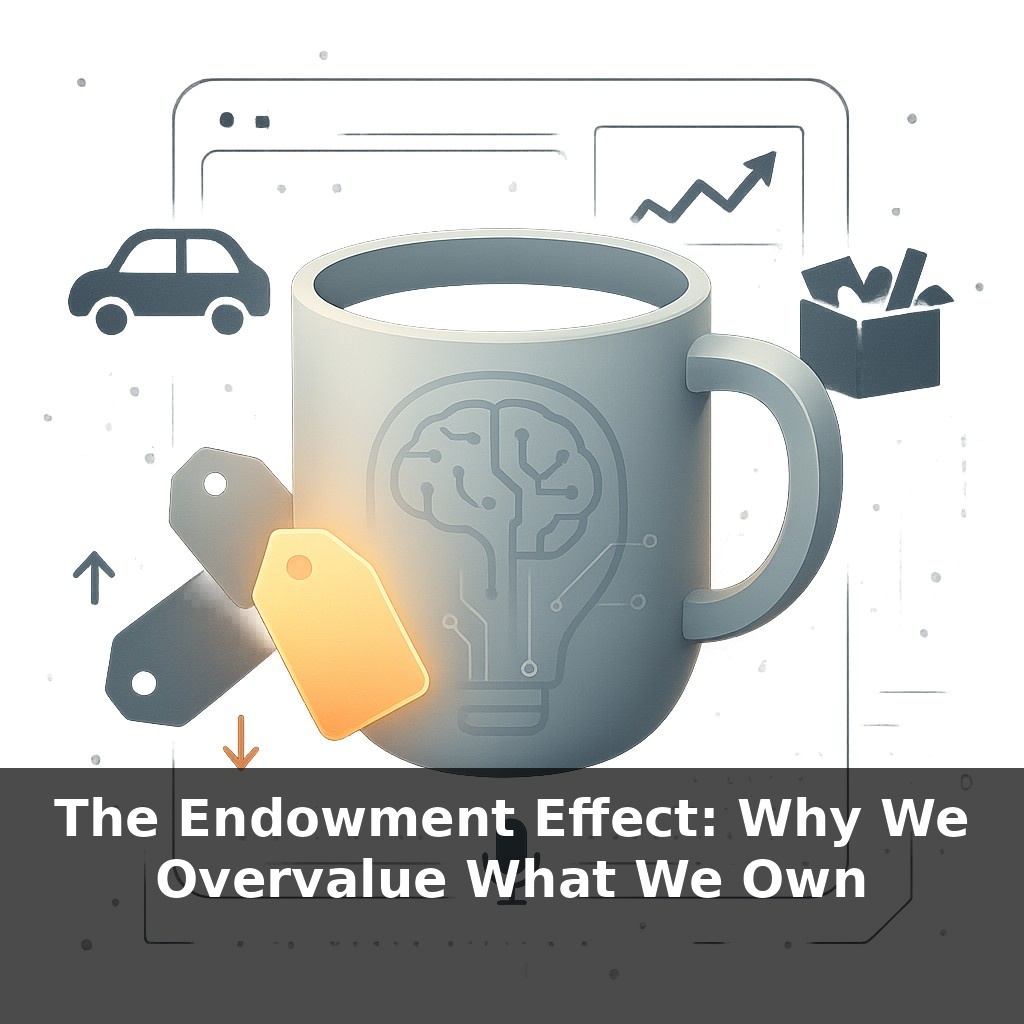
A coffee mug that no one wants at three dollars suddenly feels “worth” ten the moment it’s yours. In this episode, we’ll step into three everyday moments—selling, decluttering, and investing—where ownership quietly rewires what you believe something is worth.
That shifting price tag in your head doesn’t just apply to mugs. It shows up when you “can’t” sell your car at the market rate because “you know what it’s really worth,” or when an old side project feels too valuable to shut down, even though it only drains time and money. The endowment effect quietly stretches the distance between market prices and the numbers you feel in your gut.
In money decisions, that gap matters. It can keep you over-insured on things you no longer use, stuck with subscriptions you “might need,” or loyal to a stock just because it’s in *your* portfolio. In this episode, we’ll look at how this bias plays out in three arenas—your stuff, your investments, and your decisions about risk—and how to design simple rules that protect your bank account from your feelings.
Think about how quickly preferences harden the moment you commit. The unused online course you “will definitely complete,” the branded gadget box you keep “just in case,” the domain name for a business you’re no longer starting—all start to feel like tiny assets you must protect. This isn’t only about price tags; it’s about identity, memory, and effort getting fused into your possessions and choices. In finance, that fusion is dangerous, because markets don’t care how much history you’ve piled onto an object, only what someone else is willing to pay right now.
Kahneman’s mug experiment is striking not just for the numbers, but for how quickly the gap appears. Participants didn’t live with the mugs for weeks; they got them minutes earlier. Yet once the mug switched from “a mug” to “my mug,” their internal asking price jumped. That speed tells you something uncomfortable: you don’t need years of attachment for your internal calculator to drift away from reality.
In real life, the numbers are larger but the pattern is similar. Terrance Odean’s brokerage study didn’t look at sentimental heirlooms—it looked at plain stocks in ordinary accounts. Still, people clung to losers and sold winners, effectively paying a hidden “ownership premium” year after year in forgone returns. The penalty—about 4.4 percentage points annually—doesn’t show up on any statement. It accumulates quietly in the gap between what you feel and what the market sees.
Neuroscience adds another layer. In Knutson’s work, as people decided how much extra they’d need to part with something they owned, the insula—a region linked to pain and loss—lit up more intensely. Letting go didn’t just feel like giving up an object; it registered more like a small injury. That “ouch” signal helps explain why perfectly reasonable offers can feel like insults and why you keep thinking, “I’d rather hold onto it than accept *that*.”
Yet this reaction isn’t fixed. When goods are framed as inventory—“these are for trading”—or when people trade constantly, the pattern weakens. Day traders, professional resellers, even seasoned negotiators show smaller gaps between the price they’d pay and the price they’d accept. Repetition trains their brains to treat positions as temporary stances, not extensions of self. In effect, they move from “this is mine” to “this is a position I currently hold.”
Artists often learn a similar discipline. The first painting is painful to sell; every brushstroke carries a story. Over time, working creators learn to release finished pieces into the world and return to the studio. The work remains meaningful, but it no longer locks them in place. For your finances, the equivalent is learning to see holdings as drafts, not trophies—things you’re allowed to revise, trade, or abandon as conditions change.
The effect shows up in small, boring corners of life. A half-used bag of premium coffee in your pantry suddenly seems “too good” to serve to guests you’re not close with, even though you’d never have paid full price *for them* at the store. The same thing happens with digital clutter: you keep niche apps you barely open because you “already paid” for them, while ignoring free tools that might fit better.
Consider tech gadgets: many people won’t sell an old tablet for $60, but would never buy that same model today for $60 from someone else. They tell themselves they’ll use it for recipes, or as a “backup,” while it slowly drains value in a drawer. Seasoned refurbishers, in contrast, handle hundreds of similar devices; each one is just another line item they’re willing to price ruthlessly.
Think of a sports coach cutting players during tryouts. A novice coach overestimates the few athletes they already know; a veteran posts the roster based on performance metrics, not personal history. The difference isn’t who cares more—it’s who’s learned to separate attachment from selection.
AI portfolios could quietly become the “cold shower” your future self needs. By rebalancing without emotion, they might offload stale positions long after you’d have frozen. Resale apps could do something similar with smarter anchors: auto-suggested listing ranges, gentle prompts when you’ve declined realistic offers, even “time on market” fatigue meters. Policy designers might experiment with digital “trial moves” for housing—temporary, low-friction switches that let people sample downsizing before committing. Over time, these tools may shift how we feel when letting go.
Your challenge this week: treat one ordinary object like a rental car. List it for sale at the best current price you can find, and commit to accepting any offer within 5% of that number. Notice the discomfort, but follow through. That tiny “trade” is like a rehearsal—each repetition makes future choices less like tearing roots and more like pruning a garden.