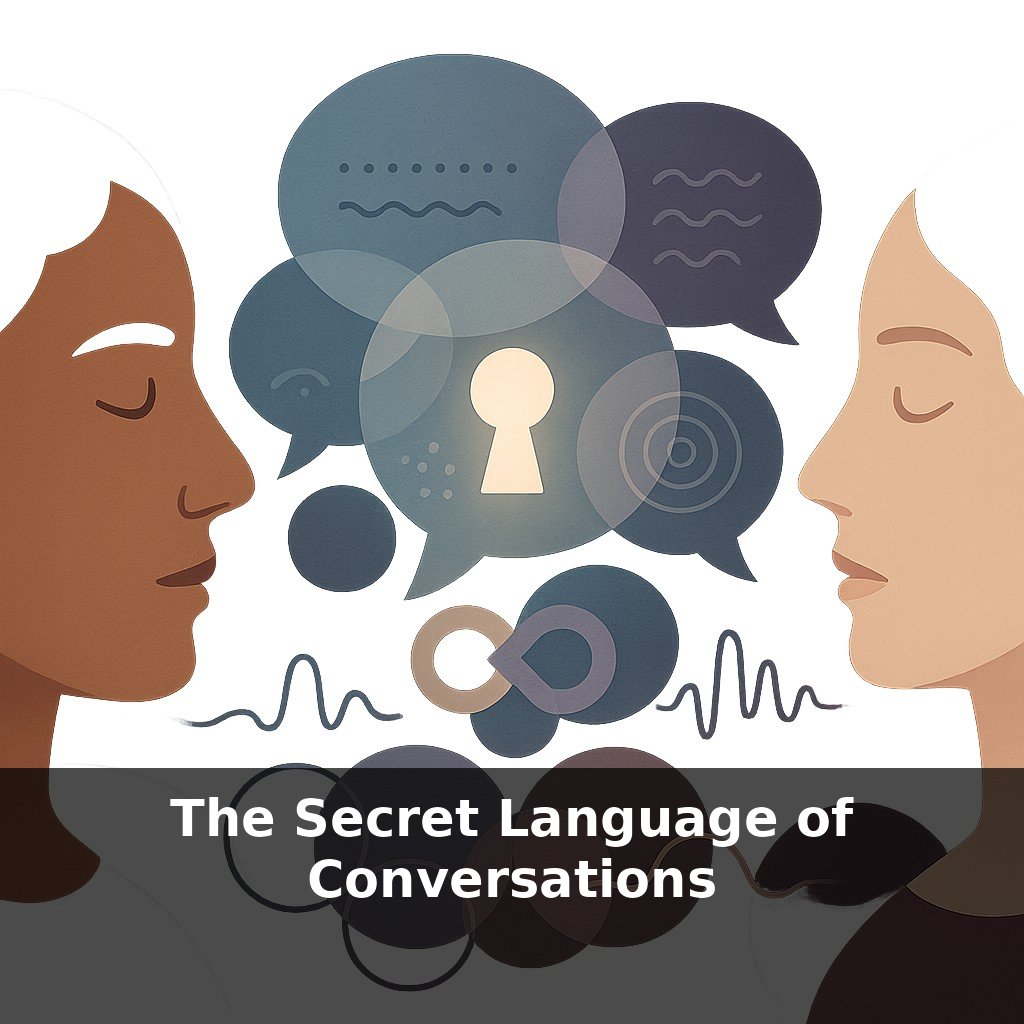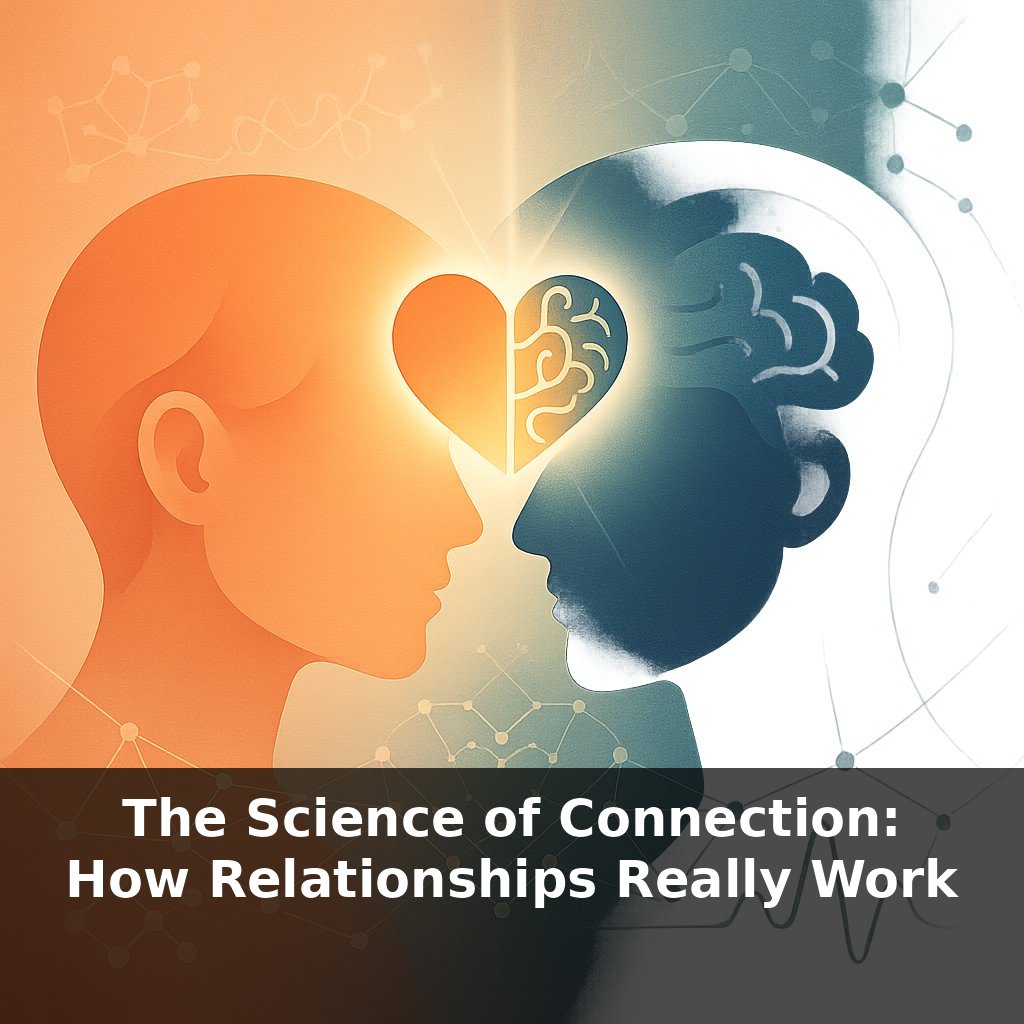
A friend says, “No, I’m fine,” in a flat voice—and your brain flags it as a lie in under a second. Here’s the twist: almost all of your relationships run on this hidden channel of meaning you were never formally taught to read. Today, we’re going to start decoding it.
Think about the last time a text message bothered you—not because of the words, but because of how they *felt*. “Sure.” “K.” “We need to talk.” Same alphabet, completely different impact. That gap between what was typed and what you *heard* in your head is where relationships are quietly made or broken.
In person, your brain is running a real-time decoding operation: tone, timing, eye contact, tiny pauses, cultural expectations, shared history—all fused into a snap judgment about what this person really means and how safe it is to respond honestly. Online, it tries to do the same thing with way less data, which is why group chats can feel like emotional landmines.
In this episode, we’ll turn that silent decoding process into something you can actually see, adjust and deliberately use to protect—and deepen—your connections.
Think of every conversation today as having two tracks playing at once. Track one is the transcript: the literal words. Track two is the “director’s commentary”: what those words are doing—soothing, shaming, flirting, deflecting, testing. Your brain is already syncing these tracks automatically; the problem is, it often does it on autopilot, using old assumptions and half-remembered hurts. That’s how “We should talk” can register as threat in one relationship and care in another. In this series, we’re going to slow that process down just enough that you can start editing the script instead of merely reacting to it.
Here’s the first upgrade: instead of asking, “What did they say?” start asking, “What job are these words trying to do?”
Psychologists call this *pragmatic* meaning—the purpose behind a sentence. The same sentence can perform wildly different jobs:
- “We should talk” can be a threat (“You’re in trouble”), an invitation (“I want to connect”), or a test (“Will you show up for this?”). - “I’m busy tonight” might be a boundary, a soft no, or a face-saving excuse.
Your brain guesses the job in a few hundred milliseconds by pulling from four main sources at once:
1. **Wording choices.** Direct (“I disagree”) versus softened (“I’m not sure that works”). Additions like “honestly,” “just,” “no offense,” or “to be honest” often signal something *extra* is riding on the words—fear, frustration, caution.
2. **Patterns over time.** One sharp reply is noise; ten sharp replies whenever money comes up is a pattern. Research on workplace conflict shows that unspoken patterns—topics that *always* go sideways—fuel a big chunk of blowups more than any single remark.
3. **Social rules in play.** Humans constantly trade off between clarity and comfort. Indirectness isn’t automatically fake; in many cultures and families it’s how people show respect or protect each other’s feelings. “You *might* want to revise this” may actually mean, “This must change,” filtered through a politeness rule.
4. **Non-verbal “votes.”** Eye contact, posture, micro-pauses, even how someone exhales after speaking—all of these vote for one interpretation over another. A firm “I’m fine” with relaxed shoulders is a different message than the same words with turned-away eyes and a delayed reply.
Here’s where things get tricky: your brain isn’t a neutral translator. It runs every message through your private archive—who this person has been before, plus who *other* people have been to you. That’s why you can misread a blunt coworker as hostile when they talk exactly the same way to everyone, or assume a partner is “pulling away” when they’re just tired.
To get better at decoding, you’re not trying to become a lie detector; you’re trying to become a better *hypothesis generator*. Instead of locking onto the first meaning, you learn to hold two or three plausible readings in mind and then test them gently.
Think of it like debugging code: the first error message isn’t always the real bug. You step back, check how different parts interact, and only then decide what to fix—or whether anything’s broken at all.
Think of a high-stakes team meeting. The manager says, “Let’s circle back on your proposal later,” glancing quickly at the clock. On the literal level, it’s a delay. But notice three extra signals: she *praised* the idea earlier, she’s rushing to another call, and she follows up with, “Can you send me your latest draft?” One decoding says, “She’s brushing me off.” Another says, “She’s time-crunched but genuinely interested.” How you read that moment shapes whether you leave motivated or resentful.
Or a partner texts, “Sure, go,” after you ask about a weekend trip. No emoji, no extra words. One hypothesis: “They’re mad and don’t want me to go.” Another: they’re in the middle of something and giving quick consent. Before reacting, you might check: “I’m hearing some hesitation—are you actually okay with it?”
In both cases, better decoding doesn’t mean magically knowing the truth. It means spotting where your first interpretation is a *guess*—then checking it, instead of silently living as if it were fact.
Sarcasm in under 600 ms, conflict from a single email, warmth lost in a “k.” As tools start reading faces, voices and pulses, your private interpretations may no longer stay private. Your future glasses might flash: “Likely annoyed” above your manager’s head—or suggest a softer reply while you’re still typing. Helpful? Maybe. But when algorithms start “auto-decoding” for you, the risk is outsourcing your judgment—and letting someone else quietly rewrite the subtext of your life.
Treat this week like a language lab. Notice when a comment feels “off,” then pause before reacting and ask: “What else *could* this mean?” You’re not hunting for the one true translation; you’re sampling options, like trying different camera filters. Over time, you’ll see which ones reveal connection you’d have otherwise cropped out.
Start with this tiny habit: When you get a text, Slack, or email that makes you feel even a little confused or defensive, pause and silently ask yourself, “What might they *really* be needing or worried about here?” Then, before replying, add just one short reflecting phrase like, “It sounds like you’re really focused on ___” or “I’m hearing that ___ matters most to you here.” Do this with just one message a day, not every conversation.