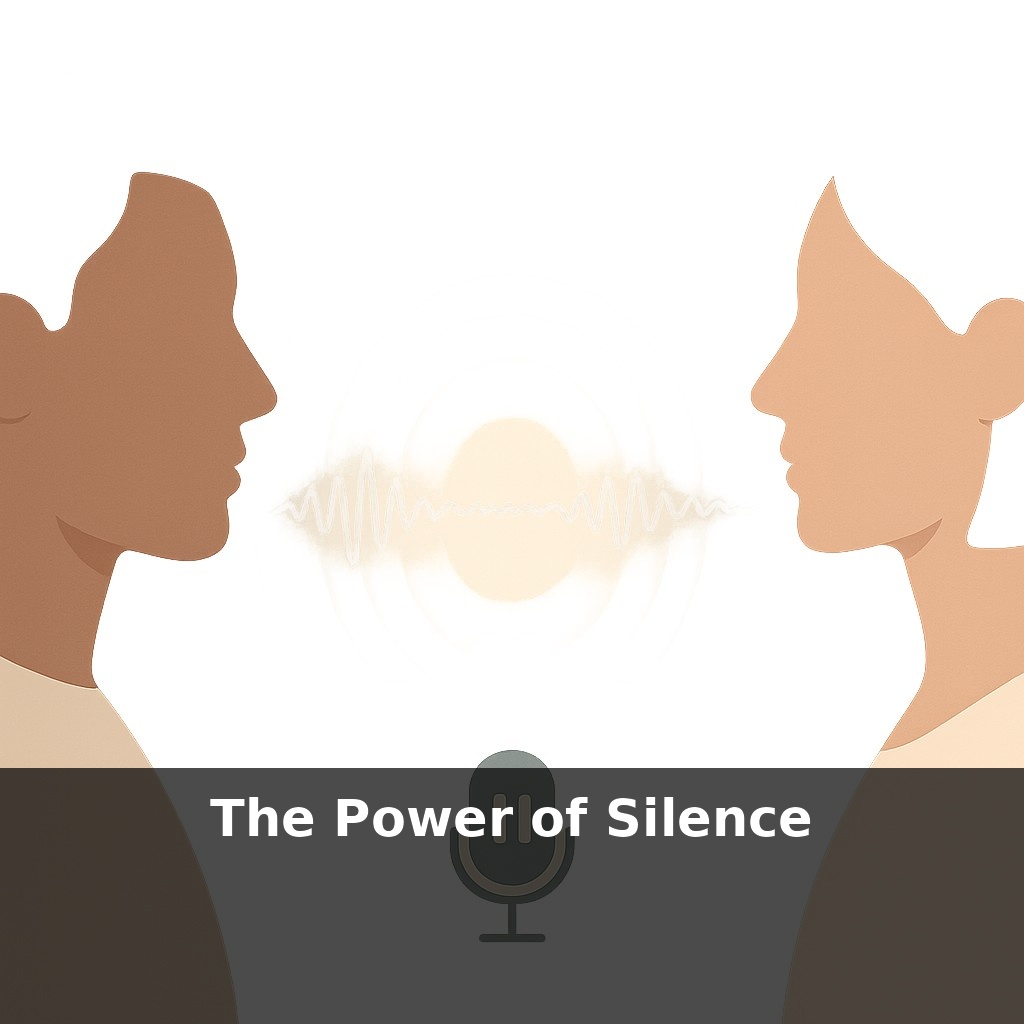
A brief pause in a conversation—just a few heartbeats of silence—can boost the quality of ideas people share by more than ten percent. Now, think of the last tense moment you rushed to fill. What might have changed if you’d stayed quiet… just a little longer?
Most of us were trained—at home, in school, at work—to treat conversational gaps like emergencies. If there’s a space, you’re supposed to fill it: jump in, reassure, clarify, entertain, rescue. Over time, we start equating speed with competence and constant talking with connection. Yet when you watch the best therapists, negotiators, or leaders, you’ll notice something quietly radical: they’re in no hurry. They respond like careful editors, not frantic commentators. They let a remark land, breathe, and only then decide what actually deserves words. In relationships, this changes everything. A partner’s sigh becomes data, not just background noise. A delayed answer becomes a doorway, not an awkward stumble. We’ll explore how to use these small pockets of quiet as active tools—so that in your toughest conversations, what you don’t say starts working for you.
In close relationships, silence usually carries a story: “She’s mad,” “He’s checked out,” “They’ve lost interest.” We rush to decode it like an ominous notification on our phone. But research suggests many of those stories are flat‑out wrong. Brief quiet often signals not withdrawal, but cognitive load: your partner is sorting memories, weighing consequences, translating feelings into words. In brain scans, this shift looks less like a shutdown and more like a busy airport rerouting flights. When you interrupt that process, you don’t just break the quiet; you break their ability to land on what’s really true for them.
When you stop treating every quiet second as a problem, you can start using it as information.
First, silence is a live readout of emotional temperature. People’s *words* are often rehearsed; their pauses are not. A partner who answers quickly but then falls quiet for a long stretch is telling you, “My mouth can keep going, but my body isn’t on board.” In therapy research, these micro‑freeze moments often predict “something important was just touched” more reliably than facial expressions. If you learn to notice *when* the quiet appears—right after a topic, a phrase, a name—you’re essentially watching a highlighter move across the conversation.
Second, silence can be a buffer between intention and impact. In heated moments, the first response that rushes to your tongue is often a defense, not a truth. Couples who do well in conflict aren’t less triggered; they’re less *immediate*. They build in tiny lags—three breaths before speaking, a “give me a second”—that prevent impulsive replies from becoming permanent damage. Neuroscience studies on reactivity show that even sub‑10‑second delays reduce the spillover of anger into language. The goal isn’t to be calm; it’s to keep your mouth from becoming your nervous system’s loudspeaker.
Third, silence is a negotiation tactic inside your relationship, not just in boardrooms. When one person drops a difficult statement—“I’m not happy at this job,” “I don’t know if I want kids”—the other often lunges to fix, reassure, or argue. That immediate move silently recenters *your* comfort. When instead you let the words hang, you’re making a different bid: “Your reality gets to exist here, even before I respond.” Over time, that changes what your partner is willing to reveal.
There’s also a coordination problem: two people, two internal clocks. Some think out loud; others think off‑mic. Many fights are actually clashes between these styles. The fast processor experiences the slower one as withholding; the slow one experiences the fast talker as invasive. Naming this difference (“I answer slowly when something matters”) turns silence from a threat into a shared setting—like switching a group chat to “slow mode” so everyone can actually follow what’s happening.
Used this way, silence isn’t avoidance. It’s an active, deliberate space where feelings can catch up with facts, and where both of you get a chance to hear what you actually mean before you make it real.
In practice, this can look surprisingly ordinary. You ask your partner, “How was it with your family today?” They shrug, say “Fine,” then reach for their phone. Instead of launching into guesses—“Your mom again?”—you stay quiet, soften your posture, and just keep your attention on them. Thirty seconds later, they put the phone down: “Actually, it was weird. My dad said…” That extra layer almost never shows up when you rush in.
Or you’re planning money decisions. One of you says, “What if we didn’t renew the lease?” and then goes quiet. Rather than flooding the space with logistics, you keep the question open. That shared stillness is often where the real fears surface: “I’m scared of starting over,” “I don’t want to be stuck here in five years.”
Think of it like letting a steak rest after cooking: stepping back for a moment doesn’t stop the process; it completes it. In relationships, the richest answers often arrive right after the moment you most want to fill the air.
Silence will likely become a design feature, not a failure mode. In tech, we may see “smart delay” settings in messaging and voice apps that briefly hold your words, giving you time to revise before they land. Workplaces might schedule literal quiet blocks between high‑stakes meetings so decisions aren’t made on fumes. Even in group chats, norms could shift toward response windows instead of instant replies, treating unsent messages as part of how we think together.
Silence, then, becomes less a blank and more a setting—like dimming the lights before a movie starts. When you treat those unspoken beats as part of the dialogue, you invite previews of thoughts that aren’t fully funded yet, emotional “drafts” that need a safe sandbox. Over time, you’re not just trading words; you’re co‑authoring the pauses that shape what love can say.
Before next week, ask yourself: 1) “Where in my day do I most quickly fill silence—like during my commute, in between meetings, or when I’m with my partner—and what am I afraid I might notice if I left just 5–10 of those minutes completely quiet?” 2) “The next time I feel the urge to jump in during a conversation, what changes if I pause for three breaths and really listen for what isn’t being said—tone, emotion, hesitation—before I respond?” 3) “If I gave myself one short ‘silence appointment’ today—no phone, no podcast, no to‑do list—what question about my life, work, or relationships would I be secretly hoping the quiet could help me answer?”