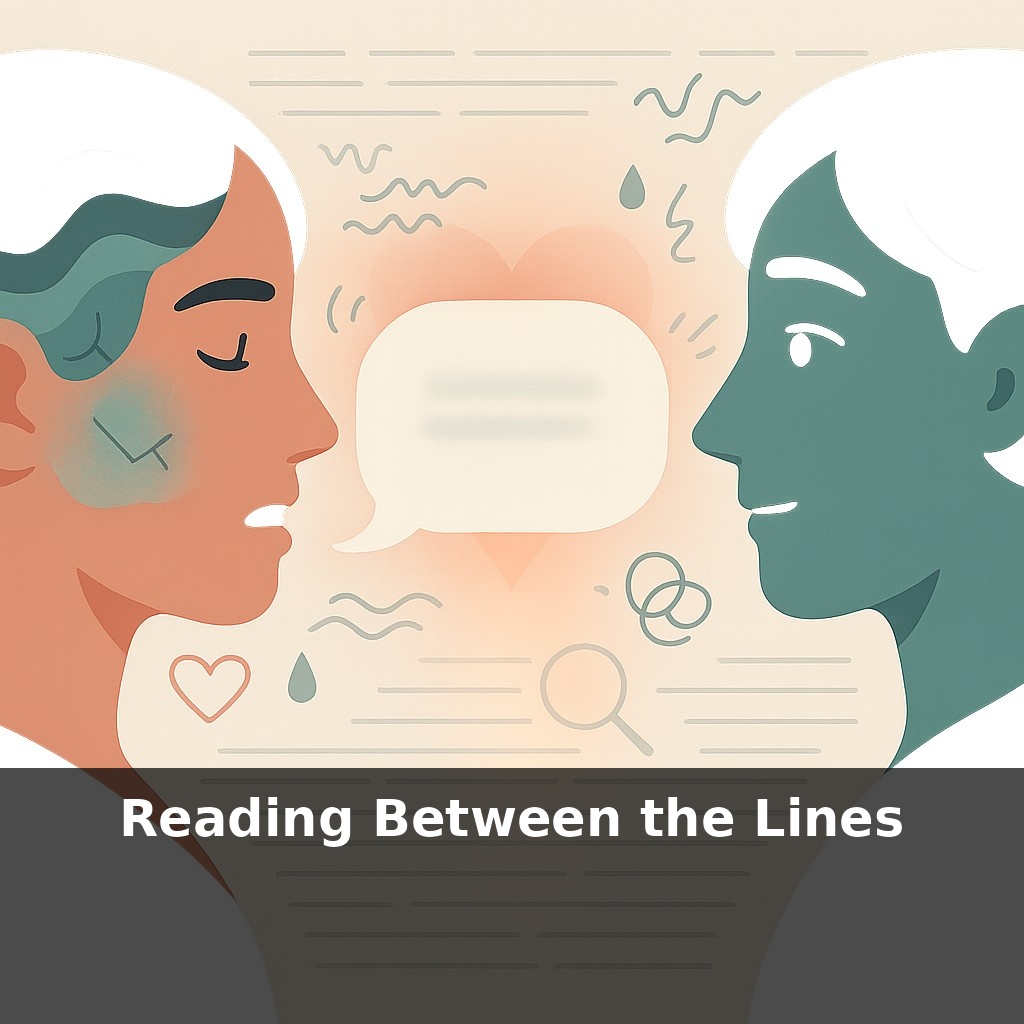
In a normal conversation, most of the emotional message never comes from the words at all. Someone says, “I’m fine,” while their shoulders curl in, their laugh is half a beat late, and their voice goes flat. Your ears hear “fine.” Your brain quietly flags, “Something’s off.”
Roughly half of what people *feel* in a conversation shows up outside their sentences, yet most of us were never taught how to notice it on purpose. We’re like people trying to follow a recipe while only half-reading the instructions: we get the gist, but we miss the timing, the heat, the tiny details that change everything.
Here’s where it gets interesting: your brain is already tracking far more than you realize. It spots the twitch at the corner of a mouth, the fractionally delayed “yeah,” the way someone’s shoulders lift when a name is mentioned. You usually register this as a vague sense—“they seem off today” or “they really lit up just now”—without knowing why.
In this episode, we’re going to slow that process down. Not to turn you into a human lie detector, but to give you language for what you’re already sensing, so you can respond with precision instead of guesswork.
Here’s the twist: those tiny signals aren’t random; they follow patterns you can learn to spot. Research shows people across cultures can read six basic emotions from faces with striking accuracy, even when expressions flash for just a fraction of a second. Add posture shifts, hand movements, and changes in tone, and you’re looking at a rich stream of data most conversations leave untouched. This isn’t about becoming hypervigilant; it’s about turning casual noticing into a quiet skill—like learning to hear the bass line in a song you used to think was “just the vocals.”
Most people jump straight to, “What does crossed arms mean?” or “What’s the sign of a lie?” That’s like opening a novel to a random sentence and trying to guess the entire plot. Before decoding any single gesture, zoom out and ask a quieter question: *What’s changing right now?*
Change is where the real story starts.
Think of a conversation you had recently where the mood shifted. Someone mentioned a deadline, a name, a decision—and something in the room tilted. Maybe voices got sharper, or one person suddenly went very still. That *shift* is worth more than any checklist of “signs.”
Three kinds of changes are especially revealing:
1. **Baseline breaks.** Everyone has a default style: how loud they are, how much they move, where they look when thinking. Spend the first minutes of any interaction just noticing that baseline. When something departs from it—laughter that sounds thinner, hands that suddenly disappear into pockets—that’s your first clue that the inner state just moved.
2. **Topic-linked shifts.** Watch what happens at topic boundaries. A coworker is relaxed and animated talking about weekend plans, then you mention the new manager and their jaw tightens, answers shorten, and they stop gesturing. The *pattern*—relaxed → constrained tied to a specific subject—often matters more than the intensity of any one signal.
3. **Synchrony and its loss.** In easy conversations, people tend to fall into a subtle rhythm: similar posture, matching pace of speech, head nods that land together. Research on “interactional synchrony” shows this happens within seconds when things are going well. When synchrony breaks—one person leans in while the other leans away, responses lag, laughter doesn’t quite overlap—it often marks tension, boredom, or withdrawal.
Now add sound. Not *what* is said, but the *shape* of the voice: does the pitch flatten on certain subjects? Does volume climb near the end of sentences, as though seeking reassurance? Studies from places like MIT’s Media Lab suggest that teams whose members naturally vary tone and pace more tend to collaborate and negotiate more effectively; their voices literally carry more “relational bandwidth.”
The trap is overconfidence. A single frown isn’t “anger,” a single shrug isn’t “lying.” What matters is clusters: two or three shifts that line up in time with something specific that just happened. When you learn to notice those clusters without immediately judging them, you move from guessing motives to getting curious about them.
You can see this most clearly in everyday, low-stakes moments. You suggest a new idea in a meeting. Your colleague says, “Yeah, that could work,” but three things happen almost together: their voice drops half a step, their shoulders angle slightly away from the table, and their fingers start tapping under their notebook. None of this screams “hostile,” but the *cluster* hints at reluctance they’re not voicing yet. Instead of pushing harder on the idea, you might say, “I’m hearing a hesitation—what’s your concern?” and watch what shifts next.
Or think about a first date. The other person is talkative, relaxed, joking easily. Then you mention long-term plans. Their smile stays, but their replies shrink to a few words, their laugh comes a beat late, and their gaze starts drifting to the window. Rather than concluding, “They’re not serious,” you treat it as a live question: “That topic just changed the vibe a bit—how do you usually feel about planning ahead?”
Algorithms are already learning to “listen between the lines” at a scale no human can match. Your camera angle, message timing, even how long you hover before hitting send can be logged like purchase history. In a few years, feedback tools might flag a teammate’s rising tension the way budgeting apps flag overspending. Used well, they could nudge check-ins or conflict repair; used badly, they become mood surveillance that pressures people to perform constant emotional correctness.
When you start catching these small shifts, you’re not trying to “win” conversations; you’re updating your map in real time. Treat each raised eyebrow or tightened jaw like a new data point in a live dashboard. The skill isn’t decoding people like puzzles—it’s staying curious enough to adjust, check in, and let the relationship be a moving target.
Start with this tiny habit: When you finish reading or listening to *anything* (an article, email, post, or chapter), whisper to yourself, “What’s not being said here?” and circle or mentally note just one word or phrase that feels loaded or vague (like “they say,” “everyone knows,” or “experts believe”). Then, look back at that one word or phrase and quickly ask yourself, “Who benefits if I believe this exactly as written?” and answer with the first name, group, or role that pops into your head. Do this once per day with something you’re already consuming, and you’ll slowly train your brain to read between the lines without adding extra time or effort.