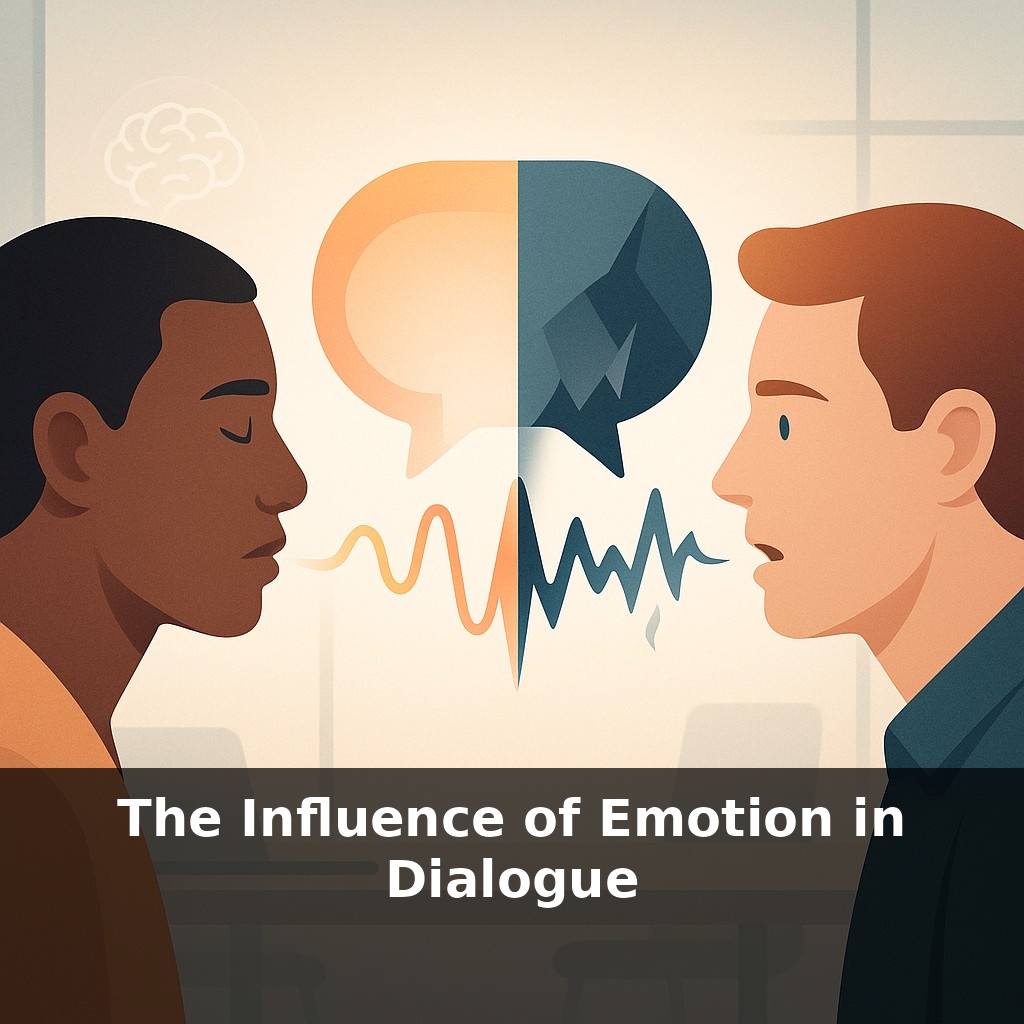
In a tense meeting, two coworkers say the exact same sentence—and only one sparks a fight. Here’s the twist: in ambiguous moments, almost all the emotional meaning lives in how words are said, not which words are chosen. So what is your tone quietly deciding for you?
“Calm down” can land like care or like gasoline on a fire—and your brain often decides which in a split second, before you’ve formed a single conscious thought. That’s because emotion isn’t a layer you add *after* you speak; it’s already shaping what you notice, which memories you pull up, and which words even feel “true” enough to say. In that flash of reaction when a partner sighs, a manager pauses, or a friend goes quiet, affective circuits in your brain are already voting on: threat or safety? respect or rejection?
Here’s where dialogue gets interesting: those fast, automatic votes don’t just color your experience, they change the conversation’s future. A tiny flare of defensiveness can turn a routine check‑in into a score‑keeping debate; a micro-moment of curiosity can turn a complaint into a joint problem‑solving session.
Watch what happens in the split second *before* you reply: your brain is already sorting the other person into categories—ally or obstacle, safe or risky, worth opening up to or not. That snap impression quietly edits what you’re willing to say out loud. In relationships, this can become a running script: one friend is “the critic,” a partner is “the fixer,” a boss is “the judge,” and every sigh or pause gets filtered through that role. Over time, you’re no longer responding to the actual moment, but to an accumulated story about who this person is with you.
Think of each interaction as having two tracks: the *content track* (the literal topic) and the *emotion track* (how safe, seen, or significant each person feels). Most people argue on the content track while the real leverage is on the emotion one.
On the emotion track, three questions quietly run in the background of almost every dialogue: - Do I matter here? - Am I safe to be honest? - Are we on the same side or opposite sides?
Neuroscience studies show that when those questions tilt toward “no,” attention narrows. You start listening for mistakes instead of meaning, intent to defend instead of to understand. When they tilt toward “yes,” your brain opens up: you recall more options, notice nuance, and can shift positions without feeling humiliated.
This is where *labeling* feelings becomes a strategic move, not just a therapeutic one. When you say, “I’m more tense about this than I expected,” you’re not just sharing information—you’re slightly rewiring the moment. Activity in threat-related regions drops; your prefrontal cortex gets more room to work. The other person also gets a clearer emotional map instead of guessing from your micro-reactions.
In groups, the emotion track becomes a shared climate. Teams with even a few people skilled at naming and responding to feelings tend to interrupt less, recover faster from friction, and take smarter risks. The key shift is from “Who’s right?” to “What’s happening *between* us right now, and what do we want it to do next?”
You can practice this in ordinary conversations by lightly surfacing the emotion track without turning it into a big “feelings talk.” For example: - “This topic seems to land differently for us.” - “I’m noticing the energy dip as we get closer to a decision.” - “I want to keep this collaborative, but I hear my voice getting sharper.”
These small signals invite the other person to step out of autopilot and co‑author the next move with you, instead of unconsciously replaying old roles. Over time, you’re not just managing individual talks; you’re upgrading the emotional “operating system” of the relationship itself.
In a product team debate, two designers oppose a feature. One says, “I’m not sure this works,” arms crossed, gaze fixed on the table. Another says the same words but swivels their laptop toward the group: “I’m not sure this works—can we stress‑test it together?” The literal message is identical; the emotional invitation is not. In one case, people brace; in the other, they lean in.
Or take a couple discussing money. Partner A blurts, “We’re always behind,” then goes quiet. Partner B can react to the words—or treat that line as a clue and ask, “Is this more about feeling alone with the pressure?” That one question shifts the focus from numbers to nervous system, and the budget talk often gets easier *after* the emotion gets airtime.
Developers see a similar pattern in code reviews. A comment like, “This is wrong,” tends to freeze experimentation. “I’m worried this edge case could hurt us in production—what am I missing?” still flags risk, but keeps the shared project identity intact.
Algorithmic systems will soon read group mood the way thermostats read temperature: quietly, continuously, and often without consent. That opens space for subtle nudging—shifting comment order, color schemes, even pacing—to steer how conflicts land. In negotiations, software may flag “relational risk spikes” before people notice tension themselves. The open question: who owns the dial, and how transparent should those emotional settings be to everyone in the room?
Treat each exchange less like a debate and more like co‑designing an app: every reaction is user feedback on how safe or valued this space feels. Micro‑adjustments—a slower reply, a clarifying question, a named feeling—are like tiny updates. Over weeks, they compound into a new interface for the relationship itself.
Start with this tiny habit: When you notice your heart rate spike or your jaw tense in a conversation, silently name just one word for what you’re feeling (like “anxious” or “angry”). Then, before you respond, take one slow breath and add one more word describing what you *need* (“space,” “clarity,” “respect”). Do this even in low‑stakes chats (like with a coworker or friend), so it’s easy to use when emotions run high.