Right now, nearly every medicine you take is negotiating with a microscopic border guard. Cells are wrapped in living, shifting skins that somehow let water rush through while blocking most charged atoms. How can a surface so thin be picky enough to keep you alive?
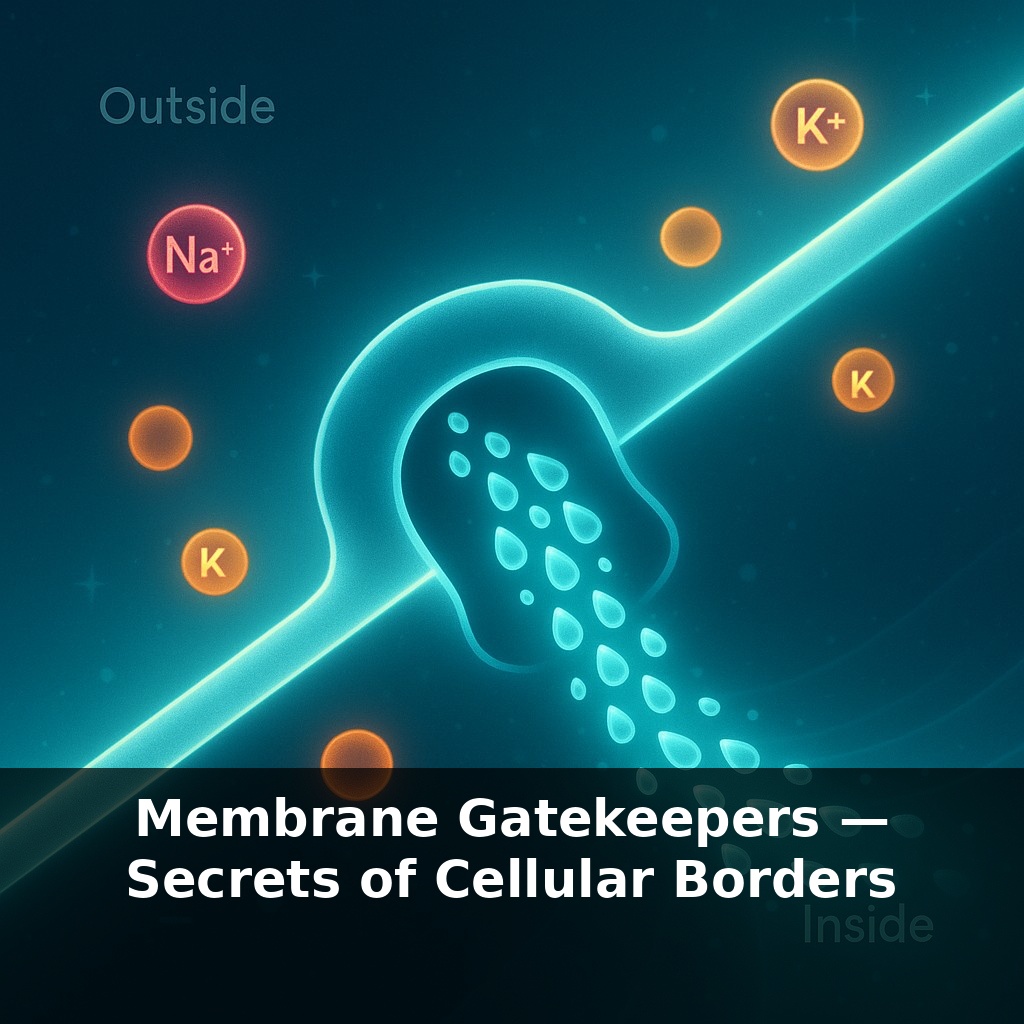
Na⁺/K⁺ pumps in your neurons are quietly eating a quarter of your resting ATP budget just to keep a razor-thin electrical line across each membrane. At the same time, water is blasting through aquaporin channels—billions of molecules per second per pore—without shredding that delicate border. This is the everyday normal of your cells: frantic molecular traffic, yet astonishing stability.
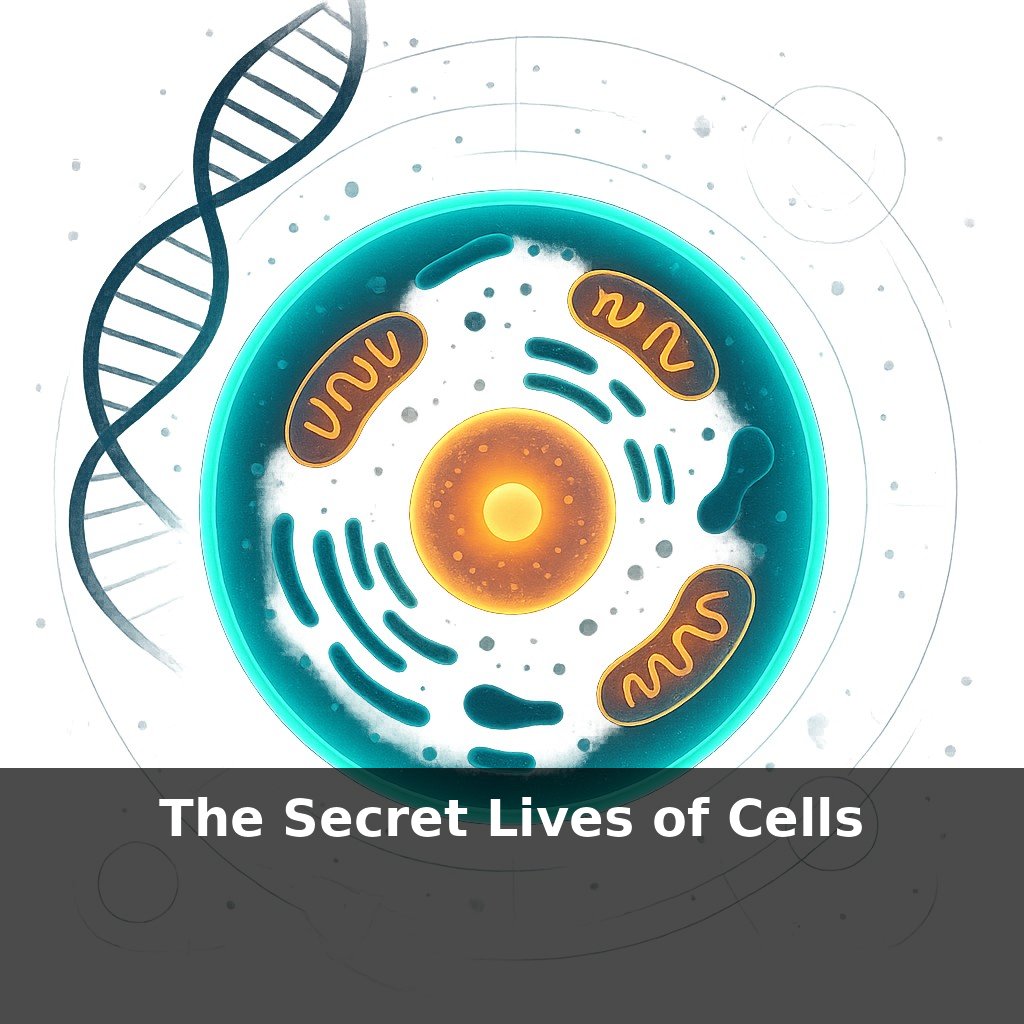
In Episode 1, we toured the “rooms.” Now we’re stepping up to the doors, locks, and security systems. These borders don’t just keep the outside out; they decide what your medicines can actually do. Two-thirds of today’s drugs work by talking to proteins embedded in these membranes—GPCRs sensing hormones, ion channels shaping thoughts, transporters rationing nutrients.
Your challenge this week: whenever you hear about a drug, vaccine, or gene therapy, ask one question—how does it cross, or talk to, a membrane?
Every one of your ~30 trillion cells has its own border policy, and no two tissues run it quite the same way. Liver cells decorate their edges with detox specialists; immune cells stud theirs with “friend or foe” sensors; neurons wire membranes into long, excitable cables. The basic structure is shared, but the protein lineup, lipid mix, and even curvature patterns differ like regional accents. Shift those ingredients and you can quietly change how sticky, bendable, or signal‑hungry a membrane is—tweaks that viruses, cancer cells, and modern nanomedicines all exploit in different ways.
Here’s the wild part: the structure that does all this is only about 5 nanometers thick—roughly 20,000 times thinner than a sheet of paper. At that scale, “solid wall” stops making sense. The membrane behaves more like a crowded, two‑dimensional liquid where molecules drift, rotate, and bump into each other nonstop.
Phospholipids don’t just sit in neat, frozen rows. They jostle sideways, swap neighbors, and occasionally flip from one side of the bilayer to the other with help from enzymes. Proteins slide around too, clustering and breaking apart as signals arrive or nutrients appear. A receptor that was alone five seconds ago can suddenly find itself in a dense patch of partners, changing how strongly it responds.
Cholesterol is a subtle but powerful modifier here. In many animal cells it can make up close to half of the lipids, threading between phospholipid tails. When things get too floppy—like at higher temperatures—it stiffens the layer; when they get too stiff—at lower temperatures—it loosens them. That buffering keeps the membrane in a sweet spot where proteins can move and work, but the border doesn’t leak catastrophically.
Cells exploit this fluidity to sculpt specialized zones. Nerve terminals pack particular lipids and proteins into tiny release sites. Epithelial cells lining your gut polarize: one side tuned for nutrient uptake, the other for handing cargo to the bloodstream. Same basic materials, very different border behavior.
Life also leans hard on energy‑driven asymmetry. Certain lipids are kept mostly on the inner face, others on the outer. When that balance flips—for instance during early cell death—immune cells read it as a distress flag and move in to clean up. Bacteria and cancer cells often tweak their surface patterns to hide from that surveillance or to stick better to specific tissues.
Modern medicine increasingly plays this game. mRNA vaccines wrap fragile genetic instructions in tailored lipid nanoparticles that fuse with membranes instead of bouncing off or being shredded. Experimental gene‑editing systems use similar tricks, adjusting lipid mix and charge so they home to particular organs. Change the border chemistry, and you change where your therapy can go—and whether it ever reaches the right “room” inside.
Think of the membrane more like coastal weather than a fixed wall: calm bays, stormy fronts, and fast‑changing microclimates all stitched together. A neuron doesn’t just have “a” membrane; its long axon, branching dendrites, and synapses each host distinct lipid “weather patterns” that favor different proteins and reactions. Shift the mix, and you can redirect whole cellular “currents” of signals.
Red blood cells, for instance, tune their borders for flexibility rather than talking—so they can fold through capillaries narrower than themselves without bursting. Plant roots load their outer layers with transport specialists that hoard scarce minerals from poor soils. Some parasites subtly remodel the membranes of the cells they invade, planting their own proteins like hidden antennas to siphon nutrients.
Even your sense of taste leans on membrane specialization: sweet, bitter, umami receptors are distributed in patterns that change with age, diet, and hormones, quietly adjusting how strongly your tongue “votes” for different foods.
Membrane “gatekeeping” is about to get upgrades nature never tried. Researchers are designing lipid shells that steer drugs like guided drones to tumors while ignoring healthy tissue. Others are crafting synthetic borders that act like programmable customs checkpoints, taxing or waving through molecules on command. As these tools mature, we may tune whole cellular neighborhoods the way urban planners reshape traffic, energy use, and noise—only here the “city” is built from living rooms of molecules.
In the next decade, we may even “compose” borders like playlists—tuning which signals dominate in a tissue the way you switch from calm jazz to high‑energy rock. That opens ethical puzzles as well as medical promise: if we can retune cellular borders at will, whose choices shape the soundtrack your cells are quietly dancing to?
Before next week, ask yourself: (1) “If my day were a cell, what are the ‘ion channels’ I’m currently leaving wide open—notifications, constant email, drop‑in requests—and what specific ‘gates’ could I close or time-limit so that only the most important ‘signals’ get through?” (2) “Just like a membrane uses receptors to decide which molecules to respond to, what concrete criteria could I set today (e.g., ‘projects that move X goal forward’ or ‘messages from these 3 people’) so I’m not reacting to every stimulus, only the ones that truly matter?” (3) “Cells spend real energy (ATP) to pump things in and out—where am I willing to deliberately ‘spend energy’ this week (deep focus, a tough conversation, a workout) and where will I consciously *stop* pumping (doom-scrolling, low-impact tasks) so my ‘cell’ doesn’t burn out?”