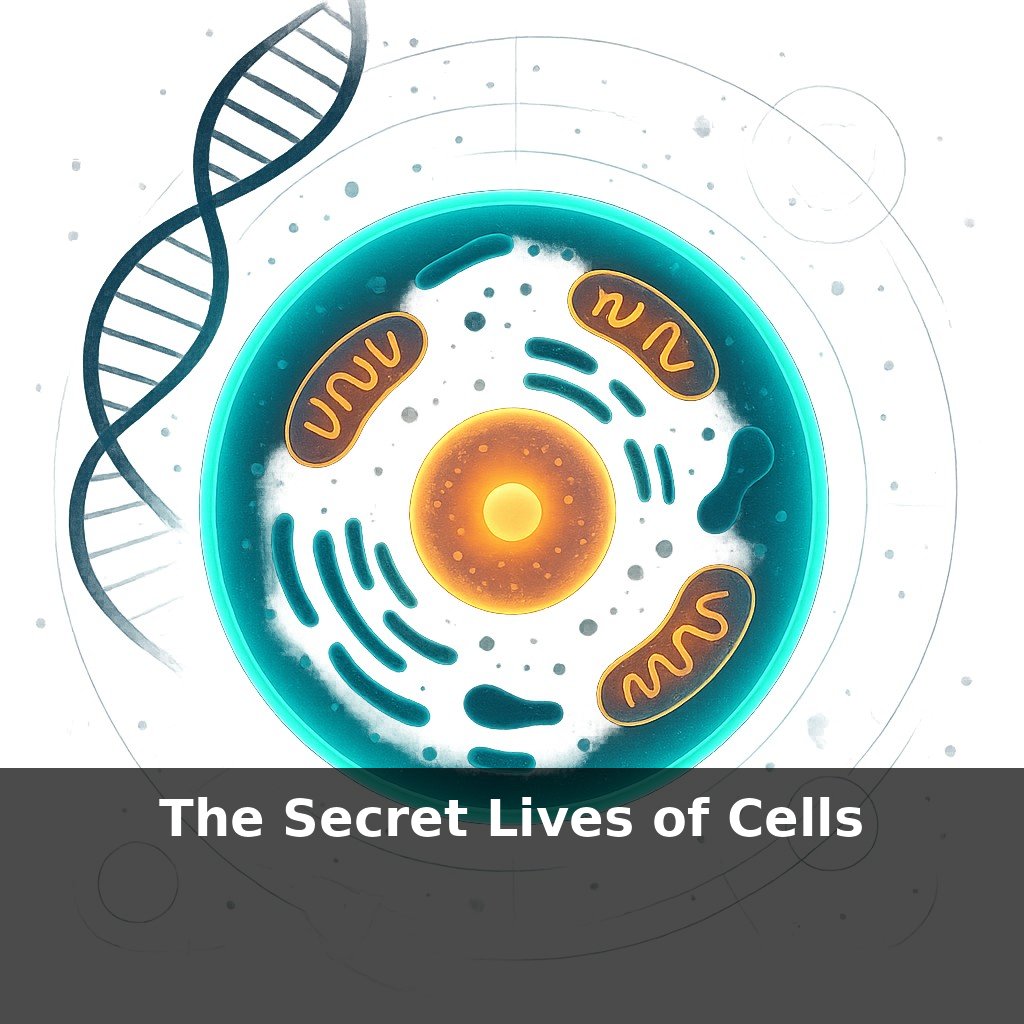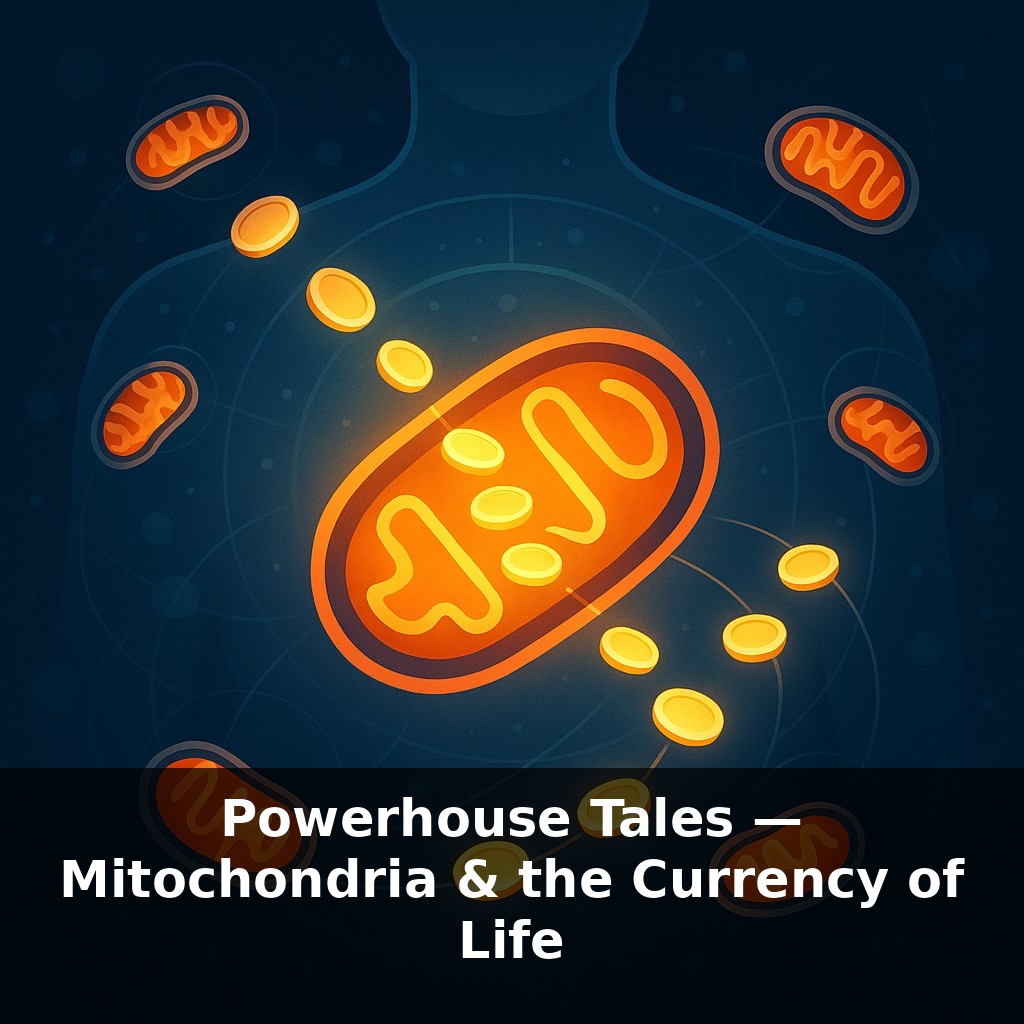
Right now, your body is quietly “spending” about your own weight in cellular money every day—then earning it all back before you sleep. In this episode, we’ll drop into the middle of that nonstop biochemical economy and meet the tiny bankers keeping you alive.
Hidden inside almost every one of your ~30 trillion cells are tiny, restless structures that quietly outweigh your skeleton. Add up all your mitochondria and you get roughly 10% of your body mass—yet you’ve never seen them, never felt them directly, and most of them will live and die without a single conscious thought from you.
In our last episodes, we met the cell and its border patrol; now we’re heading to the industrial district. This is where nutrients from your food stop being “potential” and become the energy that lets a white blood cell sprint toward an infection, a neuron fire a memory, or a muscle fiber launch you up a flight of stairs.
Here’s the twist: these powerhouses carry their own DNA, divide on their own schedule, and come almost entirely from your mother. They’re not just outlets for energy—they’re decision-makers in cell death, players in immunity, and, increasingly, suspects in the mystery of aging.
Think of this episode as dropping a camera into one single mitochondrion and pressing “record” for a few seconds of its working life. Nutrients arriving from the cytosol have already been partially processed; now their high‑energy electrons are about to be cashed in. The inner membrane, folded into dense cristae, is where the real action concentrates, packing in thousands of protein complexes per square micron. Conditions here are extreme: steep proton gradients, rapid redox reactions, and temperatures that may run slightly hotter than the surrounding cell—like a tiny biochemical hotspot pulsing inside you.
Peer a little closer at that inner landscape and the first thing to notice is how territorial everything is. Glucose never walks in the front door of a mitochondrion. Most of the early work was already done back in the cytosol, where glycolysis sliced it into smaller fragments and handed off energized electrons to carriers like NADH. These carriers are the only VIP passes accepted at the mitochondrial entrance—what crosses the boundary are fragments and electron chaperones, not whole nutrients.
Once inside, carbon fragments are fed into the citric‑acid cycle, a loop that doesn’t “burn” fuel the way a flame does, but rather shaves off electrons stepwise and loads them onto NADH and FADH₂. The carbon skeletons themselves mostly leave as CO₂, exhaled with your next breath. That means each breath is physically removing atoms that used to be part of your breakfast.
Those loaded electron carriers then queue up at the electron transport chain. Here, electrons cascade down a series of protein complexes, each handoff carefully arranged so that a tiny bit of usable work can be extracted without chaos. Oxygen waits at the end of this relay as the final electron acceptor; without it, the line backs up, carriers stay loaded, and the whole operation stalls. That’s why cutting off oxygen for even a few minutes is catastrophic for the brain and heart: their mitochondria are running near full throttle and have almost no buffer.
Not all mitochondria run the same playbook. Heart and flight muscle cells cram their organelles with extra membrane folds to support sustained, high‑output respiration. Brown fat cells, by contrast, sometimes bypass ATP production using a protein called UCP1, deliberately “leaking” the gradient as heat—helping newborns and hibernating animals stay warm.
Hover over a single human cell and you won’t find a static set of power units; you’ll see a constantly remodeling network. Mitochondria fuse into long, reticulated webs, then split apart again. This fusion–fission dance lets them dilute damage, swap components, and cull malfunctioning parts. When a unit is beyond repair, it can be selectively wrapped and sent to the lysosome for destruction in a process called mitophagy, helping preserve the overall quality of the network.
Their genetic autonomy adds another twist. Each mitochondrion carries multiple mtDNA copies, and mutations can accumulate in some but not all of them. As cells divide and mitochondria redistribute, the fraction of mutated genomes—called heteroplasmy—can drift. Cross a certain threshold in a tissue, and subtle fatigue can turn into a full‑blown mitochondrial disease, often hitting organs with the highest energy appetite: brain, muscle, heart. Some athletes and clinicians are now experimenting with training, nutrition, and even potential future gene therapies aimed not just at muscles or neurons, but at tuning the health and number of the mitochondria inside them.
In elite cyclists, muscle biopsies reveal dense “fields” of these organelles clustered near areas of highest demand, and months of training can expand both their number and total membrane surface. That remodeling partly explains why the same hill feels easier after a season of riding: you haven’t just strengthened muscle fibers; you’ve retooled the infrastructure that supports them.
Something similar shows up at the opposite extreme. In certain mitochondrial disorders, kids may appear outwardly fine yet fatigue rapidly, not because their muscles lack contractile proteins, but because the internal support grid can’t keep pace. Lab tests often pick up unusual organic acids or lactate in blood as clues that this hidden system is struggling.
Even brain function reflects this deep logistics. Regions involved in memory and vision sit atop rich supplies, and neurons carefully position these structures at synapses where rapid firing is common. When that positioning system falters—as seen in some neurodegenerative diseases—signals misfire, not only from lost cells but from surviving ones running on a tighter, more fragile energy margin.
If this hidden power grid can be tuned, everyday life might feel different in subtle ways. Treatments that stabilize these organelles in heart cells could turn a flight of stairs from a sprint into a stroll for heart‑failure patients. In the lab, cells grown in low‑oxygen “training camps” are revealing how they adapt output like lights dimming during a storm. Astronaut studies hint that one day, we might “pre‑condition” this system before surgery, spaceflight, or extreme sports.
Your mitochondria are also storytellers, quietly recording stress, nutrition, and movement as chemical “memories” that echo into future days. Your challenge this week: vary your activity—one harder day, one gentler, one late night—and simply notice when you feel sharply alert or oddly foggy, like weather fronts rolling through your internal climate.