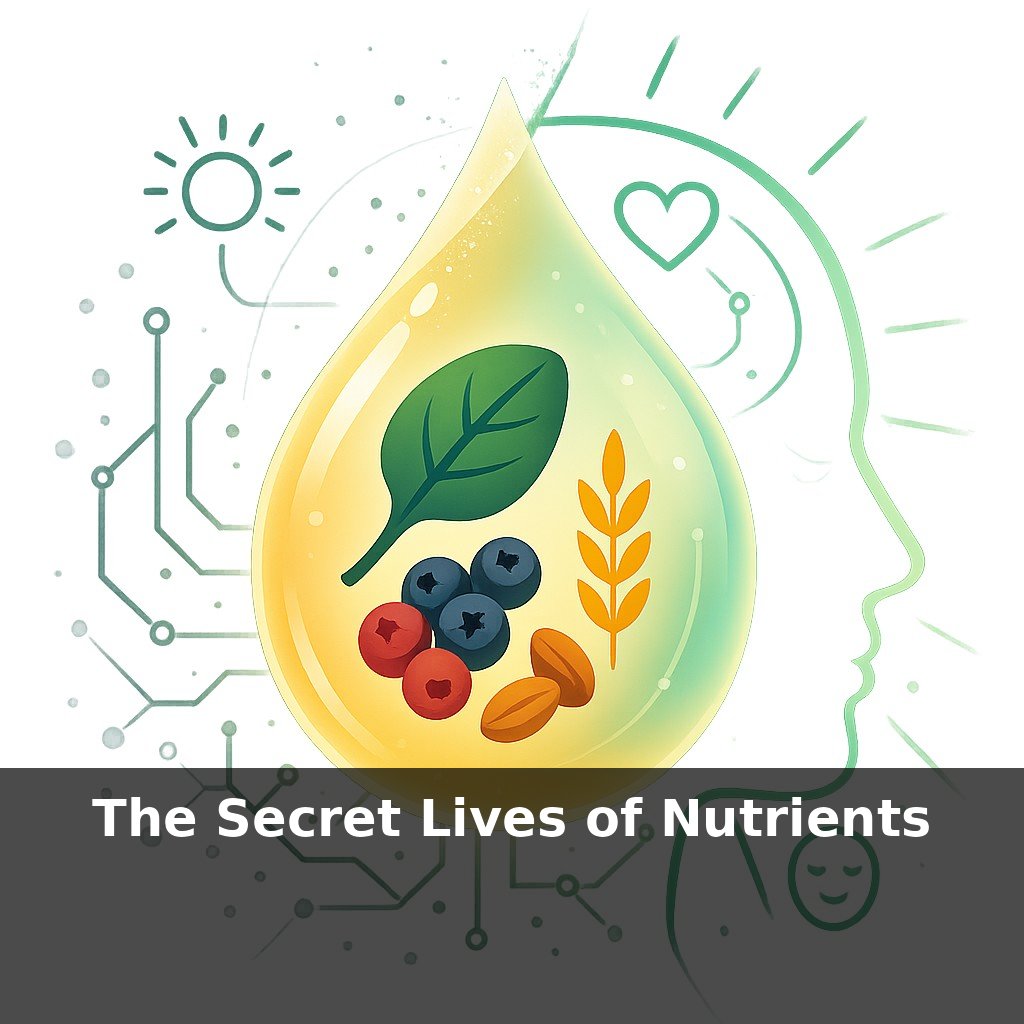
Right now, as you listen, your brain is quietly rewiring itself. Some connections are strengthening, others fading. Here’s the twist: a type of fat most people don’t get enough of can tip the balance—sharpening memory, lifting mood, and protecting your future thinking self.
Your brain does all this quiet remodeling with raw materials you eat. That’s where omega‑3 fats step in—not as vague “healthy fats,” but as physical building blocks your neurons can’t fabricate out of thin air. While most nutrients come and go, these particular fats are invited into the structure of your brain itself, shaping how smoothly signals move and how resilient those circuits stay under stress.
Here’s the catch: your brain is mostly fat by dry weight, yet it’s picky about which ones it accepts. It especially favors DHA and EPA, long-chain omega‑3s found mainly in marine foods. Relying only on plant sources is a bit like trying to run a modern app on decade‑old hardware—it works, but not at full power. In the next few minutes, we’ll trace how these specific fats travel from your plate to your synapses, and what changes when they’re missing.
Scientists can actually watch this preference for specific fats show up in real people. In long-running studies, those with higher blood levels of certain omega‑3s tend to score better on cognitive tests and stay sharper longer with age. Others notice differences more quietly: less mental “fog” after a long day, steadier focus, or sleep that feels more restorative. These aren’t instant upgrades so much as slow, structural tweaks—like gradually replacing worn keyboard keys so your fingers glide instead of catching. Over months and years, that ease can shape how you work, learn, and handle stress.
Inside that fatty, selective brain, DHA and EPA do something unusual for nutrients: they stay. Instead of just floating through, they become part of the physical landscape your thoughts run on. Under a microscope, their presence changes how tightly membrane molecules pack together, which subtly alters how receptors move, how ion channels open, and how vesicles release neurotransmitters.
One downstream effect: support for neurotrophic factors, especially BDNF. Higher omega‑3 status is repeatedly linked with higher BDNF levels, and BDNF behaves like growth instructions for synapses—guiding where new connections sprout, how existing ones stabilize, and how damaged circuits can be remodeled after stress or injury. That’s one way these fats end up mattering for both learning a new skill and recovering from a rough patch.
They also feed into a quieter system: resolution of inflammation. When brain immune cells get triggered—by infection, chronic stress, poor sleep, or metabolic issues—they release inflammatory signals that can blunt plasticity and dull mood. DHA and EPA can be converted into resolvins and protectins, compounds that don’t just block inflammation but actively help shut it down once a threat has passed. In brains low on these fats, that “off switch” can work less efficiently, leaving a smoldering background inflammation that chips away at cognition over time.
Real-world data back this up. In mood research, meta‑analyses show that supplements richer in EPA, not just generic “fish oil,” modestly but consistently lessen depressive symptoms, especially when added to standard treatment. In aging cohorts, people with higher blood DHA don’t just show lower dementia risk; they often have larger brain volumes in regions tied to memory.
There’s a practical catch: most adults convert only a sliver of plant ALA into DHA. So two people both “eating omega‑3s” can end up with very different brain supplies, depending on whether those omegas come mostly from flax and chia or from salmon, sardines, and algae oils targeted at long‑chain forms. Over weeks to months, that difference is literally written into their neural tissue.
Think about how this plays out in everyday choices. Two colleagues might both “eat healthy,” yet one leans on grain bowls, nuts, and avocado, while the other regularly includes sardines, mussels, or an algae‑based supplement. Fast‑forward six months: their lab panels could show similar cholesterol but very different long‑chain omega‑3 levels, and subtle gaps in how fresh or mentally resilient they each feel at 4 p.m.
You can even see it across life stages. Kids who rarely see seafood may hit all their growth charts yet still miss a chance to stock their neural “inventory” during years when circuits are most rapidly laid down. Older adults who finally add a few servings of oily fish per week don’t turn back the clock, but MRI studies suggest they may slow how quickly certain brain areas thin with age.
One analogy from tech: upgrading from basic to fiber‑optic internet. The websites are the same, but everything loads faster, feels smoother, and handles more tabs at once.
If these fats quietly shape how you think and feel, the next frontier is deciding who needs what, and when. Soon, a simple cheek swab could tell you whether flax salads are enough or you’d benefit from marine or algae sources. Clinics might pair tailored doses with sleep, exercise, and therapy—more like composing a playlist than handing out a single track. And if fermentation makes high‑purity oils cheap, schools or workplaces could “fortify” focus like we fortify flour with folate.
As nutrition science tightens these links, your grocery list quietly becomes a tool for shaping mental stamina, stress recovery, and how smoothly you learn new things. Tiny shifts—a weekly seafood night, algae oil beside the olive oil—act less like a quick fix and more like regular deposits into a long‑term “clarity fund” your future brain can draw on when life gets noisy.
To go deeper, here are 3 next steps: (1) Use a nutrient-tracking app like Cronometer to log today’s meals and check your daily intake of EPA/DHA, then compare it to the 1–2 g range often recommended for brain benefits. (2) Pick one high-omega-3 dinner for this week from a brain-focused cookbook like “The Better Brain Cookbook” or search “salmon + sardine recipes” on the Oldways seafood guide, and add the ingredients to your next grocery order right now. (3) If you’re considering supplements, read the omega-3 sections in Examine.com’s EPA/DHA evidence page and check a third-party-tested brand (e.g., Nordic Naturals, Carlson, or Thorne) on ConsumerLab or NSF Certified for Sport, then decide on a specific product and dose to trial for the next 4–6 weeks.