Your muscles can grow even when you’re barely moving—*if* you feed them right. In one study, people eating moderate protein built muscle as well as those chasing extreme amounts. So why do so many lifters swear you need a shake, a steak, and a snack every few hours?
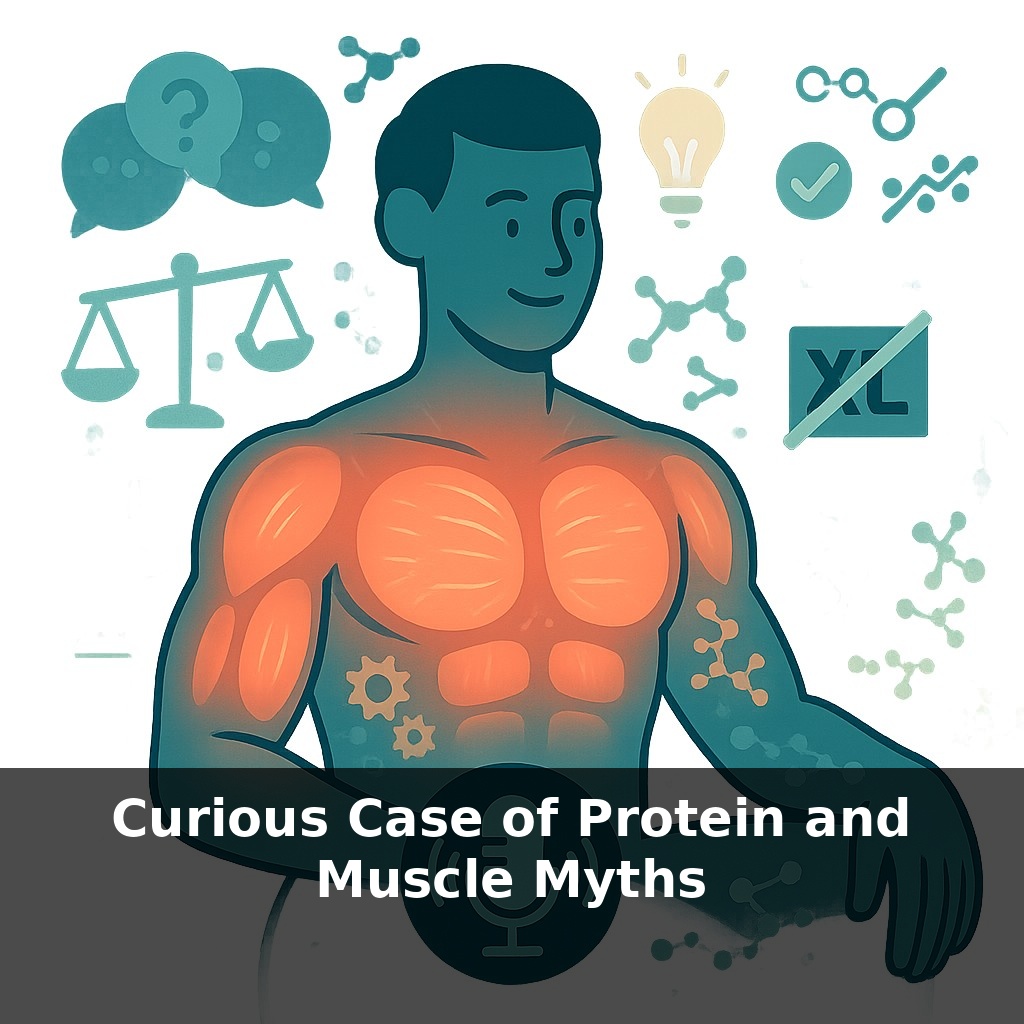
Here’s where the story gets stranger: protein is quietly running half your body’s backstage operations while you argue about shakes and chicken breasts. Enzymes made of protein decide how fast you burn fuel. Hormones built from protein help determine whether that fuel gets stored as fat or used to rebuild tissue. Antibody proteins patrol your bloodstream, tagging intruders long before you feel sick. And the source of that protein—meat, tofu, yogurt, lentils—shapes more than your muscles; it can nudge your blood sugar, cholesterol, and even how full you feel hours later. Yet most advice flattens all this into a single question: “How many grams for gains?” In this episode, we’ll pull apart four big myths about protein and muscle, and see how the *type*, timing, and total really matter for performance, health, and longevity.
Think of today’s protein debate less like biology class and more like debugging a messy app. Everyone’s obsessing over a single “max gains” setting, while the real story is in the code: how much *you* actually use, when your system is most responsive, and which inputs create the cleanest output for strength, energy, and long-term health. Newer research is quietly rewriting the rules: older adults may need more per meal than younger lifters, plant-focused eaters can match animal-protein outcomes with some planning, and your sleep, training style, and even stress can change how your body “reads” every gram.
Here’s where the myths start to crack.
Myth 1: “More protein = more muscle, no ceiling.” Your body treats amino acids like a priority inbox, not bottomless storage. When they’re needed for repair or other jobs, they get “answered” fast. But once those tasks are covered, extra isn’t turned into bonus biceps—it’s burned, stored, or repurposed. Studies on lifters show a point of diminishing returns: bumping intake from “adequate for training” to “huge” changes your grocery bill more than your physique, *unless* you were under-eating to begin with. The real levers are: hard, progressive training; enough total calories; and spreading protein across the day so your muscles see multiple “build now” signals.
Myth 2: “One magic number fits everyone.” Two people at the same bodyweight can have totally different sweet spots. Age, training age, injury status, and even dieting phase all shift how strongly your muscles respond to a given dose. Older adults often need a higher per-meal hit to get the same signal younger lifters do. Someone in a calorie deficit may benefit from the upper end of athlete ranges to hang onto muscle. Someone sleeping poorly or under heavy stress may *need* more careful distribution, because their baseline recovery is compromised.
Myth 3: “Animal good, plants… meh.” When you zoom out from isolated powders to actual diets, plant-centered eaters who hit total protein and mix sources keep up just fine. Soy, pea, potato, and wheat proteins are already showing up in trials with muscle and strength outcomes rivaling whey—especially when total grams and training are matched. The real mistake isn’t choosing plants; it’s underestimating how much you need or leaning on just one plant source without variety.
Myth 4: “Protein powders are mandatory.” They’re closer to a convenience tool than a requirement. Powders help when your appetite, schedule, or budget make whole-food protein tough, or when you need low-fiber, low-fat options right before or after training. But diets built around beans, lentils, eggs, yogurt, fish, meat, or tofu routinely hit the same targets in studies, with bonus micronutrients and fiber.
One helpful way to think about it: protein isn’t a magic button; it’s like carefully configuring the settings on a device—dose, timing, and source all interact. Get them roughly right for *your* context, and you unlock most of the benefits without obsessing over the last decimal place.
Think about how different people *use* protein, not just how much they eat. A novice lifter who trains twice a week “spends” their amino acids differently than a marathoner in peak season or a 70‑year‑old trying to stay independent. The novice might see big changes just by adding an extra serving of Greek yogurt or tofu at breakfast. The marathoner may lean on easily digested options around long runs so their gut isn’t fighting heavy food. The older adult might benefit from making dinner their *largest* protein hit, when they’re most at risk of skimping.
Zoom out to a typical day: breakfast of toast and jam (almost no protein), a modest-protein lunch, and a huge protein dinner is extremely common—and exactly backwards for muscle maintenance and steady appetite. Simply nudging a bit of that evening protein into earlier meals often leads people to report fewer cravings, better focus in the afternoon, and more stable energy even before strength changes show up.
Soon, “high protein” might mean something very different from a chicken breast. Precision‑fermented powders, insect flours, and lab‑grown options could slip into breads, snacks, and even coffee creamers, quietly upgrading everyday foods. Picture a grocery receipt that shows not just price, but a “protein quality score” tailored to your age, sleep, gut data, and training log—auto‑synced to your watch. The line between eating for muscle and being medically “dosed” with protein may blur.
So the real story isn’t “protein for muscles,” it’s “protein as strategy.” Shift the question from “How big can I get?” to “What do I want this protein to *do* for me today—steady focus, better sleep, faster recovery?” Treat each meal like updating an app: small, consistent upgrades that, over weeks, quietly rewrite how your body performs.
Try this experiment: For the next 7 days, eat 25–35g of protein (about a palm-and-a-half of chicken, tofu, Greek yogurt, or eggs) within 2 hours after your main workout, instead of “saving” most of your protein for dinner. Keep your total daily protein roughly the same as usual, just shift more of it to your post-workout meal and breakfast. Do the same 2–3 strength exercises each session (like squats, pushups, and rows) for 3 sets, and notice whether your performance (reps, ease, or soreness) improves by the end of the week. At the end of day 7, compare how strong, recovered, and hungry you feel after workouts versus how you felt the week before.