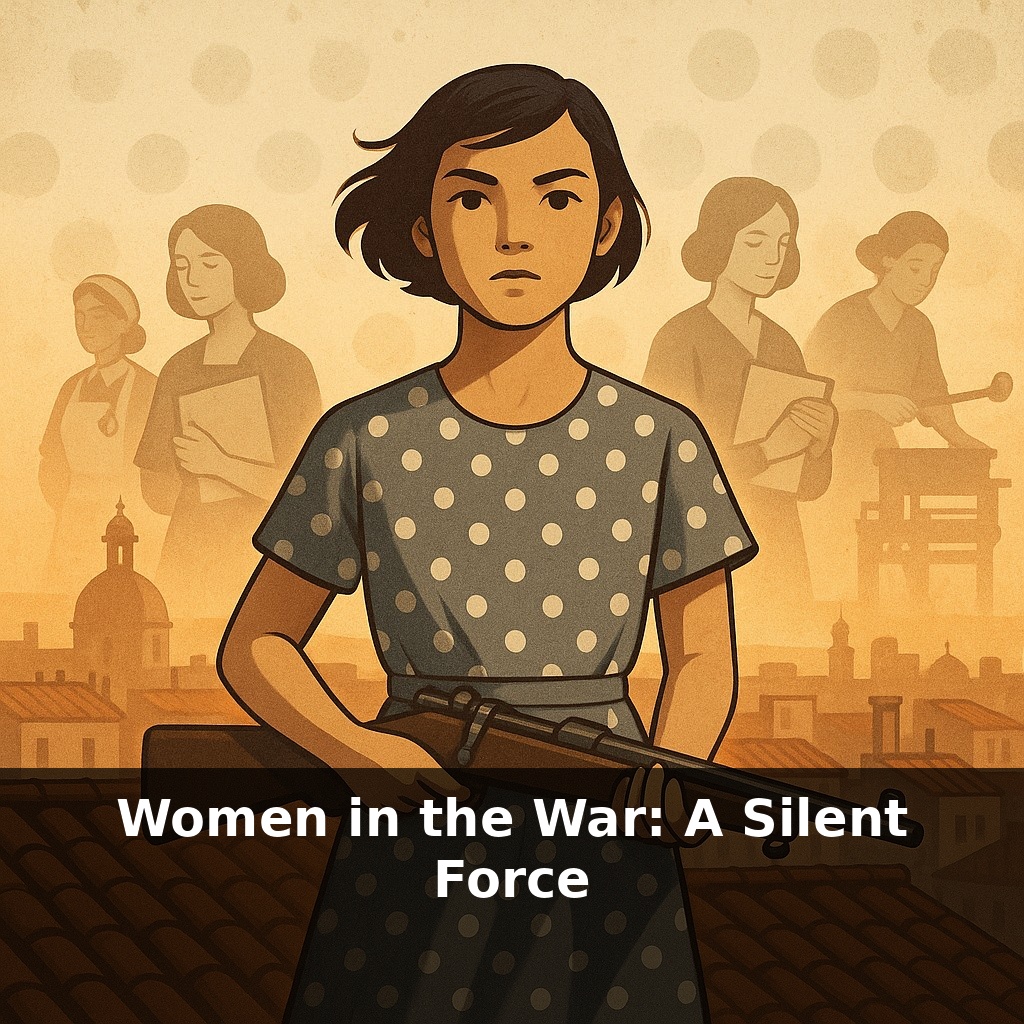
Gunfire cracks across a Barcelona rooftop. A teenager in a polka‑dot dress grips a rifle, staring straight at a camera—and into history. We know her name. But here’s the twist: for every woman we can see in this war, there were dozens more working in total silence.
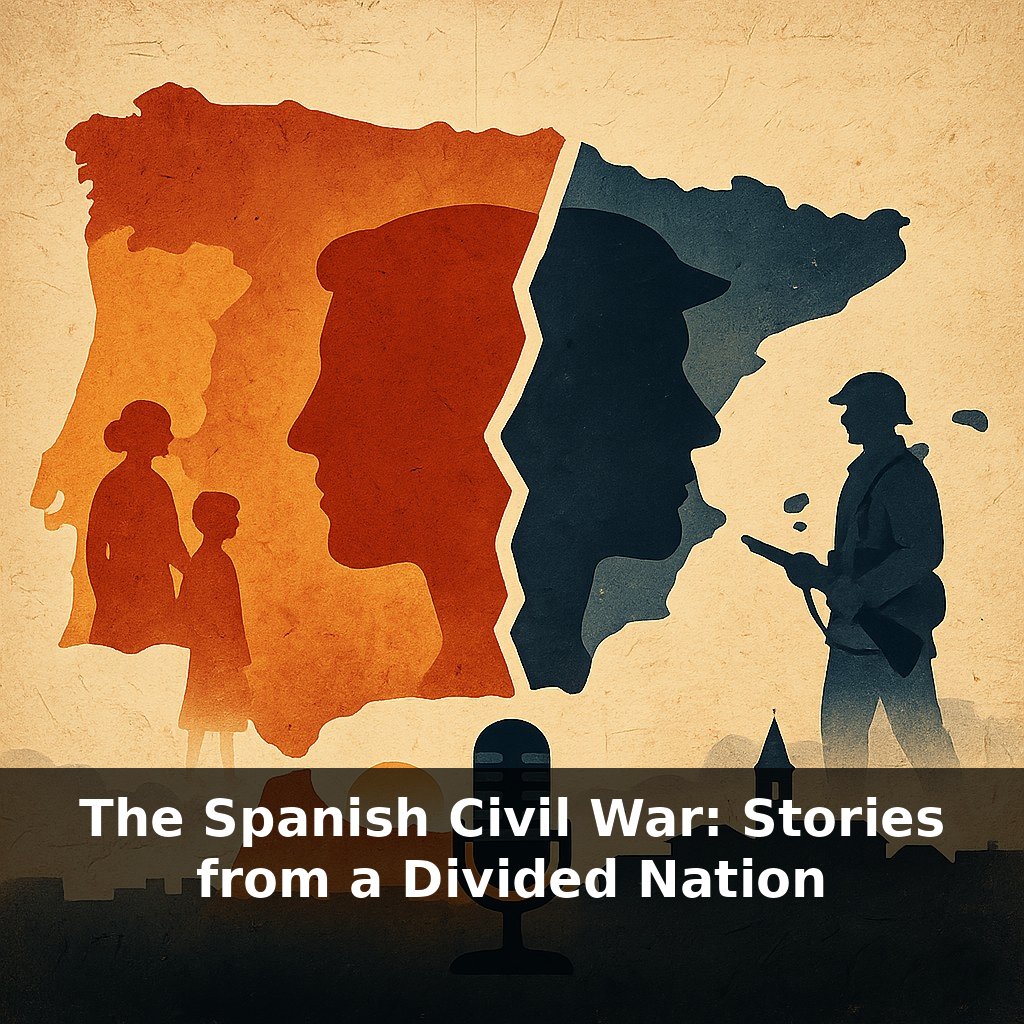
Some of these women did carry rifles, but many more wielded clipboards, stethoscopes, ladles, and printing presses. In 1936, Spanish women stepped into roles that would have sounded absurd just a year earlier: directing hospitals, coordinating food logistics for entire battalions, editing frontline newspapers, or negotiating with party leaders twice their age. Think of a modern startup where the official CEO gets the headlines, but the operations lead keeps the whole thing from collapsing overnight—only here the “product” was survival. On the Republican side, anarchist and socialist women clashed with their own comrades over childcare, divorce, and equal pay, even while bombs fell. Nationalist women, meanwhile, built a vast welfare machine that fed, nursed, and disciplined the emerging Francoist state. Both sides discovered the same truth: once women enter every layer of a war, nothing about politics or society can stay the same.
Yet if we zoom in on 1936, Spanish women were not starting from zero. Years of labor activism, literacy campaigns, and Catholic girls’ organisations had already trained them in speaking, organising, and fundraising—skills suddenly repurposed for war. Urban and rural experiences split sharply: a typist in Madrid might join a socialist women’s group, while a peasant in Galicia confronted requisitions and hunger with no party card at all. Local networks—parishes, tenants’ leagues, neighborhood cafés—became the “hidden wiring” through which women moved food, information, and sometimes weapons. And none of this fit neat propaganda posters.
On the Republican side, the most visible shock came in 1936: women in overalls and summer dresses stepping onto the front as milicianas. Estimates vary, but several thousand took up rifles in the first chaotic months, especially in Catalonia and Madrid. Many had barely fired a gun before July; what they did have was political conviction and street‑fighting experience from clashes with police and fascist groups. For them, enlistment was both military action and a declaration that the old gender order had just been blown up.
Their presence, though, exposed deep tensions. Some commanders welcomed the morale boost and international attention; others grumbled that women at the front were a distraction or a propaganda stunt. By 1937, under pressure to “professionalise” the army, many female fighters were quietly ordered back to rear‑guard roles. The same men who praised their courage suddenly insisted that “serious” war required male-only trenches. Women who had charged under fire were reassigned to typing pools, clothing depots, or hospitals—essential work, but experienced as a demotion by those who wanted to stay in combat.
Behind the lines, female organisation exploded in a different direction. Groups like Mujeres Libres and socialist women’s committees opened canteens, literacy circles, and childcare for factory workers producing arms. They debated whether to prioritise “winning the war” or “making the revolution,” often concluding that they had to attempt both at once. That double burden—keep the army supplied, and fight for your own emancipation—shaped every decision, from demanding equal rations to challenging male comrades over who controlled union funds.
Nationalist women moved with a different ideology but comparable scale. Sección Femenina drilled girls in discipline, Catholic virtue, and service, then deployed them to barracks kitchens, hospital trains, and relief centres for soldiers’ families. Their leaders spoke the language of sacrifice and obedience, yet they built a nationwide infrastructure that outlived the conflict and became a key pillar of Francoist social control.
Across the country, ordinary women adapted daily life to total war. They learned to decode shortages—when bread vanished, which neighbour knew how to stretch chickpea flour; when a son disappeared, which local contact could discreetly ask at the police station. Like a software patch quietly keeping a crashing system running, these improvised routines allowed Spain to function at all under bombardment and terror.
In practice, their work looked less like heroics and more like relentless troubleshooting. A young nurse in Valencia might spend a morning sterilising instruments, then spend the afternoon bargaining for soap and bandages with a factory manager who wanted proof his sons wouldn’t be sent to the front. In Burgos, a Sección Femenina organiser could track dozens of soldiers’ families in a notebook, noting who needed extra milk, who had a baby on the way, and who quietly asked about a missing relative. Women printers in Madrid experimented with ink mixtures when supplies ran low, keeping underground bulletins legible despite censorship and blackouts. Others learned to “read” train timetables and warehouse delays the way a strategist reads a map, spotting where food was stuck or where wounded were piling up. Their decisions were often made in cramped kitchens or crowded ward corridors, but they had the cascading effect of a well-placed pass in football: one accurate move could shift an entire local balance of survival.
Seeing these women changes how we read conflicts today. Security planners who once focused on battlefronts now mine family letters, union minutes and hospital rosters for patterns of resilience, tracing how care work, logistics and rumor shaped outcomes. As Spain opens more archives, expect casualty maps and command charts to be joined by “social maps” of who fed, healed and informed communities, much like adding a new data layer to a digital battlefield model.
To follow their traces now, historians sift recipe books, smuggled postcards, even scribbles on the backs of clinic forms, like archaeologists of everyday courage. Your challenge this week: when you see any war story—film, photo, headline—pause and ask, “Whose work is missing from this frame, and how would the story change if it were visible?”