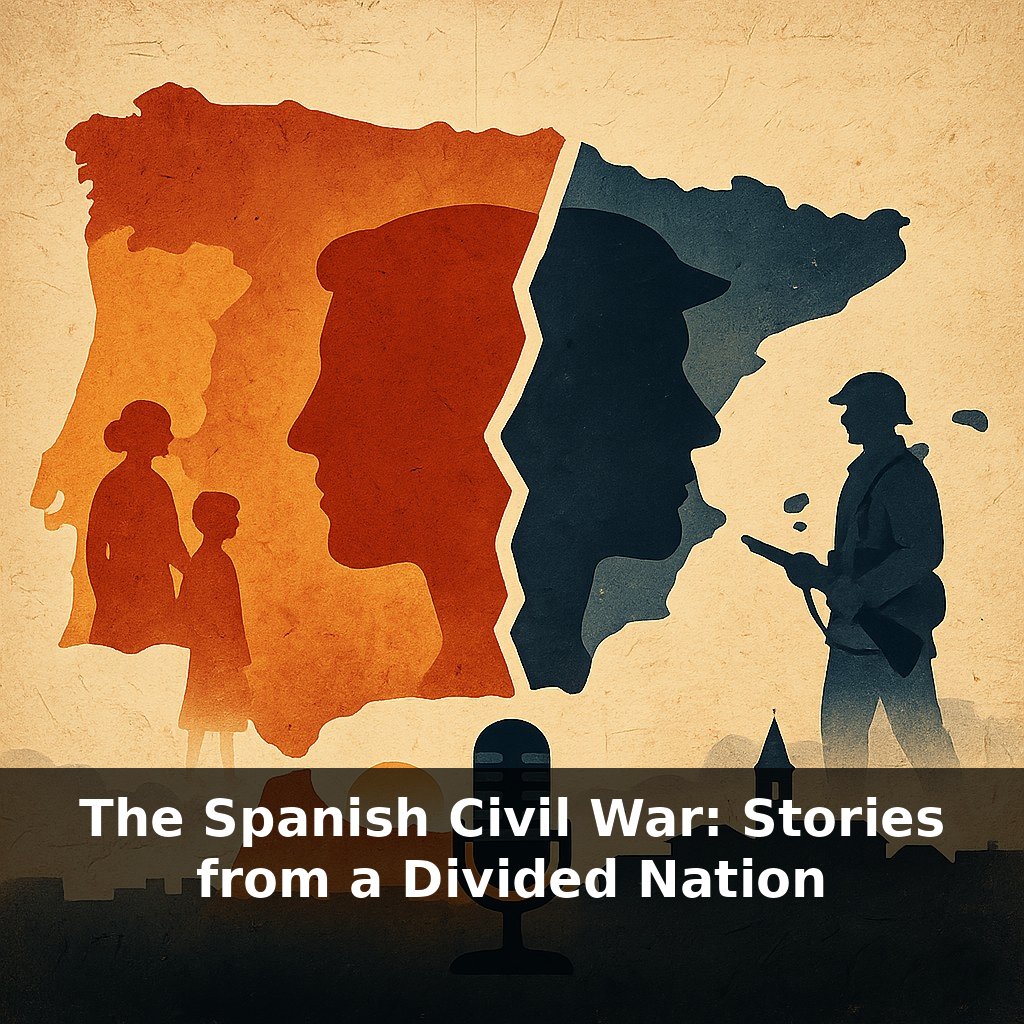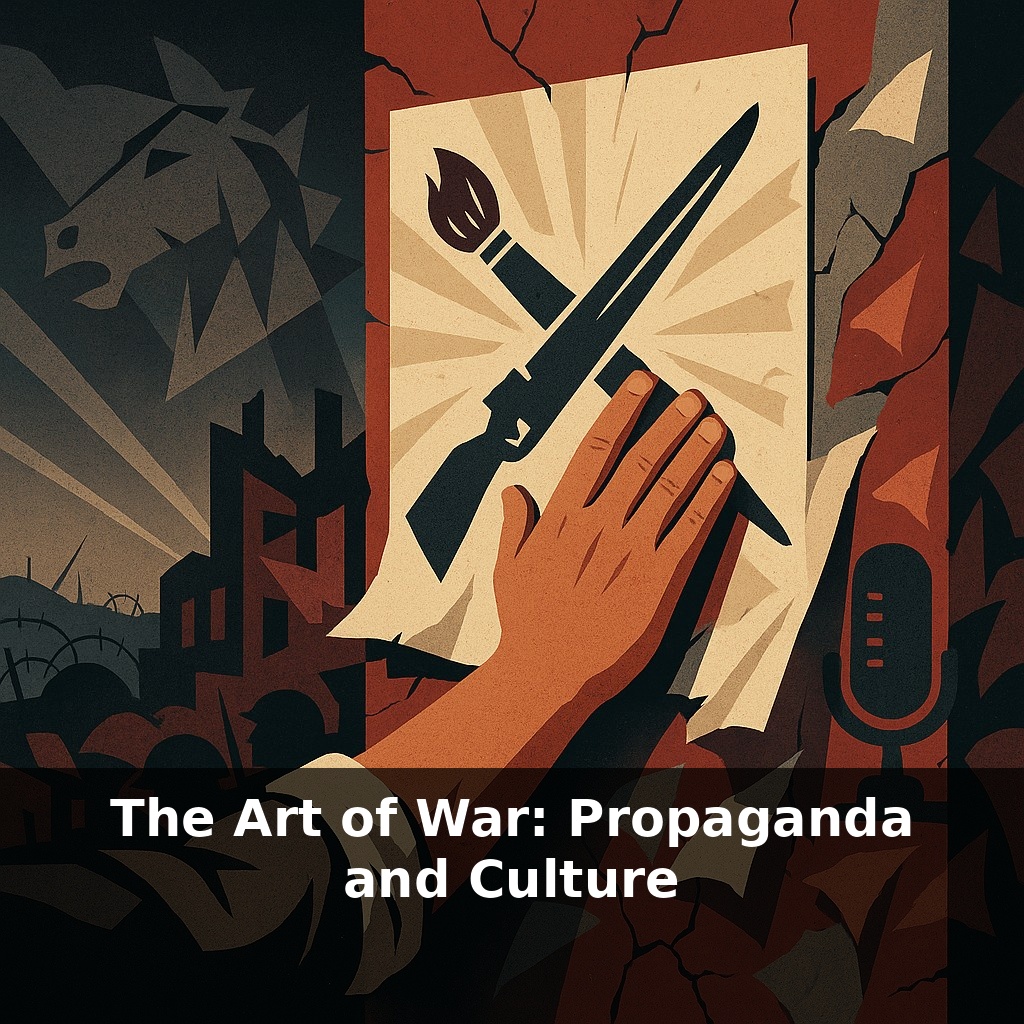
A painting of screaming horses and shattered buildings raises more money than many governments. A three-word slogan turns into a battlefield rallying cry. In the Spanish Civil War, art didn’t just report the fighting—it tried to win the war. How does culture become a weapon?
By 1937, the Spanish Civil War wasn’t just fought in trenches; it was scheduled like a media campaign. Leaders worried not only about ammunition supplies, but also about whether the right poster was on the right wall, whether tonight’s radio speech would sway Paris or Buenos Aires. Republicans and Nationalists both learned quickly: control the story, and you might control the reinforcements, the food, even the bullets.
Newspapers such as the Nationalist Arriba didn’t simply report events; they tried to choreograph how readers felt about them, day after day. Across the lines, anarchist and socialist groups poured scarce ink and paper into slogans like “¡No pasarán!”, betting that a few words could stiffen a city’s resolve more reliably than another sandbag. In this episode, we follow that battle for attention, page by page and frame by frame.
By mid-war, the front line stretched far beyond Spain’s soil. In Paris, London and New York, exhibitions, concerts and film screenings turned distant cafés and cinemas into auxiliary trenches. Avant‑garde artists, jazz musicians and filmmakers suddenly found their work threaded through telegrams, fundraising drives and embassy cables. A mural might influence a donation; a powerful film reel could tilt a newspaper editorial abroad. Meanwhile, inside Spain, radios hummed in kitchens and barracks, their schedules aligned with offensives, speeches timed like flares to light up moments of crisis or victory.
By 1938, every major faction in Spain had its own visual “accent.” Nationalist posters favoured sharp lines, heroic male figures and clear religious symbols: crosses, church silhouettes, soldiers framed almost like saints. The message was order, hierarchy, salvation. Republican visuals were messier but more experimental—montages of workers, women with rifles, and looming machinery, often in striking reds and blacks. Typography itself became partisan; blocky industrial letters signalled revolution, ornate scripts hinted at tradition or Catholic virtue.
Radio added another layer. Nationalist broadcasts stressed discipline and inevitability—victory described as a moral law of nature, not just a military goal. Republican stations mixed battlefield reports with songs, poetry readings and interviews with foreign volunteers, trying to turn a civil war into a shared international cause. Shortwave transmissions leapt across borders; a speech in Burgos or Barcelona might be cut, translated and replayed in Paris within days, folded into French or British debates about whether to intervene.
Film units on both sides travelled with troops, shooting newsreels that blurred the line between documentation and staging. A charge might be re‑enacted for the camera; a damaged building framed to look like total annihilation, or carefully cropped to hide nearby intact streets. These reels toured cinemas from Madrid to Mexico City, their commentary tracks doing as much work as the explosions on screen. Who bombed first? Who defended civilians? The answers shifted with the narrator’s voice.
Foreign artists and writers amplified all this. Visits to bombed towns became carefully guided tours, with local officials steering guests toward particular ruins, particular grieving families. Out of those visits came novels, essays, and canvases that circulated abroad as a kind of secondary propaganda—less controlled, but still deeply shaped by what visitors were allowed to see.
All of this produced a strange tension: the more each side tried to fix a single, simple story, the more contradictory images and testimonies seeped out, creating a fractured global memory of the war that still hasn’t fully settled.
A Nationalist rally in Burgos could feel like walking through a carefully designed stadium: chants timed to speeches, banners arranged so every camera angle showed unity, priests and generals positioned like star players introduced before kickoff. Each element was choreographed to project inevitability—this side looked like the team already winning the league.
Republican cultural fronts, by contrast, often resembled a sprawling open‑source software project. Trade unions, women’s groups and regional parties each maintained their own “branches”: magazines, posters, songs, small film units. Sometimes they collaborated brilliantly; other times updates conflicted, producing mixed messages that confused outside observers trying to “install” a clear sense of who was in charge.
Foreign volunteers added yet another layer. Letters home from Canadian, Polish or Irish brigaders blended trench gossip with critiques of Spanish tactics and politics; their accounts circulated in union halls and church basements, subtly rewriting how distant audiences interpreted the headlines arriving the same week.
Artists, journalists and coders today inherit this toolbox of persuasion, whether they want it or not. Studying those 1930s experiments helps decode how playlists, thumbnails and push alerts can quietly steer mood and belief. It also sharpens a different skill: spotting the seams where a polished narrative doesn’t quite fit the raw footage. In that gap, citizens can choose to remix the story, not just forward it, turning passive audiences into wary editors.
Each leaflet, song and frame from the 1930s now sits in archives like black‑box recorders after a crash, waiting to be replayed. When we study them, we’re not just decoding old lies; we’re mapping how hope, fear and loyalty were engineered. That map doesn’t give easy answers, but it does mark the blind corners where any future story may try to ambush us.
Here's your challenge this week: Pick one current news story and, for 48 hours, track how at least three different outlets (for example: a major U.S. network, a foreign state-funded outlet like RT or CGTN, and a niche online source) frame the exact same event—note the images, headline words, and which voices get quoted. Then, deliberately *invert* the messaging Sun Tzu–style: write a short, clear summary of the event that strips out emotional language, removes all “enemy/hero” framing, and focuses only on verifiable facts and admitted uncertainties. Finally, share that neutral summary with one friend and ask them which version (the original outlets or yours) made them feel more emotionally charged—and why.