A dictator controls the cities, the radio, the army—and yet he can’t sleep easy. Why? Because in the hills above him, a few hundred half-starved fighters and couriers keep blowing up tracks, vanishing into forests, and smuggling secrets across a guarded border.
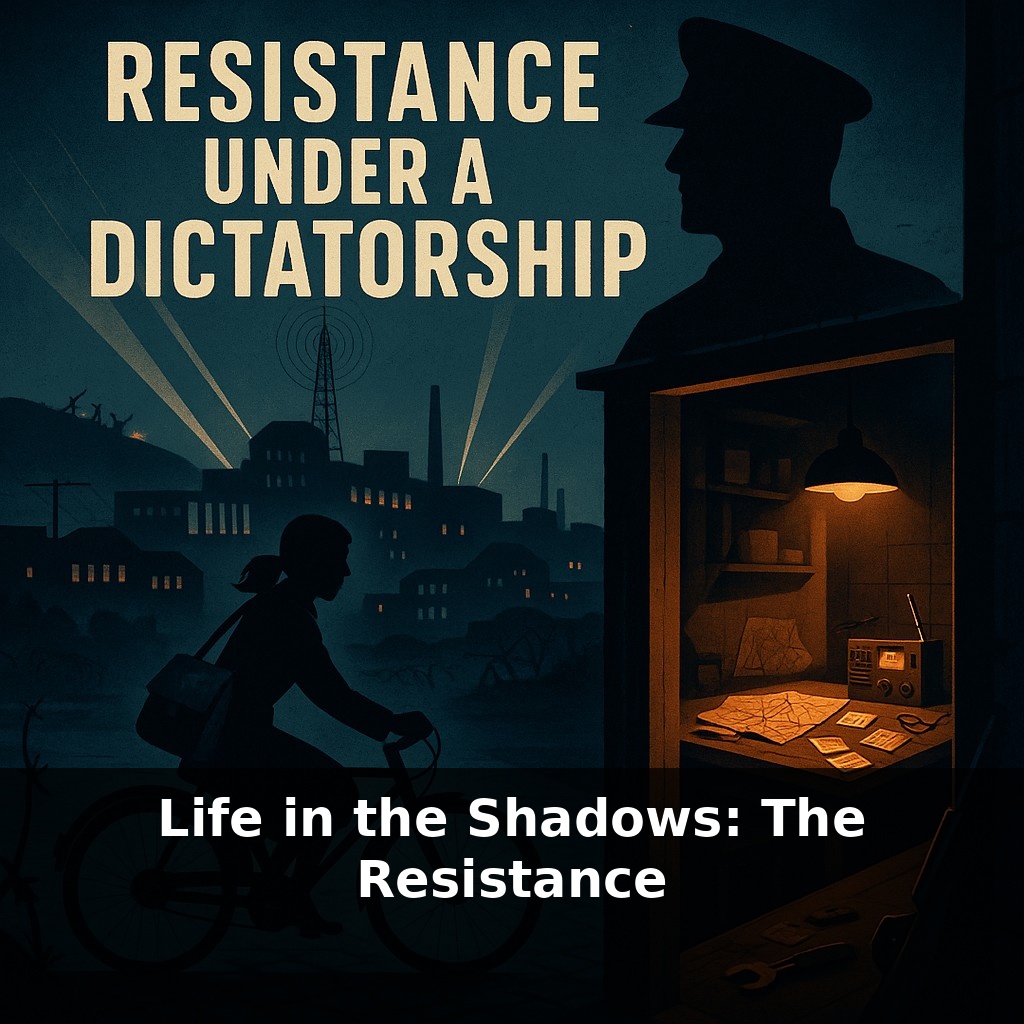
In this episode, we move in closer—to the kitchens, workshops, and smoky back rooms that kept the resistance alive. The story isn’t just men with rifles in the hills; it’s also women cycling through city streets with coded recipes that doubled as instructions, printers threading stencils onto battered mimeograph drums, and shepherds who knew which mountain path could swallow a patrol in fog.
While Franco’s regime paraded its strength in daylight—marches, speeches, uniforms—the real contest often played out after dark. A neighbor’s knock might mean shelter for a messenger, or a quiet warning that the police had asked too many questions. Resistance wasn’t a single heroic act; it was a long series of small, risky decisions—like constantly choosing the narrow, unlit alley over the safe, well‑paved boulevard, knowing that one wrong turn could end everything.
By the late 1930s, these hidden networks were no longer improvised acts of bravery; they were becoming a kind of shadow infrastructure. Safe houses formed quiet junctions where routes, code words, and people intersected. Some apartments doubled as switchboards, where a knock at noon meant “danger” and the same knock at dusk meant “all clear.” In mountain villages, bar tabs and church donation lists masked financial ledgers. A single misfiled name could trigger arrests, so records were fragmented—like splitting a password into pieces so no one person could unlock the whole system.
Fascist control was thickest in the obvious places: barracks, police stations, town halls. So the maquis learned to grow where surveillance was thinnest. One crucial zone was the countryside between front lines and big cities—those half-forgotten valleys where a suspicious stranger was noticed, but a familiar shepherd could pass three times a day without comment. There, guerrilla groups mapped terrain the way others mapped family trees: who owned which mule, which ravine flooded in autumn, which Civil Guard captain drank too much to lead a dawn raid.
Their operations fell into overlapping layers. At the sharpest edge were classic guerrilla bands—small units that cut telephone cables, derailed supply trains, or ambushed isolated patrols. But behind every dramatic action sat a quieter, slower machine. Villagers tested new policemen with harmless gossip to see what they repeated at the bar. Train workers memorised cargo schedules as if they were football scores, then passed them on during card games. A single accurate timetable could mean the difference between hitting an empty carriage or stalling an entire division.
Women’s roles expanded most dramatically here. Official propaganda praised them as mothers of “order,” yet that very stereotype made them less visible to patrols. A woman carrying bread baskets could hide microfilmed reports in the lining; a nurse could whisper news in hospital corridors crowded with wounded soldiers. Many did far more than relay messages. Figures like Encarnación Hernández commanded mixed-gender units, decided targets, and negotiated with wary villagers who feared both fascist reprisals and guerrilla requisitions.
Urban cells, too, learned to work under the nose of power. Printers hauled heavy mimeograph drums up rickety staircases, then timed noisy runs with church bells or factory whistles to muffle the clatter. Clandestine newspapers stitched together local stories—arrests in one town, a successful sabotage in another—into a picture of a Spain that had not fully surrendered. Reading one could feel like finding an encrypted update log in a system the dictatorship claimed was fully under its control.
Exile routes formed yet another layer. Guides from groups like the Ponzán network memorised dozens of crossing points in the Pyrenees, adjusting paths as German patrol patterns shifted. A failed crossing didn’t just mean captured airmen or activists; it threatened the entire chain of farmers, innkeepers, and priests who had quietly agreed that ferrying strangers through snowstorms was worth the risk of a firing squad.
In tech terms, these networks functioned less like a single encrypted channel and more like a decentralized mesh system. If one node dropped, messages could reroute through others. A printer in Bilbao might go silent, but a dockworker cell in Valencia could still distribute news via handwritten bulletins tucked into pay envelopes. Railway staff sometimes treated train schedules like real‑time dashboards, marking delays or unusual cargo with tiny pencil dots only insiders recognized. In the Pyrenees, guides adjusted routes the way a savvy gamer adapts to a map after each patch—testing patrol habits, noting fresh bootprints, then “updating” their mental charts before the next crossing.
Even money moved in unconventional ways. A village bar might “win” suspiciously frequent bets from a visiting trader; the losses were really donations, laundered through fake gambling streaks. In some towns, charity raffles drew numbers that secretly indicated who should shelter whom if a raid scattered families overnight.
Historians are now wiring these scattered stories into something searchable. Digitised files, GPS‑tagged grave sites, and pattern‑finding algorithms can reveal which villages quietly helped, which valleys became information highways, which crackdowns actually backfired. Like upgrading from scattered notebooks to a shared online map, this changes who gets seen as a protagonist. Future trials, school curricula, even local memorials may shift as invisible choices become traceable.
Today, those once‑silent choices echo in school projects, street names, and family stories finally told aloud. A granddaughter might scan a faded note like a QR code to a past her grandparents never voiced. Your challenge this week: trace one local story that feels “too small” for monuments and ask how it quietly bent history’s metal.