 2min preview
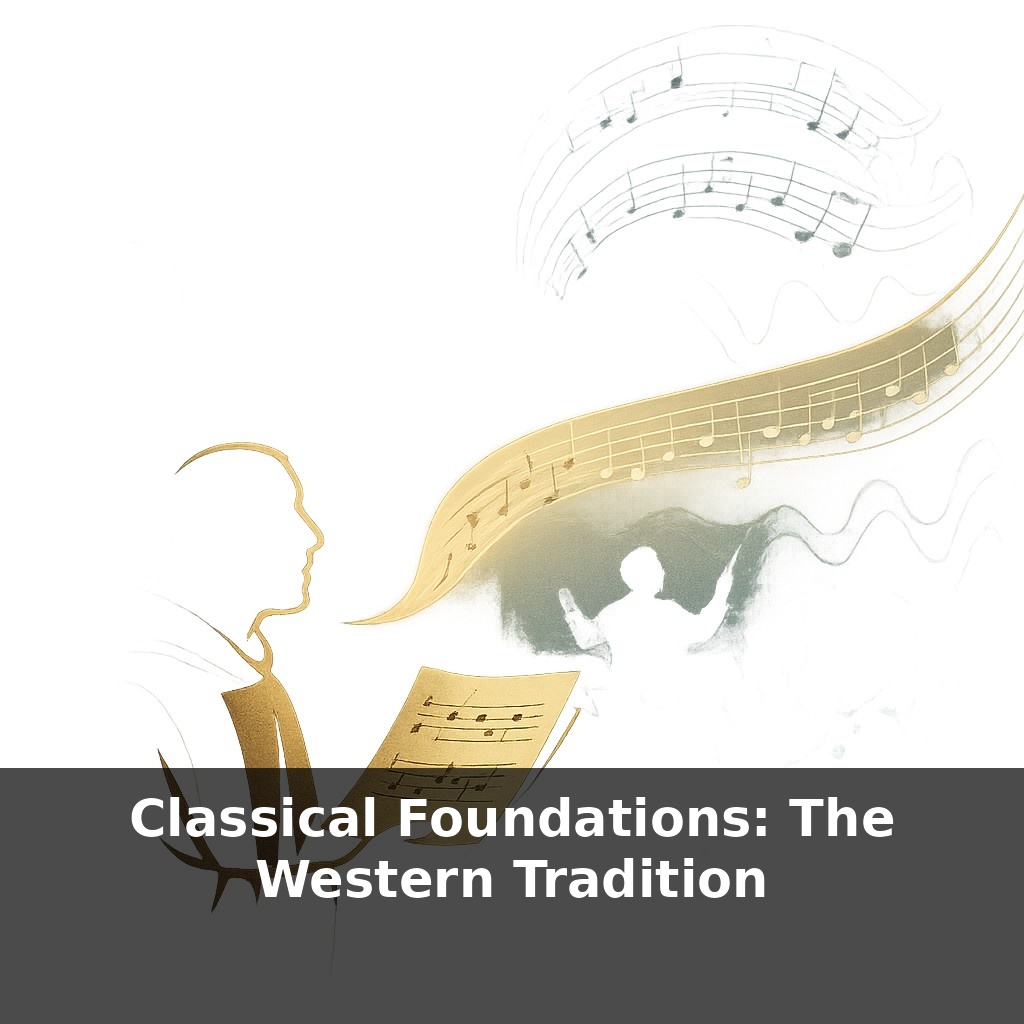
Classical Foundations: The Western Tradition
📝 Transcript
A thousand years of music history began with monks singing a single, unaccompanied line in stone-cold chapels—no instruments, no harmony, no applause. Yet those quiet voices eventually gave us Beethoven’s thunder and the soundtracks of our favorite films. How did that transformation happen?
Those early voices didn’t just fill chapels; they quietly engineered a new technology: a way to freeze sound in ink. Musical notation turned fleeting vibrations into something you could ship across kingdoms and revive centuries later—like sending a recipe instead of the finished meal. Once pitches and rhythms could be reliably written down, composers were free to experiment: stacking notes into harmonies, stretching melodies over longer spans, organizing time into ever more ambitious shapes.
Across generations, this written tradition hardened into what we now call the “canon”—a cluster of works copied, studied, and performed so often that they began to define what “serious music” meant. Yet that canon was never static. New styles kept crashing in, old ones faded or were revived, and each innovation raised a deeper question: who gets to decide which sounds become “classical” and which are forgotten?
Subscribe to read the full transcript and listen to this episode
Subscribe to unlockSubscribe for $1.99/month to unlock the full episode.
From this course
The Story of Music: How Sound Became Art
8 episodesUnlock all episodes
Full access to 8 episodes and everything on OwlUp.
Subscribe — $1.99/monthLess than a coffee ☕ · Cancel anytime