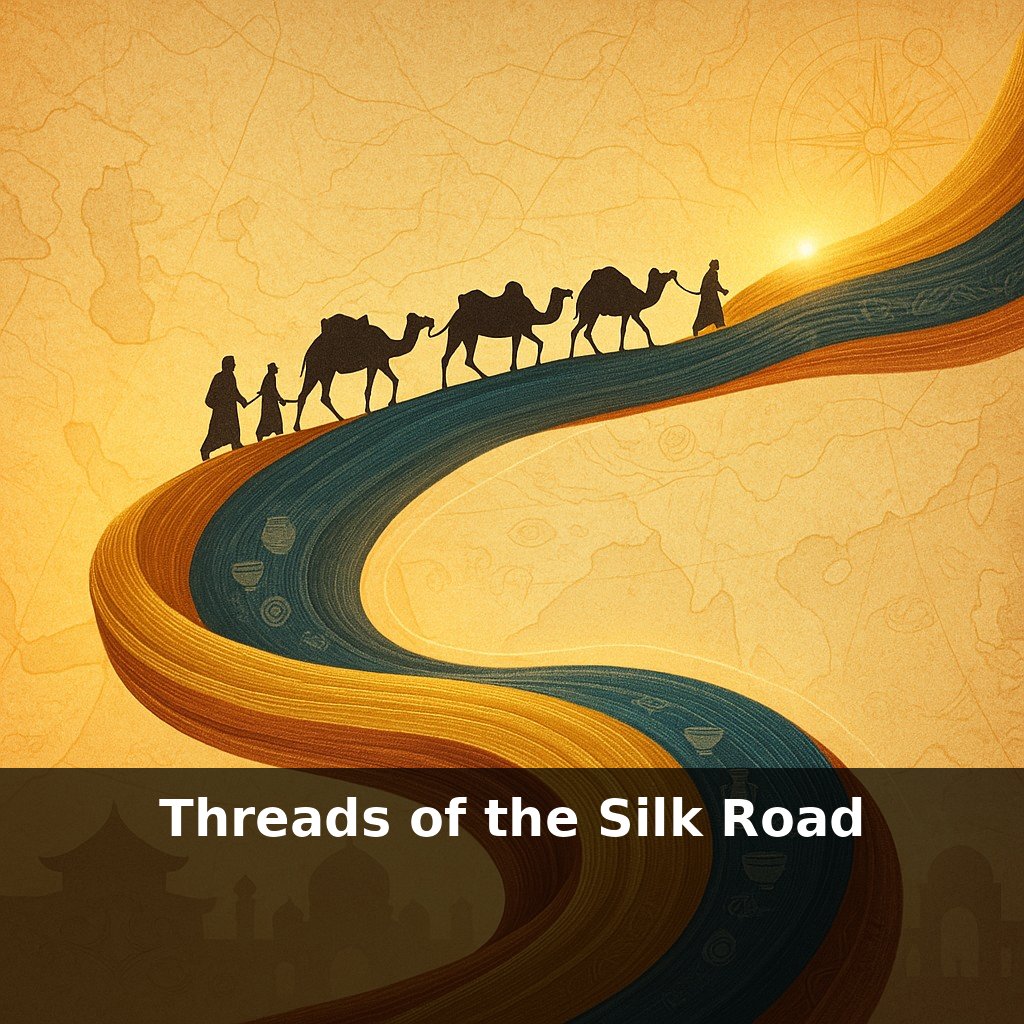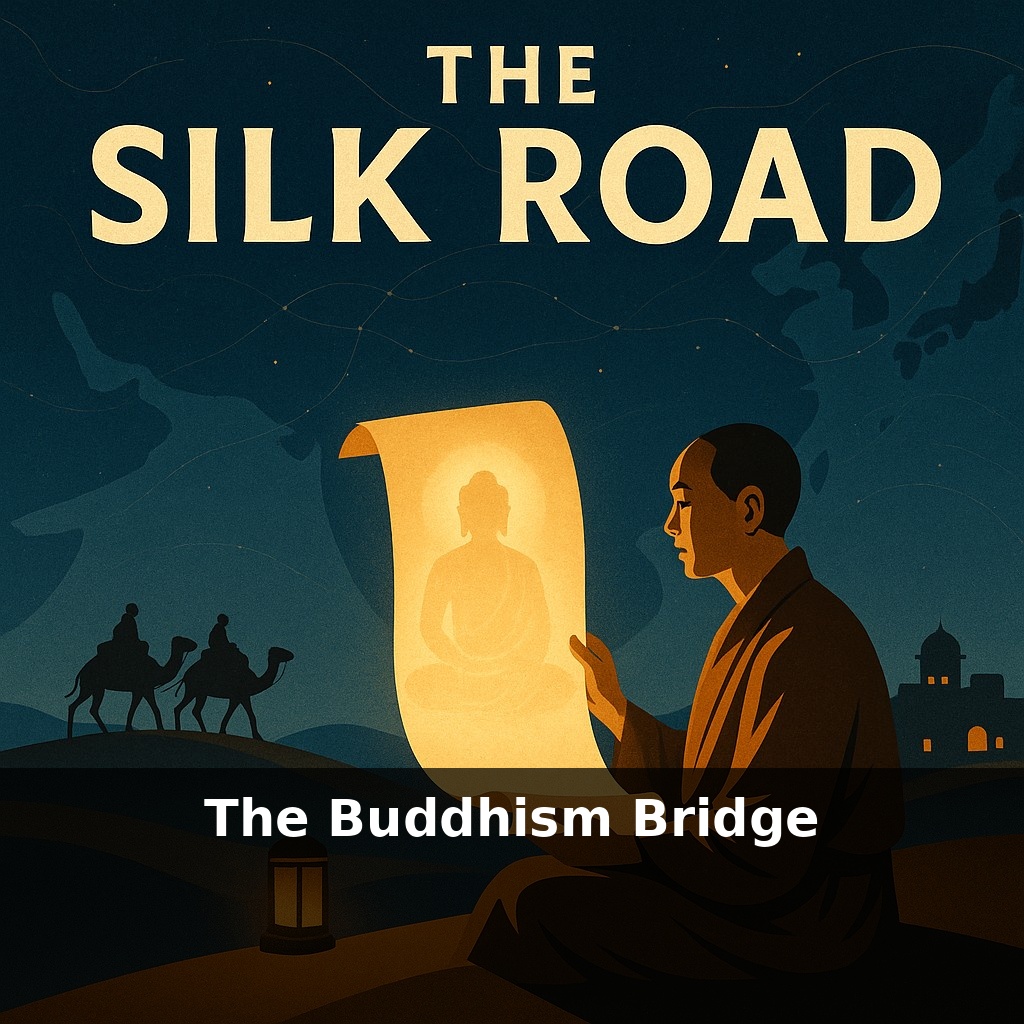
Half a world away from India, a Chinese monk opens a scroll and meets the Buddha for the first time—through a translator who has never seen India at all. On tonight’s episode, we follow the caravan where merchants traded silk…and accidentally rewrote religious history.
By the 3rd century, the busiest traffic on the Silk Road wasn’t always silk—it was ideas. A caravan might roll into an oasis town like Kucha carrying lapis, glass, and pepper, but by nightfall the real bargaining happened in lamplit rooms where monks, merchants, and local nobles argued over how to render a single Sanskrit word into Chinese. Should “śūnyatā” be translated as “emptiness,” “openness,” or something closer to “unbounded space”? The choice could tilt an entire school of thought. At some stops, you’d hear four or five languages volleyed in a single debate, like a crowded group chat where everyone hits “reply all” in a different tongue. Out of that noisy, imperfect process came new ritual calendars, new temple layouts, and scriptures that no one in India had ever read in quite that way before. The Silk Road wasn’t just a road—it was a moving workshop for re‑building Buddhism in real time.
By the time those debates reached Central Asian crossroads like Dunhuang or Samarkand, a traveler could walk one street and pass an Iranian merchant, a Sogdian banker, a Chinese official, and a visiting Korean monk in a few dozen steps. Local rulers quickly understood that hosting monasteries wasn’t just pious—it was good policy. Monks offered literacy, record‑keeping, even diplomacy between rival courts that shared no common tongue. Caravanserais became something like international airports: anonymous gates on the outside, but inside, lounges where stories, rituals, and architectural styles quietly changed their flight plans.
Stand on the ramparts of Chang’an around 400 CE and you’re looking over a city where one source claims more than 30,000 Buddhist monasteries dot the empire beyond its walls. That density wasn’t an accident of royal fashion; it was the downstream effect of centuries of small, practical decisions made at roadside towns that most emperors never saw.
Follow the route backwards and the story gets stranger. The earliest Chinese scriptures weren’t usually translated by Indians at all, but by monks from Central Asian kingdoms like Kucha or Sogdia. They arrived speaking hybrid tongues, trained in Indian doctrines but steeped in Iranian storytelling and steppe politics. When they sat down to render Sanskrit into Chinese, they didn’t just swap words—they smuggled in local assumptions about kingship, family duty, and the afterlife. A Chinese official hearing those sutras for the first time might recognize echoes of his own classics in the way karma or compassion were framed, and that familiarity made foreign ideas feel negotiable rather than threatening.
The physical landscape recorded this mixing just as clearly as the texts. In the desert site of Miran, mud‑brick stupas rose using building tricks borrowed from Middle‑Eastern architects. Farther east, cave temples around Dunhuang wrapped imported legends in Chinese cloud scrolls and swirling robes. Inside, wall paintings show donors with carefully inked mustaches wearing Sogdian caps, standing beside Chinese patrons in silk, all kneeling before imagery that a pilgrim from India would find both recognizable and oddly dressed.
Meanwhile, the people paying for these experiments were often not scholars at all. Sogdian trading families endowed shrines to advertise reliability and win protection for their caravans. Generals along the frontier sponsored rituals to stabilize newly conquered territories. Even low‑ranking soldiers tucked tiny printed charms into their belts—cheap, portable promises of luck that traveled faster than any monk on a sponsor’s payroll.
Over centuries, these local bets on what would “work”—which image calmed a sandstorm‑weary trader, which sermon impressed a prince—slowly sorted ideas. Doctrines that bridged cultures moved on to the next town; those that didn’t withered at the oasis where they were tried. Step by step, an Indian religion crossed 7,000 kilometers not as a single, intact export, but as a chain of regional prototypes, each one subtly re‑engineered for the next audience on the road.
At Dunhuang, that “moving workshop” left a paper trail. Cave 17’s sealed chamber held over 50,000 manuscripts that feel less like a sacred library and more like the back office of a very busy institution: tax records beside miracle tales, meditation manuals next to travel permits. You can trace a single phrase as it mutates across languages, picking up new shades of meaning when a Tibetan scribe quotes a Chinese paraphrase of an earlier Sogdian rendering of an Indian verse. One scroll might splice a ritual for safe childbirth onto a spell for protecting cattle, hinting at the daily worries of the donors who paid for copying. Another preserves a sermon customized for border guards, promising merit for defending distant passes. Like a long‑running open‑source codebase, comment lines and “bug fixes” accumulate in the margins—monks correcting each other, adding clarifications, or quietly steering a story to suit a new patron’s world.
Today, you can scroll through Dunhuang scrolls on your phone while freight trains retrace old steppe corridors. The next step isn’t just preserving them as museum pieces, but letting them shape how we meet across borders now. Your challenge this week: whenever you see a heated online argument about belief or identity, pause and ask, “What local fear or hope is this really translating?” That Silk Road habit of listening under the words might be the most modern legacy of all.
In the end, those routes didn’t just move creeds; they trained people to remix meaning on the fly, like DJs sampling tracks for a new crowd. Your challenge this week: when you meet a belief that feels “foreign,” ask what problem it might be solving for someone else. You may not adopt it, but you’ll see the hidden map of needs beneath the words.