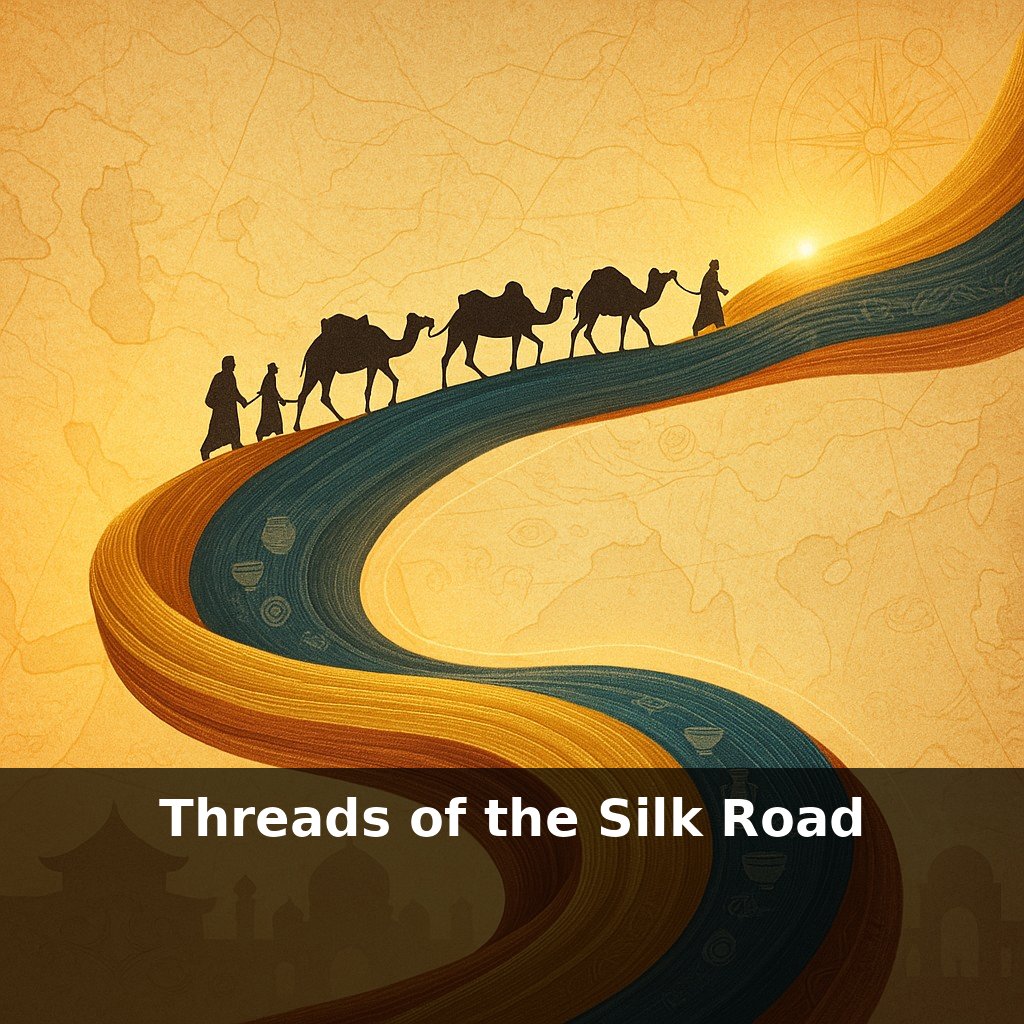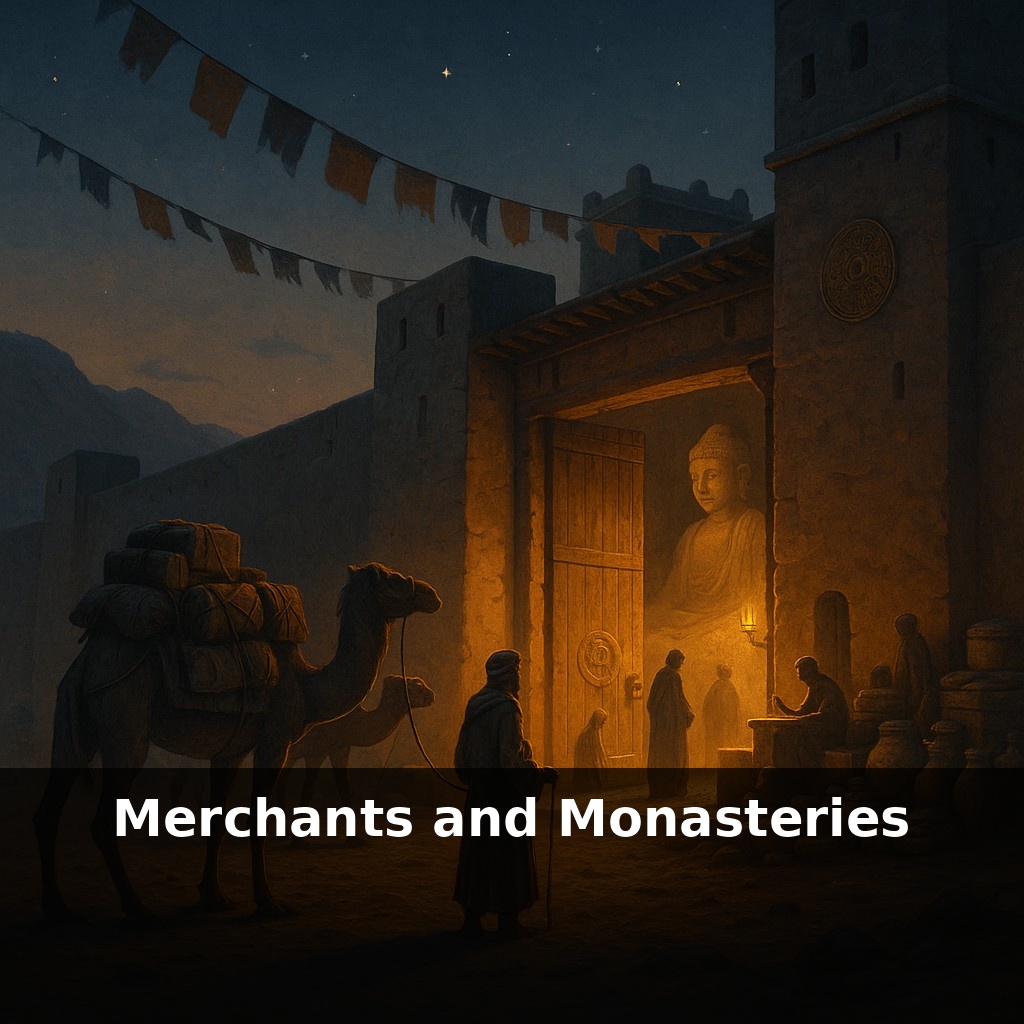
Caravans once paid monks a standard “camel parking fee” just to sleep safely near their walls. In this episode, we step into those night courtyards—where dusty traders, chanting monks, and royal tax deals quietly turned remote monasteries into economic powerhouses.
By daylight, those same courtyards revealed something stranger: the busiest “markets” along the Silk Road were often behind monastery walls, not city gates. Stone Buddhas looked down on ledgers; prayer flags fluttered above grain storehouses. In Dunhuang, merchant clans didn’t just buy protection for a single night—they sponsored entire cave murals, turning devotional art into a very public credit score. Further east and west, kings quietly diverted tax revenue and irrigated fields into royal monasteries, trusting monks more than ministers to keep accounts straight. Think of long-distance traders “subscribing” to a network: donate in one town, get trusted lodging, news, and introductions in the next. As we follow these donation trails and land grants, a pattern appears: faith created the infrastructure that finance alone couldn’t build.
By the 7th century, some of the busiest account books in Inner Asia were kept not in palaces, but in scriptoria that smelled of ink and incense. Monks tracked donations in multiple scripts—Chinese, Sogdian, Tibetan—like multilingual spreadsheets binding far‑flung partners into a single system. A Tang edict could tweak the rules overnight: waive import duties here, require temple contributions there, and suddenly caravans rerouted toward certain valleys. In oases like Khotan, royal houses, merchant guilds, and abbots formed a three‑way balance, each leaning on the others to keep grain, silver, and pilgrims moving.
By the time caravans reached places like Dunhuang or Khotan, the real negotiation often began not at the customs post, but in the abbot’s reception hall.
Here’s the basic deal, revealed in contracts and donor lists: merchants brought in mobile wealth—silver, bolts of cloth, sometimes entire strings of pack animals. Monasteries converted that into fixed assets—land, water rights, warehouses—and then quietly fed value back into the trading system.
One way was through land. In Khotan and similar oases, temple estates weren’t just pious showpieces; they were irrigated, surveyed, and folded into regional markets. Lay tenants paid rent in grain or labor, and monks decided how much surplus to sell, at what season, and to whom. That gave them subtle leverage over prices just before caravan season, when fodder and food could make or break a long journey.
Another way was through information. Monastic guest registers in multiple scripts doubled as risk reports. A Sogdian trader staying three days might hear which passes were snowed in, which governors had been recalled, which frontier post had a new, bribe-hungry officer. When the same traveler appeared months later at a sister house hundreds of kilometers away, the monks there already knew his credit history and news he carried from the last stop.
The most sophisticated layer, though, was financial. Some monasteries effectively ran deposit schemes: wealthy patrons endowed funds “for eternal lamps” or ritual recitations. The capital was sacred, but the income it generated—via interest-bearing loans to caravan partners or advances to farmers—circulated briskly. A pious endowment could underwrite a risky venture without any official “merchant bank” ever appearing on the scene.
Rules of the game mattered. When the Tang court granted tariff exemptions in exchange for temple support, Sogdian firms didn’t just save on duties; they gained a quasi-legal channel for moving profits. Donate here, claim religious merit there, and inconvenient questions about exact volumes or margins became harder for tax agents to pursue.
Taken together, these practices turned scattered religious houses into a kind of slow-motion clearing system. Monks, praying at scheduled hours and copying sutras line by line, also stitched together the dependable routines that high-risk trade needed—regular lodging, predictable fees, and shared records that outlived any single dynasty.
In Dunhuang, those donor lists sometimes read like a who’s‑who of rival firms quietly cooperating. A Sogdian caravan leader might sponsor a side chapel; a local Chinese grain broker would underwrite the roof beams. On paper, they’re just names carved into plaster. In practice, that shared sponsorship functioned like co‑signing a contract: if the roof collapsed—or a caravan vanished—their reputations sank together.
Elsewhere, Nestorian waystations and later Islamic khānqāhs plugged into the same circulatory system. A Nestorian house in Central Asia could vouch for a Christian trader arriving at a Buddhist site; a Sufi lodge might pass on news of safe wells to a mixed‑faith caravan.
Think of a sports league where teams fight fiercely on the field but rely on the same schedule, referees, and stadiums. Monastic networks set the “fixtures” of the trading year—festival dates, pilgrimage seasons, ritual fasts—so merchants could plan departures, hedge risks, and even time risky crossings between major feasts, when more eyes and guards would be on the roads.
Pilgrims and traders treating monasteries as neutral ground left an unexpected legacy: templates for governing trust across borders. Today’s halal logistics chains and fair‑trade labels echo those badge‑like donor lists, signaling “safe to deal with” when law or language falter. Your challenge this week: scan the labels, certifications, and apps you rely on when buying or traveling, and ask which of them quietly play the old monastic role of referee, not just vendor.
In the end, these alliances did more than fatten ledgers—they rewired who people trusted. A monk’s signature might outweigh a prince’s seal, just as a tiny lock icon now calms us more than a brand’s glossy ad. Following those old trails of confidence, we see how belief keeps sneaking into our contracts, shaping the deals we think are purely rational.
Try this experiment: For the next 7 days, split your working time into “Monastery Hours” and “Marketplace Hours” and track what happens. Block 60–90 minutes each morning as Monastery Hours: no phone, no email, no social media—just deep, craft-focused work on one “soulful” project (your equivalent of the monks’ scriptoria: writing, designing, coding, composing, etc.). Then schedule a 60–90 minute Marketplace block later in the day that’s unapologetically commercial: sales outreach, pricing tweaks, offer pages, or direct revenue-focused tasks. At the end of each day, jot down (in one sentence each) what you produced in Monastery Hours, what you earned or moved forward in Marketplace Hours, and which block felt more energizing. After 7 days, decide—based on your notes—whether you need to lengthen, shorten, or rebalance those two modes to better match your goals.