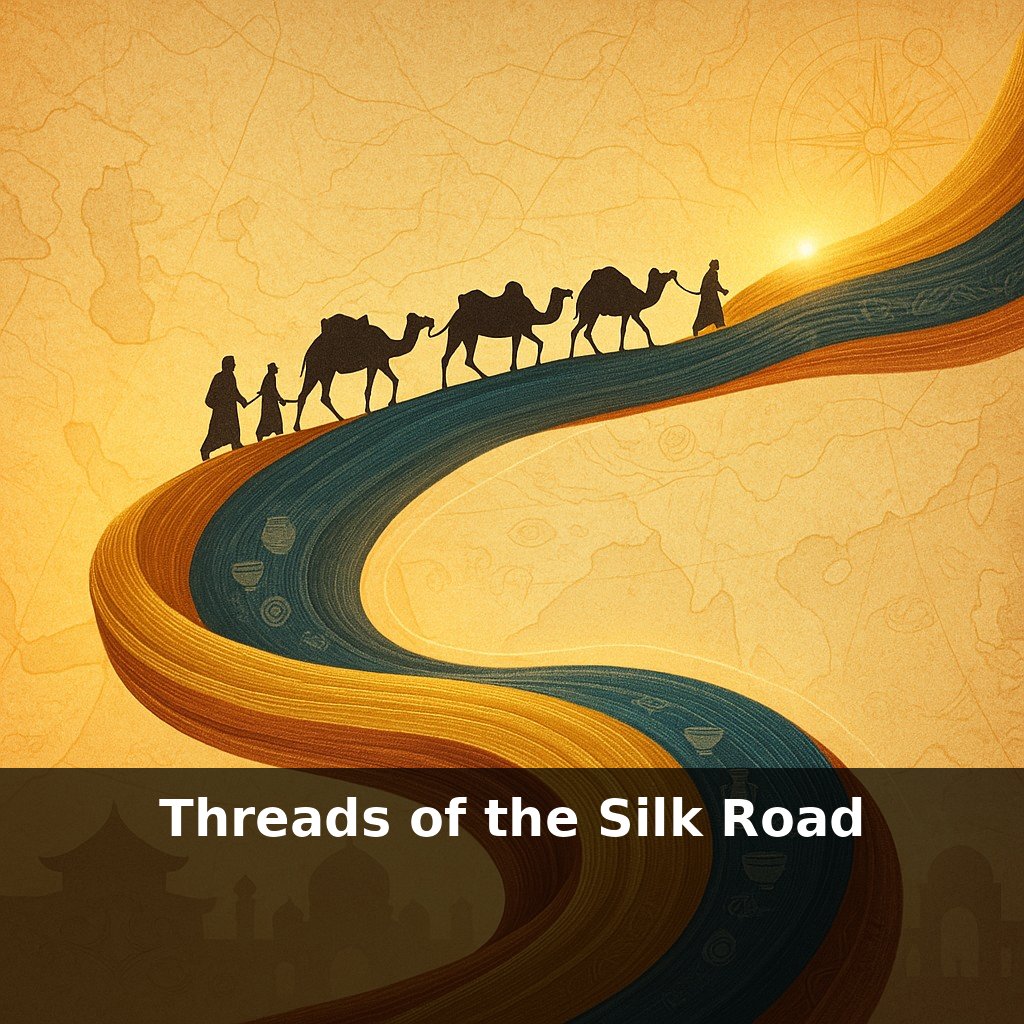
A single road of trade once bankrolled armies from China to the Mediterranean, yet owned no soldiers, no king, no capital. Caravans crept through desert passes; in distant palaces, emperors rewrote tax laws overnight. How did a trail of dust quietly re-engineer global power?
By the 2nd century BCE, the Silk Road wasn’t just moving goods; it was underwriting empires. Han officials counted bolts of silk the way modern states track oil exports, while far to the west Roman senators fretted over how much bullion was vanishing into “oriental luxuries.” Statutes, fortresses, and border posts sprouted along the route—not as random outposts, but as carefully placed faucets to control the flow of wealth. During stable eras like the Tang or the later Mongol rule, rulers slashed banditry, standardized taxes, and watched caravans surge in response. In fragmented times, the same paths splintered into risky detours. The story ahead explores how Han bureaucrats, Abbasid caliphs, Mongol khans, and Timurid warlords all treated this trail as both lifeline and lever: fund the army, justify the crown, shape what people believed and desired.
Some of the most powerful states in history rose beside windswept passes and dusty wells, not lush river valleys. Han garrisons dotted the Gansu Corridor; Parthian and later Sasanian elites clustered near Iranian plateaus; oasis cities like Samarkand and Bukhara turned from sleepy stops into dense hubs of scribes, tax men, and spies. Control wasn’t just military—paperwork mattered. Customs ledgers, sealed letters, and standardized weights did as much as spears. Follow these empires along the trail and a pattern appears: whoever mastered chokepoints could rewrite the map far beyond the desert’s edge.
Under the Han, the story begins with defense, not profit. Xiongnu raids along China’s northwest frontier forced courts to pour resources into walls, watchtowers, and supply depots. Once those outposts existed, officials noticed something: merchants were clustering near the gates, exchanging horses, jade, and eventually silk. What started as a military cordon slowly mutated into a revenue system. Silk stipends paid to frontier soldiers could be resold westward; the flow of pay became a flow of exports.
Further along the trail, Parthian and then Sasanian elites did something different: they treated distance itself as an asset. Instead of trying to reach China or Rome directly, they specialized in being indispensable middlemen. They licensed merchant houses, taxed caravanserais, and quietly managed information—careful not to let eastern and western buyers talk to each other too much about prices. Geopolitics and price protection went hand in hand.
The Kushan realm, straddling today’s Afghanistan and northern India, turned crossroads into ideology. Greek-style coins showed kings in Roman dress on one side and Buddhist or Hindu deities on the other. This blend wasn’t aesthetic whim; it signaled to diverse subjects and traders that the regime could speak multiple cultural “languages” at once, making it safer to invest, worship, and store wealth under their protection.
Centuries later, Tang China scaled up this logic. Court patrons filled Dunhuang’s cave shrines with paintings that featured Sogdian, Turkic, and Indian figures kneeling together, a visual claim that distant communities were now part of a shared orbit. In Chang’an, foreign quarters became testing grounds for urban policy: legal codes on contracts, loans, and partnership structures emerged partly from disputes among long-distance merchants.
The Abbasid shift of the Islamic world’s center to Baghdad rewired the network again. Paper-making know‑how moving west from Chinese workshops collided with demand from tax offices and scholars. Account books, bills of exchange, and letters of credit reduced the need to haul hard silver across every frontier, even as Roman-era anxieties over bullion drainage echoed in new debates about hoarding, interest, and fair pricing.
Then the Mongol conquest stitched these regional experiments together. Their Yam posts, spaced a day’s ride apart, did more than move couriers; they standardized expectations. A merchant leaving Tabriz for Khanbaliq could anticipate recognizable seals, weights, and procedures thousands of kilometers away, a kind of proto-platform architecture for Afro‑Eurasian trade.
Abbasid Baghdad functioned like a densely wired server hub: information, credit, and skilled people converged, then fanned out toward Cairo, Damascus, Nishapur, and beyond. A Jewish trader from Fustat might finance a shipment of Yemeni aromatics to Siraf using partnership contracts vetted by jurists quoting both hadith and Greek logic, then reinvest profits in a Book Market copyist’s stall that depended on cheap Samarkand-style paper. Farther north, Sogdian merchant families in places like Bukhara or Panjikent carved niches as cultural “translators,” drafting multilingual contracts and arranging marriages that tied steppe lineages to oasis guilds. When the Ottomans later absorbed nodes from Bursa to Aleppo, they didn’t just inherit customs posts; they absorbed these archival habits, credit tools, and brokerage practices. A Bursa silk weaver, a Damascus dyer, and a Cairo broker might never meet, yet their livelihoods were synchronized by reference prices posted in bazaars and decisions taken in distant chancelleries balancing tariffs with the need to keep traffic flowing.
Railways, fiber‑optic cables and energy pipelines now trace newer corridors across similar passes, turning mountain tunnels and border crossings into leverage points. Algorithms route containers the way officials once routed caravans; a customs bottleneck can stall factories continents away. Climate models and satellite scans, meanwhile, treat buried ruins as datasets, letting planners test how past chokepoints behaved under stress and how today’s corridors might bend or snap in future crises.
Today’s rail lines, data cables, and airline hubs echo old corridors, but with satellites as cartographers and trade algorithms as schedulers. Power now pools where logistics, finance, and ideas intersect, not just where armies stand. Your challenge this week: map three places in your life where a “route” quietly decides who gains, who waits, and who is left out.