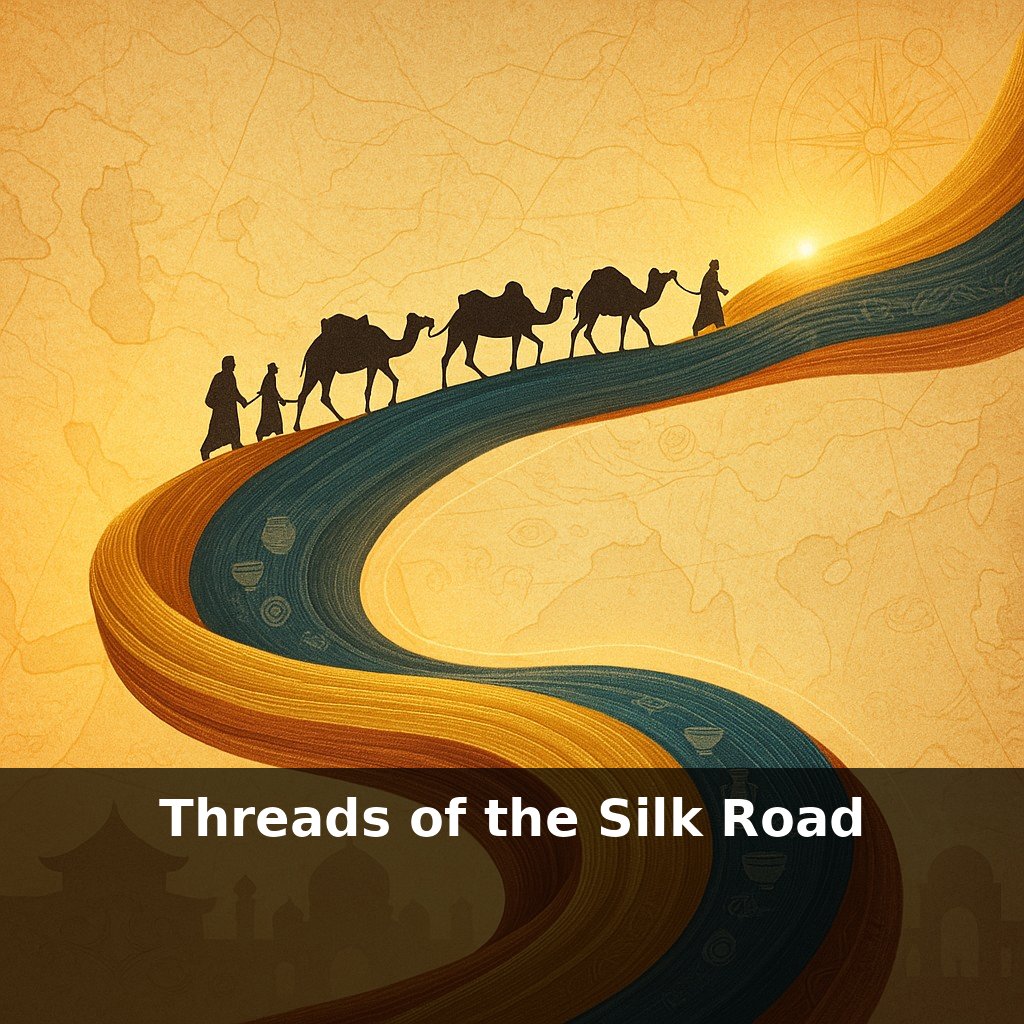
A merchant sets off from China with barely a cart of silk—and returns years later to a city where new religions, fruits, and ideas have quietly taken root. The paradox is this: the Silk Road’s most valuable cargo was almost never the thing anyone set out to buy.
A Buddhist sutra copied in Central Asia turns up centuries later in a cave in western China, written on paper that probably began as a slurry of rags in an Iraqi workshop. Along the way, the handwriting has changed, the language has shifted, even the margins betray a different sense of beauty and order. This is the kind of quiet, cumulative remix that made the routes so powerful: no one planned a “global culture,” yet one slowly coalesced.
As caravans and ships moved, so did techniques for banking, credit, and contracts. A dealer in Samarkand might trust a scrap of inked text more than a chest of coins, because that text linked him to partners he’d never meet. Like a relay race where each runner adjusts their stride for the next, communities tweaked what they received—foods, faiths, tools—then passed on a version slightly more their own.
A traveler leaving Xi’an in the 9th century didn’t just cross distance; they crossed calendars, alphabets, and tax systems. At each frontier, weights and measures might change, coins might be refused, even colors on official seals could signal trust or danger. To cope, merchants built habits that feel oddly familiar today: they learned to “translate” prices across currencies, memorize fluctuating tolls like commuters track rush-hour traffic, and cultivate brokers who specialized in a single risky mountain pass the way modern firms hire consultants for one narrow regulatory hurdle. Every border forced creativity rather than simple compliance.
A network stretching around 11,000 kilometers at its height had a peculiar problem: no one was really in charge. Emperors could pave a segment, protect a pass, or close a port, but monsoons, nomad politics, and local guilds often mattered just as much. That looseness forced participants to invent tools for coordination that outlived the caravans themselves.
One quiet revolution moved at the pace of a walking camel: standardized paperwork. In western China, wooden tallies recorded loads and tolls; in Abbasid Iraq, scribes drafted contracts so precise they specified who paid if a camel slipped on ice. Bills of exchange let a trader deposit valuables in one city and claim their value in another. A scrap of writing could now stand in for heavy metal, which meant fewer targets for bandits—and the early skeleton of long-distance finance.
Religions adapted just as aggressively. Buddhist monasteries in Central Asia ran guesthouses and warehouses, offering secure courtyards and trusted mediators. Sufi lodges in Iran did something similar centuries later, feeding travelers and smoothing negotiations between strangers. These weren’t just spiritual centers; they were multifunction hubs where prayer, storage, translation, and gossip blended into a single service package.
Urban landscapes changed in response. Oasis towns like Dunhuang or Kashgar developed specialized districts: one alley for Indian cotton dealers, another for Persian glassmakers, a courtyard where Turkic interpreters loitered, listening for accents they could monetize. Ports from Sri Lanka to the Red Sea did parallel work for maritime legs, synchronizing to monsoon calendars the way airports today align global timetables.
Risk—of theft, drought, or plague—never went away, but it was increasingly managed rather than simply endured. Merchant associations spread losses across partners. Caravans hired armed escorts as a pooled expense. Even crop choices along the route became part of the risk toolkit: drought-tolerant grapes, hardy walnuts, and adaptable peaches moved westward, diversifying local agriculture and embedding Central Asian genetics into European orchards.
Out of this messy improvisation emerged a durable habit: assume that distant strangers will want different things, speak differently, and fear different risks—and design systems flexible enough to work anyway.
Persian glassmakers tweaking furnace temperatures in Central Asian towns were doing what modern startups do when they A/B test features in a foreign market: adjust one variable, watch how local buyers respond, then roll the winning version forward to the next hub. Chinese engineers didn’t just ship paper; they experimented with fibers on the move—adding flax here, hemp there—until certain blends emerged as regional standards quietly adopted by distant bureaucracies. Religious translators made similar micro-adjustments. A Buddhist text entering Sogdian or Arabic might downplay one metaphor, amplify another, so it resonated with caravan guards as much as with scholars. Even spices became prototypes. Pepper, cinnamon, and saffron were sampled in new recipes in caravanserai kitchens; the dishes that kept travelers talking rode onward in the memories of cooks and innkeepers, turning waystations into test labs where culture, technology, and taste were constantly in beta.
A thousand years from now, historians may treat our data centers and submarine cables the way we treat Silk Route oases: as experiments in how far trust can stretch. Today’s “Digital Silk Road” already tests who controls maps, payments, and standards when servers sit on one continent and users on another. Climate shifts may open Arctic detours that feel like secret back doors in a game, inviting new players—and new rules—into the global negotiation.
Your challenge this week: treat your city like a living archive of those old routes. Visit one shop, café, or market stall run by people from elsewhere. Ask where a recipe, tool, or habit came from, then trace its journey online as if you were following a map. Notice how many borders a “local” thing has crossed before reaching your hands.