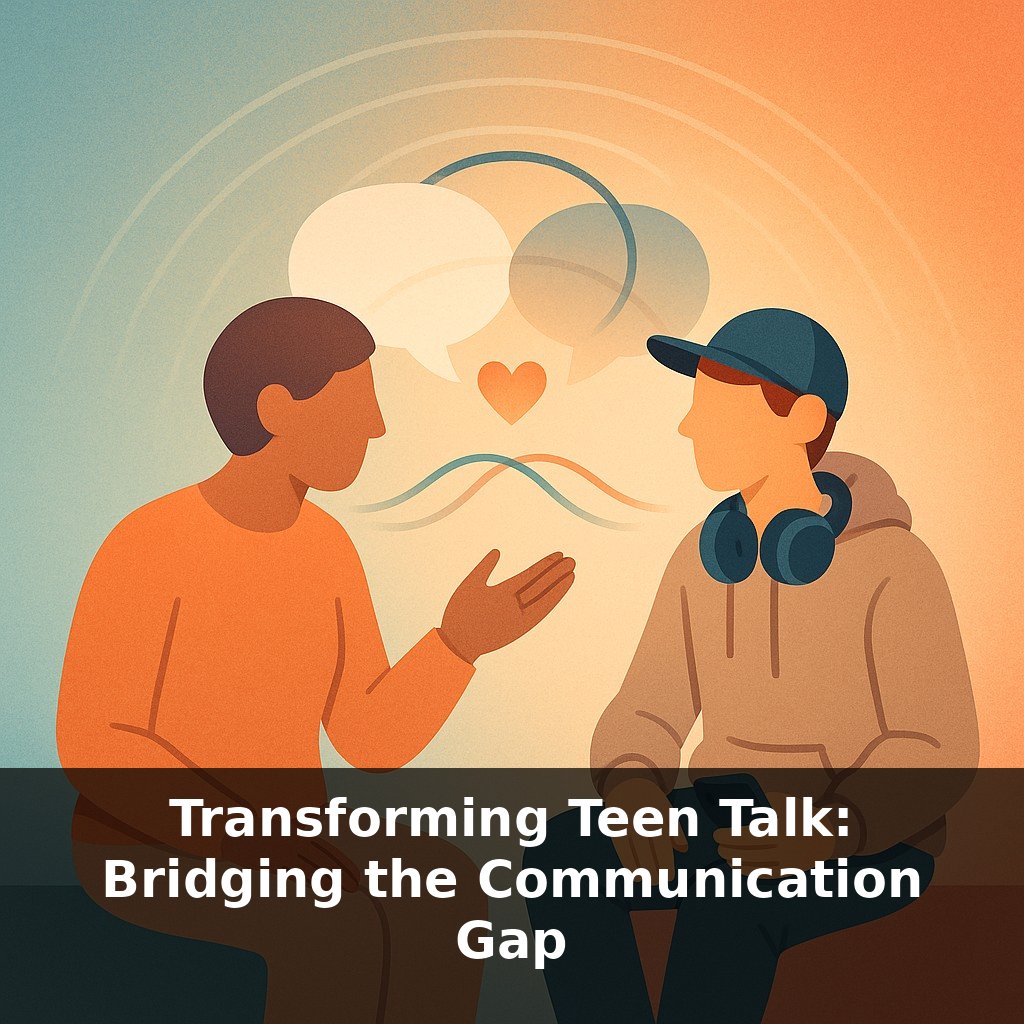
“Most parents cut their teen off in under twenty seconds.”
Now, drop into this moment: your teen finally starts talking… and you feel the urge to jump in with advice. You want to help—yet every word you add seems to shut the conversation down even faster. Why?
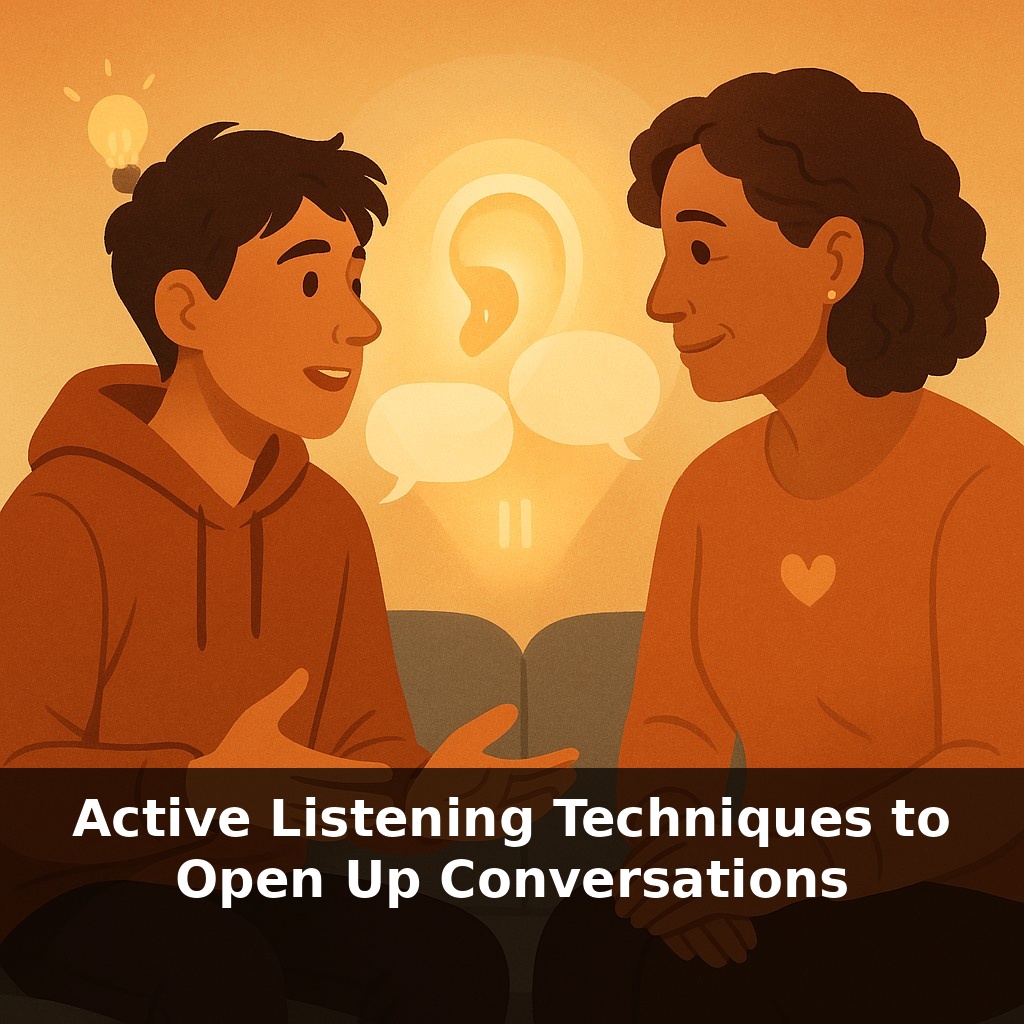
That tiny gap—those few seconds before you jump in—is where active listening lives. It’s not passive, and it’s not just “being quiet.” It’s a deliberate choice to stay curious instead of corrective. Think of it as switching from “answer mode” to “receive mode,” where your whole goal is to understand, not to fix.
Here’s the twist: teens are scanning your face, your posture, even your breathing for cues about whether it’s safe to keep talking. A raised eyebrow, a quick sigh, glancing at your phone—each one can feel like a closed door. Active listening turns those micro-moments into open doors: a simple “tell me more,” a nod that says “I’m still with you,” a pause that proves you’re not rushing to judgment.
In this episode, we’ll turn those instincts you already have—care, concern, protectiveness—into specific listening moves that actually invite your teen to go deeper.
Teens’ brains are wired to treat every conversation as a kind of social “test.” Neuroscience shows they’re unusually tuned in to signs of approval or rejection, which means tiny shifts in how you respond can feel huge on their end. When you interrupt, correct, or rush to silver-lining a problem, their threat system flares up and the safest move becomes: say less, retreat faster. When you slow down and stay curious, you’re quietly sending a different message: “You won’t be graded here.” That sense of safety doesn’t just feel better—it literally makes it easier for them to keep talking.
Here’s where it gets practical: if that early moment in a conversation is so powerful, what do you actually *do* with it?
Start by stretching that first window. Instead of jumping in at the first pause, silently count “one… two… three” in your head. Those extra beats often pull out the thing your teen wasn’t sure they were brave enough to say. That’s usually where the real problem lives.
Next, shift from *filtering* to *following*. Most of us listen through our own filter: “Is this a big deal? Is this reasonable? What should happen next?” Following means you track *their* logic instead. Listen for three things: - **Facts**: what actually happened - **Feelings**: how it landed for them - **Fears**: what they’re worried might happen
You don’t need a speech. One short reflection per piece is enough: - “So the teacher moved the deadline without telling anyone.” (facts) - “That sounds really unfair and stressful.” (feelings) - “And you’re worried your grade’s going to tank now.” (fears)
Notice you’re not fixing, judging, or comparing to your own past. You’re simply holding up a mirror so they can see their own experience more clearly.
Now add *curious questions*—but only a certain kind. Replace why-questions, which can feel like cross-examination, with *how* and *what*: - “What part of that bothered you most?” - “How did you handle it in the moment?” - “What do you wish could happen next?”
These questions hand the steering wheel back to them. They also surface their own ideas, which they’re far more likely to act on than any lecture you could give.
One more move: name the *hidden* layer you suspect, gently and tentatively. “I’m wondering if part of this is you feeling like your friends are choosing sides?” If you’re wrong, they’ll correct you—and still feel surprisingly understood, because you were willing to go beneath the surface.
Active listening, used this way, isn’t about dragging the conversation out. It’s about removing the friction that usually derails it: defensiveness, feeling judged, feeling small. When those drop, talks are often shorter, calmer, and more honest—not because you talked more, but because you listened differently.
Your teen slumps into the car and mutters, “Today sucked.”
One path: “What happened? Did you finish your project? Did you talk to the teacher?”—a rapid-fire quiz that shuts things down.
Another path: you glance over, soften your voice: “Rough day?” Then you wait. They add, “Yeah, people were being fake.” You nod. “Fake how?” Now you’re not interrogating; you’re walking beside them, one small step at a time.
Think of it like debugging a glitchy app with them. You’re not rewriting their code; you’re asking, “Where did it freeze? What were you trying to do right before that?” When you treat their experience as data to explore instead of a problem to correct, they start volunteering more details: the group chat, the comment in class, the joke that went too far.
Notice how tiny your lines are in this version of the story—and how much more of their story you actually get. That’s the quiet power of staying with their words until *they* are ready for yours.
A 17‑second habit today shapes your teen’s habits with *their* kids tomorrow. As they experience you tracking their inner world, they’re quietly downloading a template for how close relationships feel. Over time, that template competes with harsher voices—algorithms, peers, even their own self‑criticism. Consistent, calm attention becomes like good urban planning: small, deliberate choices now create sturdy pathways they’ll walk for decades, including when they’re stressed, in love, or raising kids of their own.
When you practice this kind of attention, you’re not just “getting through” tonight’s topic; you’re slowly teaching your teen that their inner world is worth airtime. Over weeks, you may notice small shifts: shorter silences, more side comments, stories that start earlier in the timeline—like they’re handing you the rough draft, not just the polished headline.
Start with this tiny habit: When someone starts telling you about their day, silently count to three before you respond and then reflect back just one specific word they used (“Long meetings?” or “Excited about that trip?”). Do this once per conversation, no more. If you catch yourself jumping in with advice, pause and instead ask a single follow‑up question that starts with “What” or “How” (“What part of that was hardest?”). Let that be your whole “active listening workout” for the day—one pause, one reflection, one curious question.