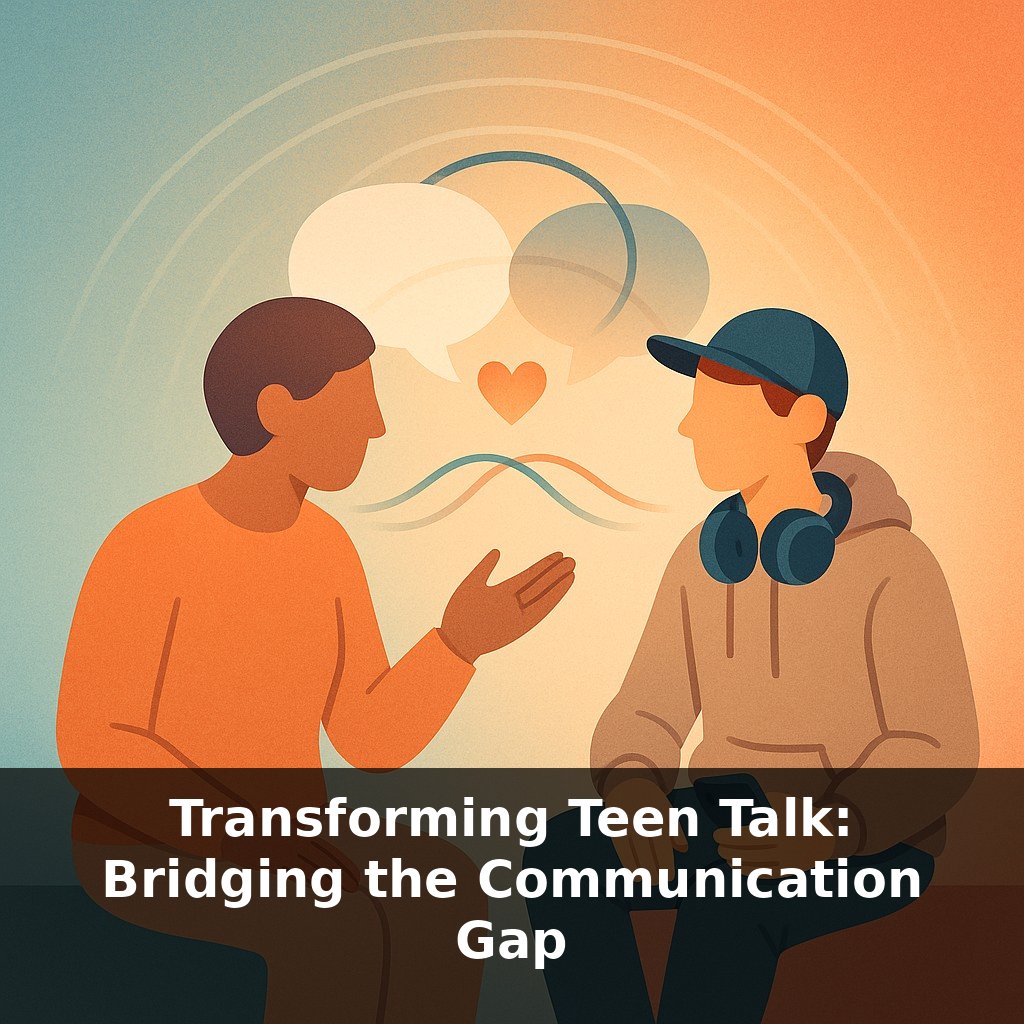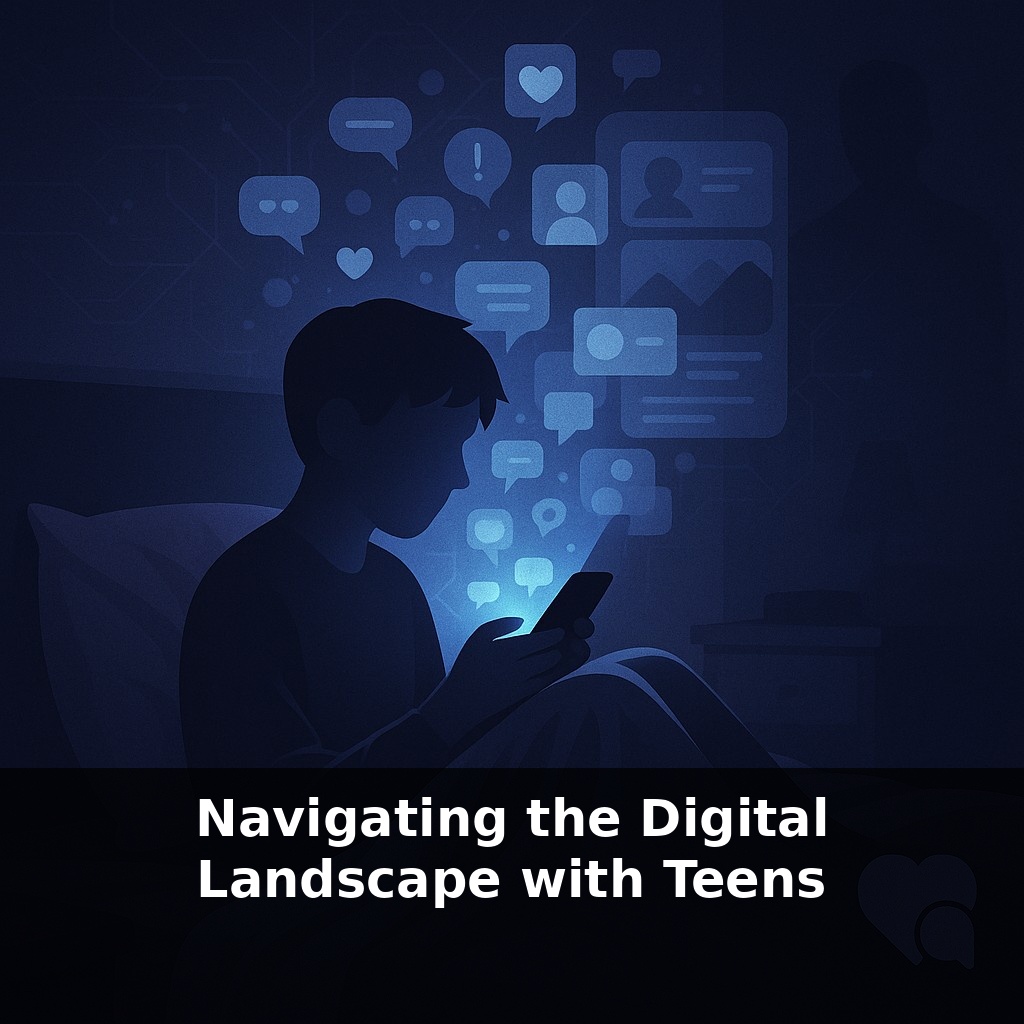
About half of U.S. teens say they’ve been bullied online—yet many parents believe, “My kid would tell me if something was wrong.” A phone buzzes at midnight, a quiet laugh under the covers… Is this harmless scrolling, or a moment that could reshape your teen’s inner world?
Sixty percent of teens say they “couldn’t get through the day” without their phone—yet most also say social media makes them feel judged, distracted, or behind. That tension is where digital parenting really lives: between “this matters to you” and “some of this is hurting you.”
You’re not just dealing with apps; you’re navigating attention‑grabbing designs, streaks, infinite scrolls, and group chats that never sleep. Your teen isn’t weak for getting pulled in—those systems are built to hook even adults, and their still‑developing brain is wired to chase reward and belonging.
So instead of treating the phone as the enemy, this series invites you to treat it as shared territory. Not a device you police from the outside, but a space you walk through together—sometimes beside them, sometimes a step behind, sometimes (when needed) a step in front.
You’re also stepping into a world where algorithms quietly shape what your teen sees, when, and how often. Their feed isn’t a neutral window; it’s more like a “for you” conveyor belt tuned to whatever keeps them watching. That matters, because a brain that’s still calibrating impulse control can easily slide from “just checking one thing” into an hour gone missing. Add school group chats, gaming with friends, and homework portals, and the line between “online” and “real life” blurs. The goal isn’t to draw a hard border, but to help your teen notice what’s influencing them—and how they want to respond.
A median of 4.8 hours a day on social media isn’t just “a lot of scrolling”; it’s a major slice of your teen’s social, academic, and emotional life. That means the goal can’t simply be “less screen time.” A better question is: “What is this time *doing* for them—and to them?”
Start by separating *modes* of use. A teen making a short film for class, co-writing a story in Google Docs, or messaging a friend who’s having a rough day is online in a very different way than when they’re jumping from clip to clip half‑awake at midnight. One is active, creative, often relational. The other is mostly passive and reactive. Both will happen; you’re trying to help your teen recognize the difference and tilt the balance.
This is also where the design of specific platforms matters. A group chat for their robotics club, Discord for a gaming team, and TikTok’s “For You” page each invite different behaviors. Instead of asking “how much per day?” in the abstract, you can get curious together about “how does *this* app tend to make you feel after 20 minutes? After an hour?” Now you’re not measuring minutes; you’re tracking effects.
Adolescent brain wiring adds another twist: highs and lows feel sharper, social comparison hits harder, and “right now” often drowns out “later.” When a teen says, “I know I’ll be tired tomorrow, but my friends are all on,” they’re not being irrational—they’re prioritizing belonging in the moment. You can honor that pull while still helping them see patterns: “When the chat keeps you up past midnight three nights in a row, what happens to your mood? Your grades?”
Here’s where skills beat rules. Instead of only saying, “Don’t look at your phone before bed,” you might practice small experiments together: using grayscale at night, charging phones outside the bedroom, or setting app limits *they* help choose. Think of it like training a muscle: you’re helping them build the capacity to pause, notice, and adjust, one small rep at a time.
Over time, you’re aiming for a shared language: not “You’re addicted to your phone,” but “Is this the kind of online time that leaves you drained or the kind that leaves you better off?”
Think small and specific, not “fix their whole screen life.” One way to start is to map *contexts* rather than apps. Walk through a typical weekday together and notice the digital hotspots: before school, commute, homework window, late evening. Each has its own “job.” Maybe music and a quick meme before school helps them gear up, while video during homework quietly derails them.
You can also experiment by “tagging” online moments with simple labels: create, connect, consume, cope. A teen editing a video is in create mode; scrolling fan art with a friend is connect; flipping through shorts alone is consume; binging clips after a rough day might be cope. None of these are automatically good or bad, but the mix over a week tells a story.
Design one tiny shift per context, like a coach tweaking one part of a training plan instead of overhauling the whole season. Then check in: “Did that change make your day feel a little better, worse, or about the same?”
In a few years, your teen may wear lightweight glasses that overlay group chats on the bus, homework help at the desk, and ads on the sidewalk. Their “status” could follow them into every room. That makes today’s experiments less about policing specific apps and more about rehearsing judgment that transfers anywhere. Think of it like teaching city savvy before they can drive: how to notice when a space feels off, when to leave, and how to travel with trustworthy companions—human and digital.
Your challenge this week: Ask your teen to teach *you* one thing they’re good at online—editing a clip, spotting a fake account, organizing a group chat, customizing privacy on a platform you barely use. As they walk you through it, narrate what you notice: “You’re really thinking about who can see this” or “You checked that source pretty fast.” Then, together, name one way that same skill could transfer to a future tech—AR glasses, VR, or AI tools.
You don’t have to master every app to matter here; you’re learning a moving game together. Think less “guard at the gate,” more “trail guide with a good map.” Some days you’ll lead, some days you’ll follow their shortcuts. What counts is staying on the path with them, curious, adjusting your route as new turns and hidden side roads appear.
To go deeper, here are 3 next steps: (1) Sit down with your teen and use the *Common Sense Media Family Tech Agreement* (search it online) to co-create 3–5 concrete phone and social media rules that fit your family, then print and sign it together. (2) Watch the free “Social Media and Mental Health” lesson from *The Social Dilemma*’s Educator/Family Guide (on their official site), then ask your teen 3 questions from the guide about how algorithms shape what they see. (3) Install and explore a digital wellbeing tool *with* your teen—like Apple’s Screen Time, Google Family Link, or Bark—agreeing on specific app limits for just one week as an experiment, and schedule a 15-minute check-in on your calendar to review what you both learned.