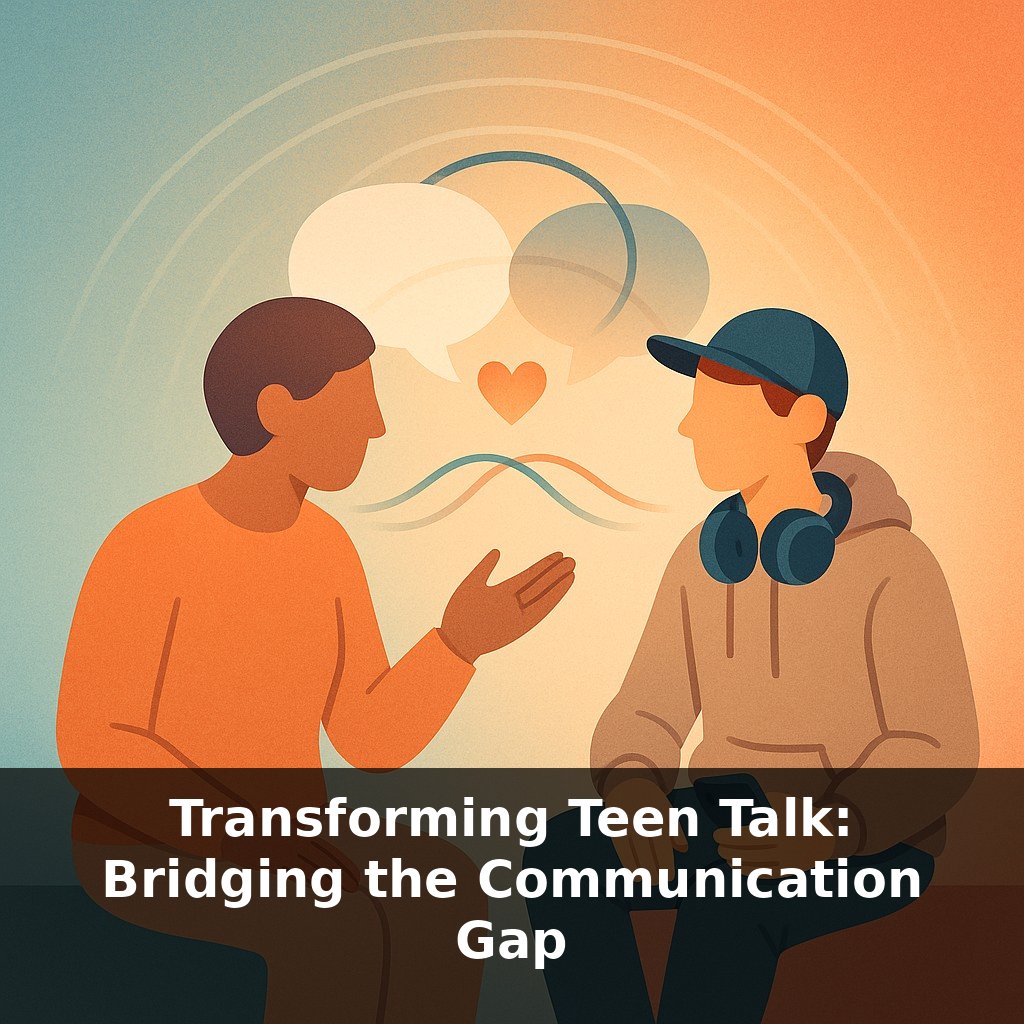
Teens who share regular dinners with their parents are about a third less likely to use alcohol—yet many families only talk about drugs or school when something goes wrong. Tonight, we drop into that tense moment and explore a calmer, more effective way through it.
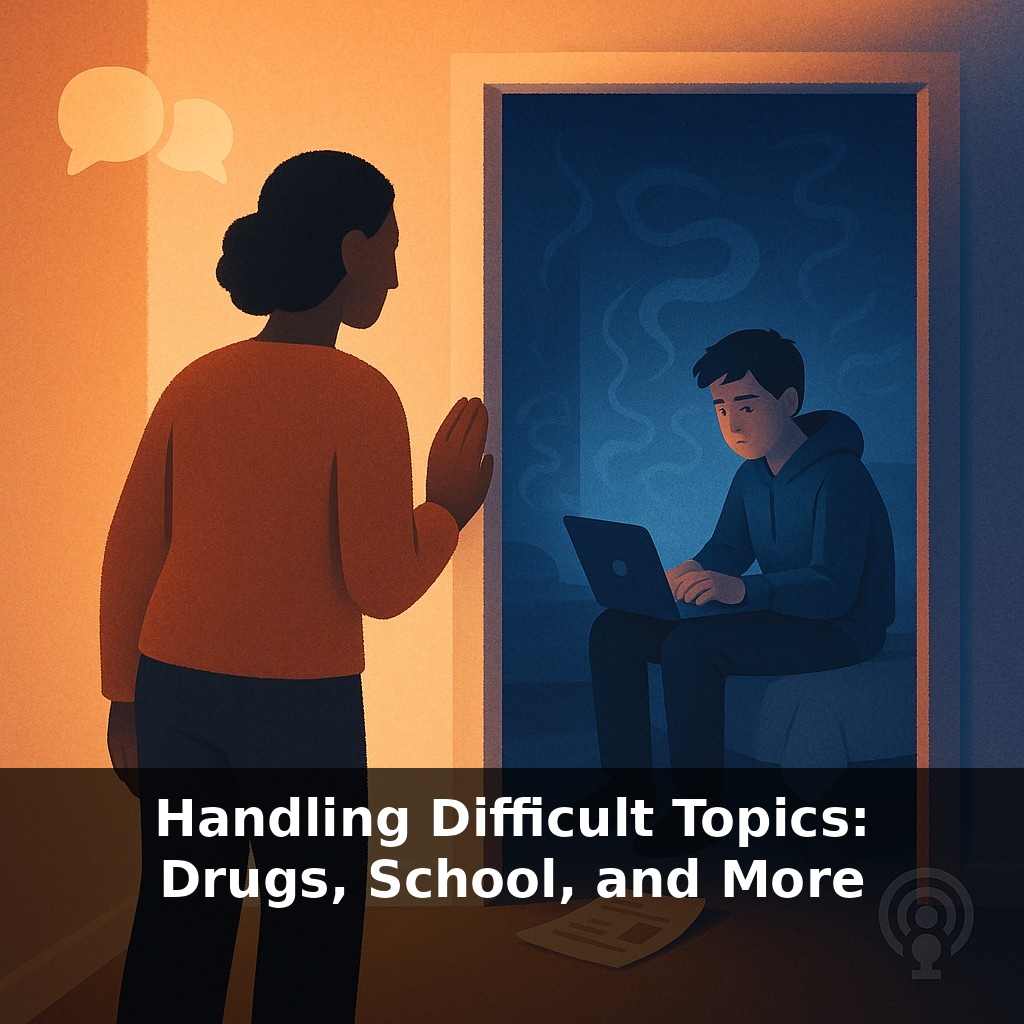
You’re standing in the doorway of your teen’s room. There’s a crumpled school notice about missed assignments on the floor, their eyes are glued to a screen, and you’re carrying a knot of worry about grades, vaping rumors, and late-night texts. You know snapping won’t help—but saying nothing doesn’t feel right either.
This is where most families get stuck: in the gap between “I’m scared” and “I know how to talk about this.” The goal isn’t to control every choice; it’s to become the person your teen can actually think *with* when life gets messy.
Neuroscience reminds us: teens’ brains are wired to chase rewards and status. So instead of power struggles—“Because I said so”—we’ll explore how to turn tough talks into joint problem-solving, where your values and their growing independence can actually sit at the same table.
So in this episode, we’re going to zoom in on the *moments* that usually set everything off: the slammed door after curfew, the “everyone else is doing it” eye-roll, the teacher email that lands at 10 p.m. These are the points where your own stress spikes, your teen’s defenses go up, and the conversation quietly detours into blame, lectures, or silence. Instead of trying to fix everything at once—grades, vaping, late-night scrolling—we’ll focus on tiny shifts: when you start the talk, which questions you choose, and how you respond when they test a boundary just to see if you’ll still stay in the room with them.
When one of those “uh-oh” moments hits, most parents reach for one of three scripts: the lecture, the interrogation, or the shutdown. All three *feel* productive in the moment—at least you’re doing something—but they send the same message to your teen’s brain: “Hide. Say less. Don’t get in deeper.”
A more useful question is: “What would make it feel safe for my teen to tell me the *whole* story?” That safety doesn’t mean there are no boundaries; it means your teen can predict your reaction. Predictability calms their nervous system enough for honest thinking instead of quick, self-protective answers.
Here’s where style matters. Research on parenting styles shows that teens do best when parents are both warm and firm. Warmth sounds like: - “Thanks for being honest with me.” - “I get why this is tempting.” - “You’re not in trouble for telling me the truth.”
Firmness sounds like: - “You still can’t ride in a car with someone who’s been drinking.” - “We’re going to change some privileges while we sort this out.”
Combining the two turns a high-stakes talk into something closer to a strategy meeting than a courtroom. You’re still clearly in charge of safety, but you’re also treating your teen as an apprentice decision-maker, not a defendant.
Because peers and status are powerful drivers, it helps to ask questions that surface social pressure instead of just saying “Choose better friends.” Try: - “What feels hardest about saying no in that group?” - “Whose opinion matters most to you there?” - “If your best friend were in this spot, what would you want for them?”
Notice these questions aren’t traps. They invite your teen to step slightly outside the moment and look *at* the situation with you, instead of feeling like the situation is them.
Think of it like debugging an app together: you’re not shaming the user; you’re examining the code, seeing where it crashes—lack of coping skills, fear of missing out, anxiety about grades—and then updating it. You’re asking, “Given what we know about your brain, your friends, and this school, what would make the next ‘uh-oh’ moment go better—for you and for us?”
Think of three different “channels” you can tune into during a hard talk: facts, feelings, and future. Most of us get stuck broadcasting only on “facts”—missing assignments, who brought the vape, what the teacher wrote. Your teen, meanwhile, is often stuck on “feelings”—embarrassment, anger, or fear of disappointing you. Future barely gets airtime, even though that’s where motivation lives.
So, you might say: “Give me the facts in two sentences. Then tell me the part that feels worst. After that, let’s spend more time on what you want this to look like next week.” This simple structure keeps you from spiraling into past mistakes and pulls both of you toward next steps.
You can also try switching “why” to “how” and “what”: not “Why would you do that?” but “What was going on for you that day?” and “How do you want to handle it if this comes up again?” Those subtle wording shifts lower defensiveness and turn the conversation into a shared investigation instead of a cross-exam.
Soon, these talks won’t just happen at the kitchen table. AI tools may flag worrying posts or late-night chats and quietly ping you, much like a dashboard light hinting something in the engine needs checking. At-home drug-checking kits could make “Is this safe?” a standard question instead of a rebellious secret. Schools might sync SEL, homework loads, and mental-health check-ins, so your teen’s calendar, not just grades, reflects what keeps them steady, not just high-achieving.
Your challenge this week: Run a small “future test-drive” with your teen. Ask one concrete question: “If our phones or school apps started warning us about stress or risky stuff, how would you want me to respond?” Just listen. Notice where they want more space, where they quietly hope for backup, and what they’d never want shared. Treat their answers as draft settings for how you’ll handle the next tough topic—before it hits.
You won’t script every hard conversation, and you don’t need to. What matters is showing up like a steady coach, not a referee throwing flags. Over time, those small, curious check-ins stack up like quiet practice sessions, so when life suddenly throws a fastball—news about pills at school, a brutal grade—both of you already know how to step up to the plate together.
Here’s your challenge this week: Pick one “hard” topic from the episode—drugs, school pressure, or internet safety—and have a 15-minute, distraction-free conversation about it with your child before Sunday night, using “curious, not panicked” questions (e.g., “What are you seeing at school around vaping?” or “What stresses you out most about grades?”). Start the talk by sharing one real story from your own teen years related to that topic (a mistake, a pressure, or a close call). Before you wrap up, agree together on one concrete boundary or family norm for that topic (for example: “If you’re ever at a party with drugs, you can text me ‘X’ and I’ll pick you up, no questions asked”).