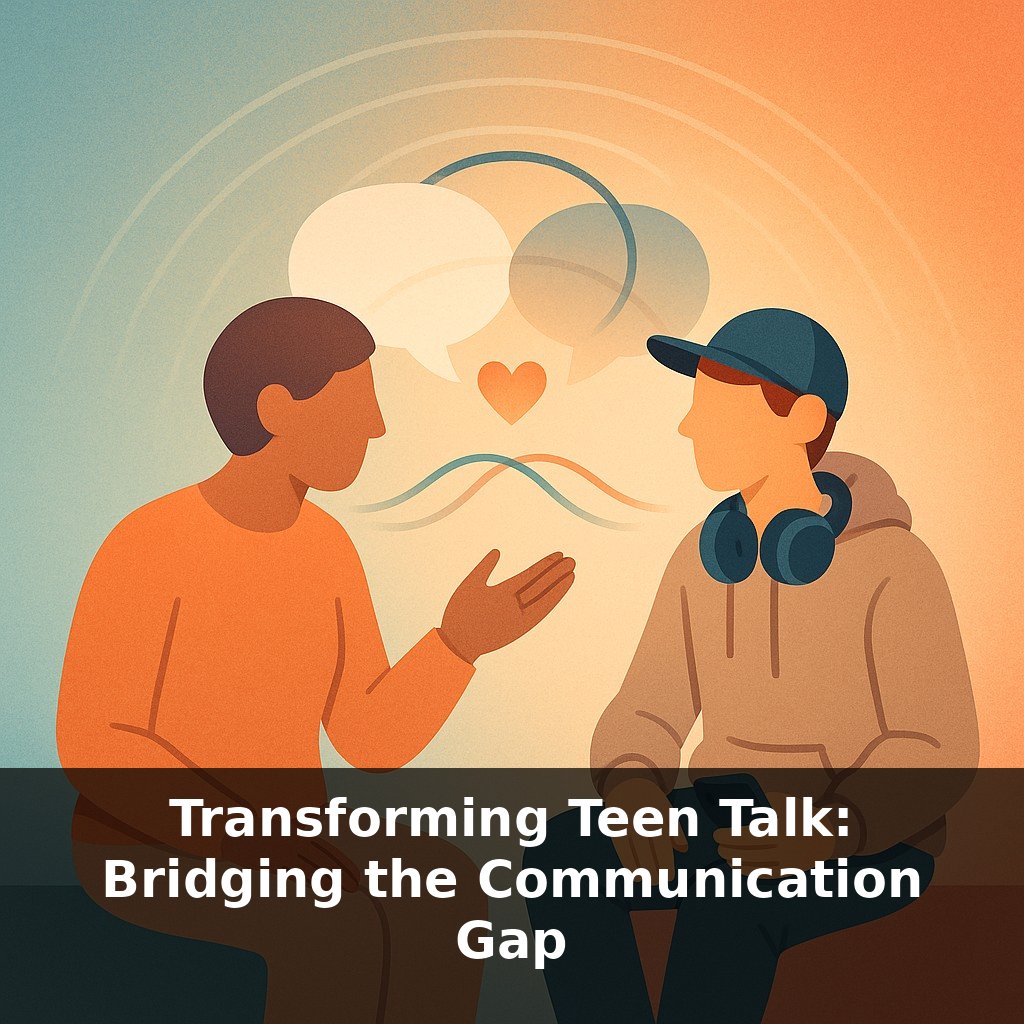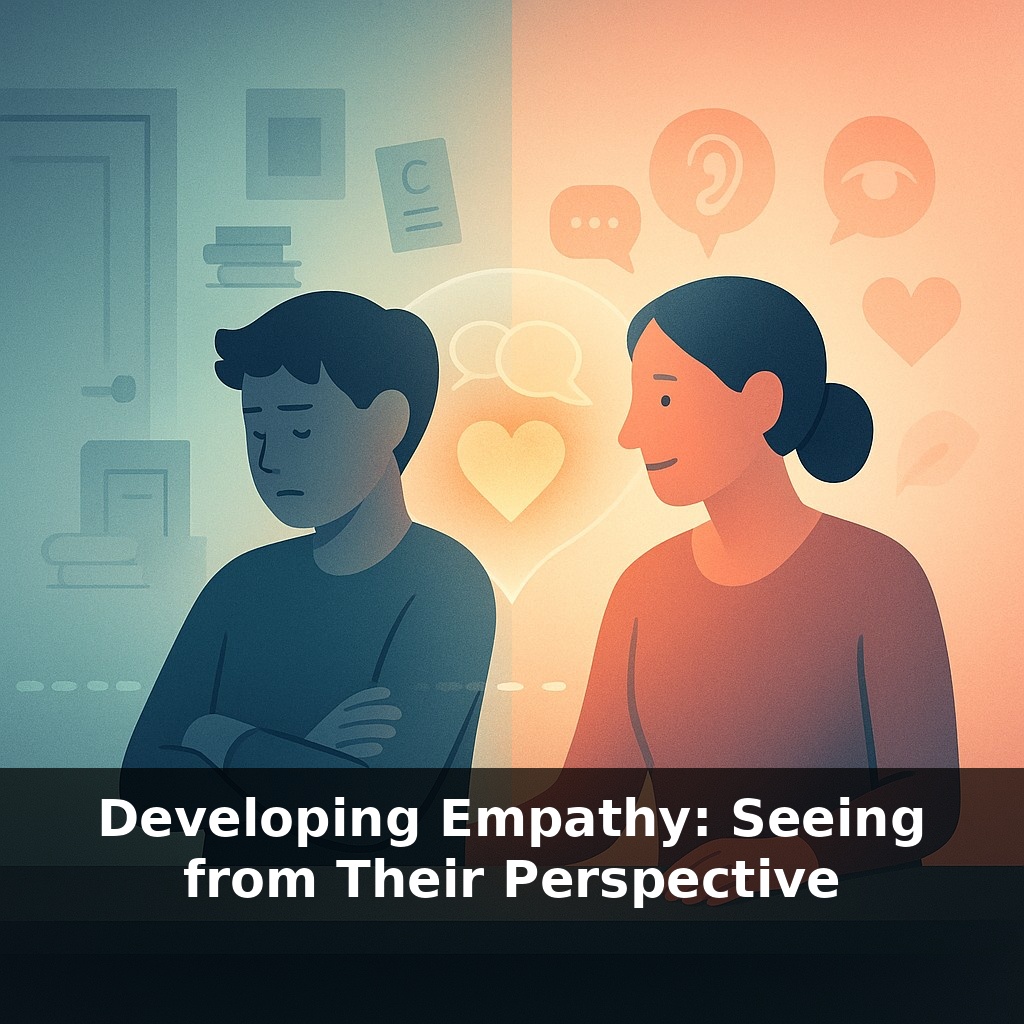
“Most teens say their parents care more about grades than kindness—yet the teens who feel truly understood are several times more likely to feel mentally okay. A boy slams his door; a girl goes silent at dinner. What if those tense moments are actually invitations into their world?”
Seventy‑one percent of teens say their parents care more about achievement than empathy—yet those same teens are far more likely to open up when they feel genuinely “got.” That gap between what we intend and what they experience is where empathy does its quiet, powerful work. Not in big speeches, but in micro‑moments: the pause before we correct, the choice to ask one more curious question instead of giving one more piece of advice. Neuroscience shows that when we really try to see the world through our teen’s eyes, specific brain circuits strengthen, making it easier next time. The encouraging part? Teens’ brains are still wiring these same circuits, which means every small act of perspective‑taking is like laying another brick in a bridge you’re building together—a structure sturdy enough to carry even the hard conversations. In this episode, we’ll focus on how to actually do that, step by concrete step.
Some days, talking with a teen feels like debugging a glitchy app: the same input gets wildly different outputs—sarcasm at breakfast, warmth after practice, shutdown at bedtime. That inconsistency isn’t random; it’s often your teen testing, “Is it actually safe to show up as myself?” Context matters: the same comment about homework lands very differently right after a social disappointment than after a win. When we zoom out and notice patterns—time of day, who else is around, what just happened—we start to see the hidden “code” behind their reactions and can respond to what’s underneath, not just what’s on the surface.
Seventy‑one percent of teens say their parents value grades over kindness—yet most parents will tell you, “Of course I care more about who they are than what they achieve.” That disconnect doesn’t come from a lack of love; it comes from what teens actually *see and hear* in the messy, everyday exchanges: the raised eyebrow at the B‑, the third question about college but none about friendships, the quick fix offered before the feeling is acknowledged. When this happens over and over, teens quietly conclude, “My results matter more than my reality,” and their guard goes up.
Here’s the hopeful part: those same ordinary exchanges are exactly where you can re‑signal what you truly value. Not with a big speech, but with small, specific shifts. Instead of “How’d you do on the test?” try, “How did it *feel* walking out of that room?” Rather than, “You just need to ignore them,” go with, “Ouch—that sounds really isolating. What’s the hardest part right now?” These aren’t soft responses; they’re targeted moves that tell your teen, “Your inner world is not invisible to me.”
A core skill here is asking “precision questions”—short, non‑interrogating questions that narrow in on their experience, not your assumptions. For example: - “On a scale from 1–10, how overwhelmed are you tonight?” - “Was today more ‘annoying’ or ‘draining’?” - “What do you wish people understood about this situation?”
You’re not mining for data; you’re giving them language and control over the story. Many teens don’t lack feelings; they lack *words* for those feelings. When you lend them sharper vocabulary—“Does it feel more like pressure or like disappointment?”—you’re strengthening both of your abilities to navigate tough moments without escalation.
Think of this like updating the “settings” on a device: when you fine‑tune how you ask and listen, the whole system runs with less friction. Over time, your teen learns, “When I show a messy feeling, my parent doesn’t panic, preach, or pounce—they get curious.” That expectation alone can lower defensiveness before conflict even starts and opens the door for the firmer boundaries and problem‑solving you still need to hold.
When a teen snaps, “You don’t get it,” many adults instinctively defend, “I *do* get it.” Try flipping that script. A dad I worked with started answering, “You’re right—I probably don’t yet. Can you walk me through it so I’m closer?” The first time, his daughter rolled her eyes and left. The third time, she stayed and gave him two extra sentences. That’s progress.
Or consider a car ride after a disastrous game. Instead of, “You’ll do better next time,” one mom tried, “If your coach could see what it felt like from *inside your head* today, what would they notice?” Her son surprised them both: “That I was already mad at myself before I messed up.” Now they were talking about self-criticism, not just sports.
Empathy here isn’t agreeing with every choice; it’s showing your teen you’re willing to update your “mental file” on them. Like a software patch, each new detail they share lets you respond to *this* version of them—not last year’s. That’s what makes your support feel current, not canned.
In the next decade, your living room might double as an “empathy lab.” VR headsets could drop you into your teen’s cafeteria, while simple wearables flag spikes in stress so you learn their early warning signs. Think of it less like surveillance and more like co‑piloting: shared dashboards where you both see how certain routines, texts, or schedules affect their day. The opportunity—and risk—is huge: tools can deepen trust, or turn connection into a managed project. The difference will be whether you use data to *listen* or to *control*.
Your challenge this week: when tension rises, pause and silently ask, “What might this look like from their side of the chessboard?” Then respond with one short question about their view before sharing yours. Over time, you’ll collect “moves” that reveal new strategies, turning standoffs into chances to think on the same team.