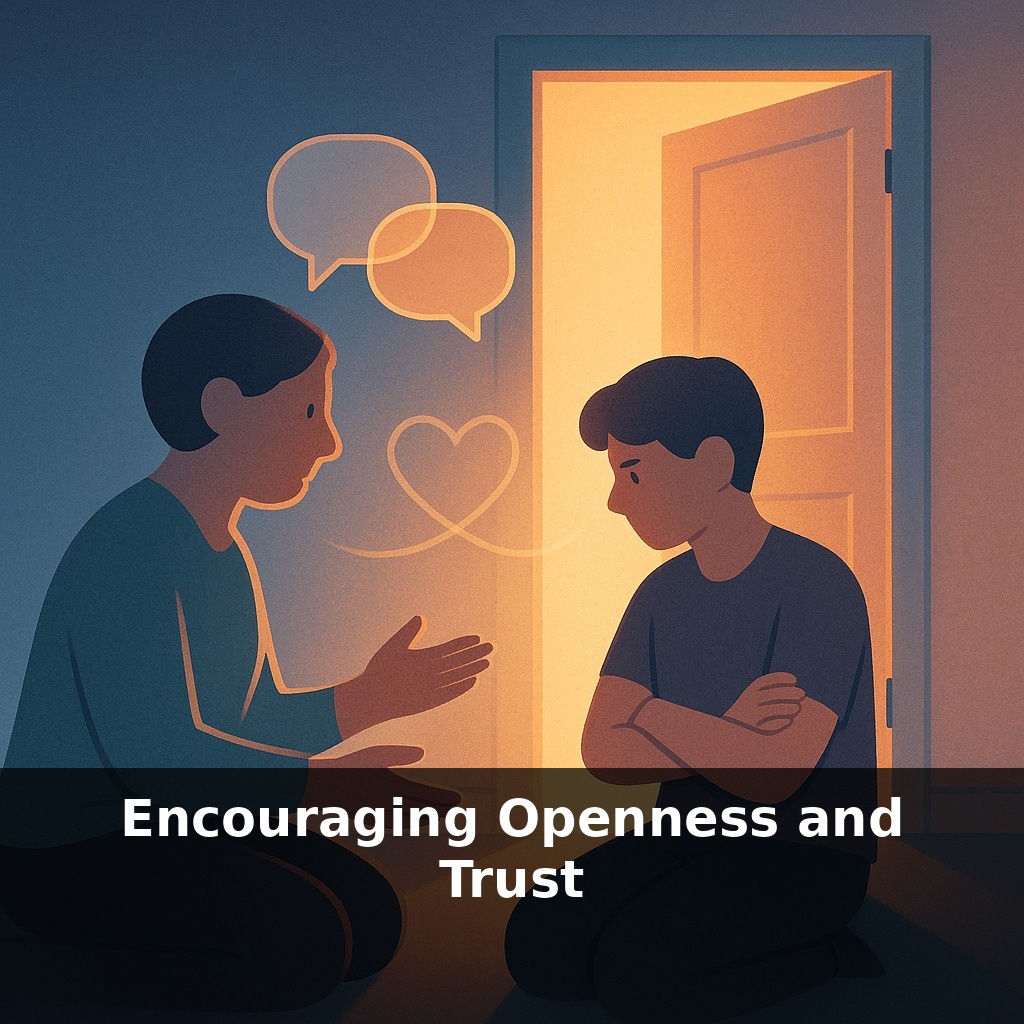
“Teens who feel heard by their parents are dramatically less likely to binge drink, yet most say, ‘My parents don’t really know what’s going on with me.’ In one home, a slammed door ends the night. In another, the same slam becomes the start of a real conversation.”
A slammed door or a quiet “fine” can feel like the end of the road—but they’re often just cover stories for something your teen isn’t ready to name yet. Many parents respond by pushing for answers or backing off completely. Neither tends to work for long. What shifts the pattern isn’t a magic question; it’s the ongoing sense your teen has that, with you, their inner world won’t be judged, rushed, or used against them later. That feeling doesn’t appear in big moments first. It’s built in small, low‑stakes exchanges: the car ride after practice, the late‑night snack run, the two-minute chat while loading the dishwasher. Think of these like “micro-bridges” you’re quietly reinforcing every day, so when real weight needs to cross—stress, shame, fear—the structure is already strong enough to hold both of you.
Some of those tiny moments are more important than they look because your teen is constantly running a quiet test: “If I share this, will it make things better or worse?” Research shows that when parents respond with calm curiosity instead of interrogation or instant solutions, teens are more likely to open up about the stuff that actually worries you—grades, friends, sex, substances. The twist is that trust isn’t built when you’re asking for the “big reveal.” It grows when you handle the small disclosures well enough that your teen thinks, “Okay, I can risk a little more next time.”
Think of what happens inside your teen right before they talk: there’s a rapid cost‑benefit calculation. “If I say this, will I get yelled at? Lectured? Ignored? Smothered? Or will I feel lighter?” That split‑second prediction is built from hundreds of past moments with you. Research calls it “perceived emotional safety,” and it matters more than how “good” your questions are.
Three ingredients keep showing up in studies of families where teens voluntarily open up about grades, friends, sex, and online life:
1. **Warmth that doesn’t vanish under stress.** It’s easy to be kind when nothing’s on fire. What your teen watches for is how you respond when they’ve messed up, snapped at you, or dropped a bombshell. A steady tone, even when you’re firm, signals, “You’re still my person, even when this behavior isn’t okay.” That separation between who they are and what they did is huge for openness.
2. **Respect for their autonomy.** This doesn’t mean saying yes to everything. It means showing you recognize their right to an opinion, a preference, and some privacy. Phrases like “Help me understand how you see it” or “What’s your plan for handling this?” tell them you’re not trying to run their life, you’re trying to support them running their own—age‑appropriately. Teens are more likely to share when they feel like collaborators, not defendants.
3. **Predictable follow‑through.** Your reactions form a pattern: do you remember what they told you last week? Do you quietly do what you said you’d do? Inconsistent responses (super engaged one day, dismissive the next) create what attachment researchers call “ambiguity of availability.” Teens then hedge: “I’ll keep this to myself; I don’t know which version of my parent I’ll get.”
Here’s where many parents unintentionally shut things down: by jumping straight to fixing, moralizing, or widening the lens (“When I was your age…”). Those moves might come from love, but they shift the focus away from your teen’s experience and toward your anxiety, your values, your story. Over time, your teen learns, “Sharing equals losing control of my own narrative.”
Instead, communication science suggests a different sequence: first **reflect** what you’re hearing (“So you’re stuck between…”), then **validate the feeling** (“That would be exhausting”), then **ask if they want help** (“Do you want ideas, or do you just need to vent?”). This order tells their nervous system, “You’re in the driver’s seat; I’m the co‑pilot, not the cop.”
A useful way to notice this “quiet test” in action is to watch what happens around minor glitches. Your teen forgets their water bottle for the third time, or you overhear a half‑finished story about “someone” failing a test. Those are often rehearsal moments: they’re floating out a small, low‑risk signal to see how you handle it before deciding whether to share more. If you can stay specific (“So today was rough in science?”) instead of global (“You’re always so careless”), you’re lowering the cost of honesty. One fresh cue to track is how often your teen moves *toward* you after tension—lingering in the kitchen, sending a meme, asking a random question. That’s usually a bid for connection, not just procrastination. Meeting that bid with a few undistracted minutes—phones down, eyes up—quietly updates their prediction that coming closer is safe, even when things have felt prickly between you. Over time, those tiny “after‑tension” contacts often precede the conversations you’re secretly hoping for.
Wearables and AI may soon nudge you—“now’s a good time to check in”—the way calendar alerts already rescue forgotten meetings. That won’t replace your judgment, but it can surface patterns you’d miss in daily chaos. As teens confide more in apps, your role shifts from sole problem‑solver to “editor” helping them sort healthy advice from harmful noise. Schools and pediatricians may even ask about your routines at home, treating family talk like sleep or nutrition: a vital sign to monitor, not a bonus.
You don’t have to overhaul your whole parenting style overnight. Start by treating one everyday moment—waiting at a red light, passing in the hallway, rinsing dishes—as a tiny “open office hour.” No agenda, just availability. Over weeks, those casual, pressure‑free windows can become the places your teen quietly tests sharing the next layer down.
Here’s your challenge this week: In your next team meeting, set aside exactly 10 minutes to practice “leader vulnerability reps” by sharing one recent mistake you made, what you learned from it, and one specific thing you’re still unsure about and want input on. Then invite each person to respond with either one clarifying question or one suggestion—no solutions from you, just listening. Before the meeting ends, ask the group to agree on one simple “trust habit” for the next 7 days (for example, always explaining the “why” behind decisions or explicitly admitting when you don’t know something) and schedule a 10-minute check-in next week to honestly rate how well you all followed through on a 1–5 scale.