“In almost every family, one person quietly becomes ‘the strong one’—and another, ‘the problem.’ No meeting, no vote, it just…happens. A teen’s panic attacks, a parent’s silence, a sibling’s rebellion—today, we’re pulling back the curtain on who got cast in which role, and why.”
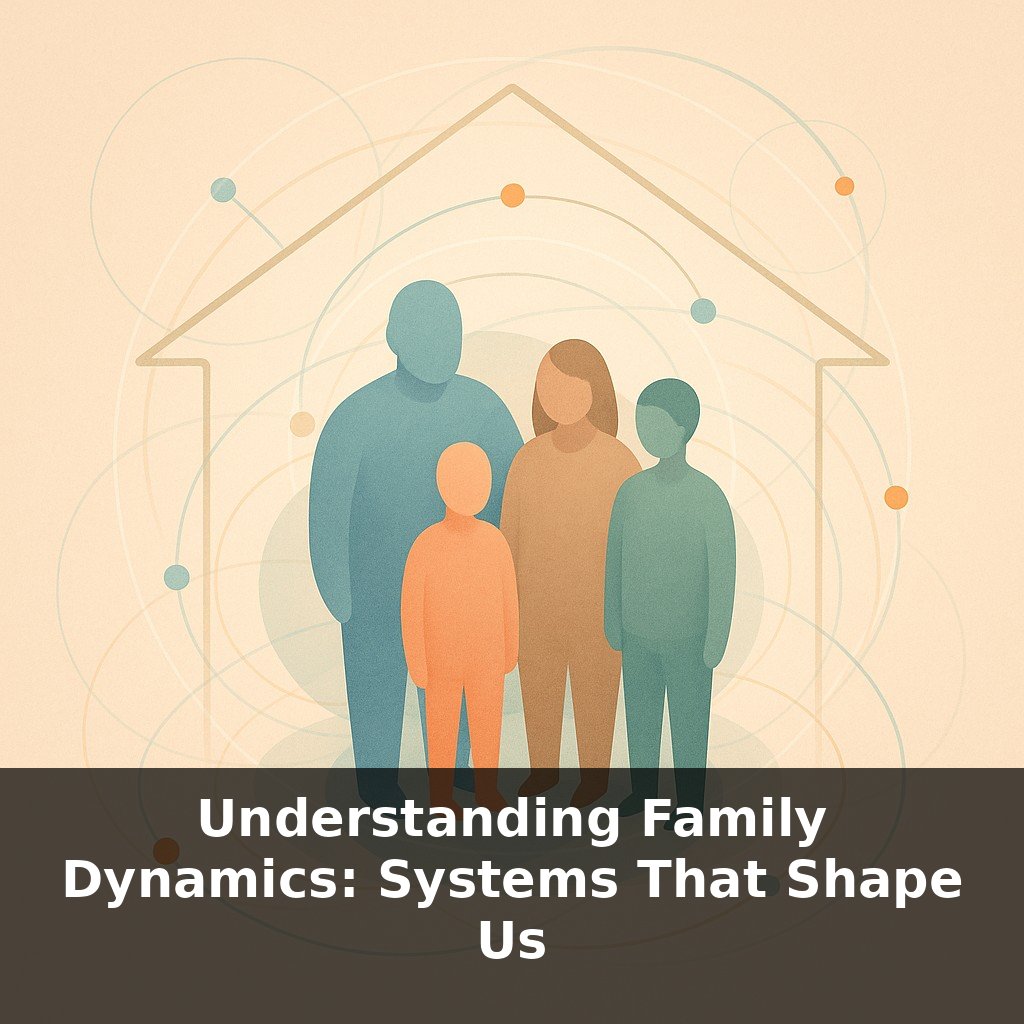
A curious thing happens in most homes: long before anyone can spell “dynamics,” the family starts running on unwritten rules. No one announces them, but everyone feels them. Maybe it sounds like, “Don’t upset Dad,” or, “We don’t burden Mum,” or simply, “We just get on with it.” Over time, those rules decide who speaks up, who swallows their feelings, who smooths things over at any cost. Research shows it’s not just the rules themselves that matter, but how tightly they’re held. When the script can never change—no matter who is struggling, or how the family is evolving—stress doesn’t just float in the air; it lands in bodies, arguments, and quiet resentments. Today we’ll look at how these hidden rules form, how culture and birth order shape them, and how to tell when structure is protective versus when it’s slowly hurting everyone.
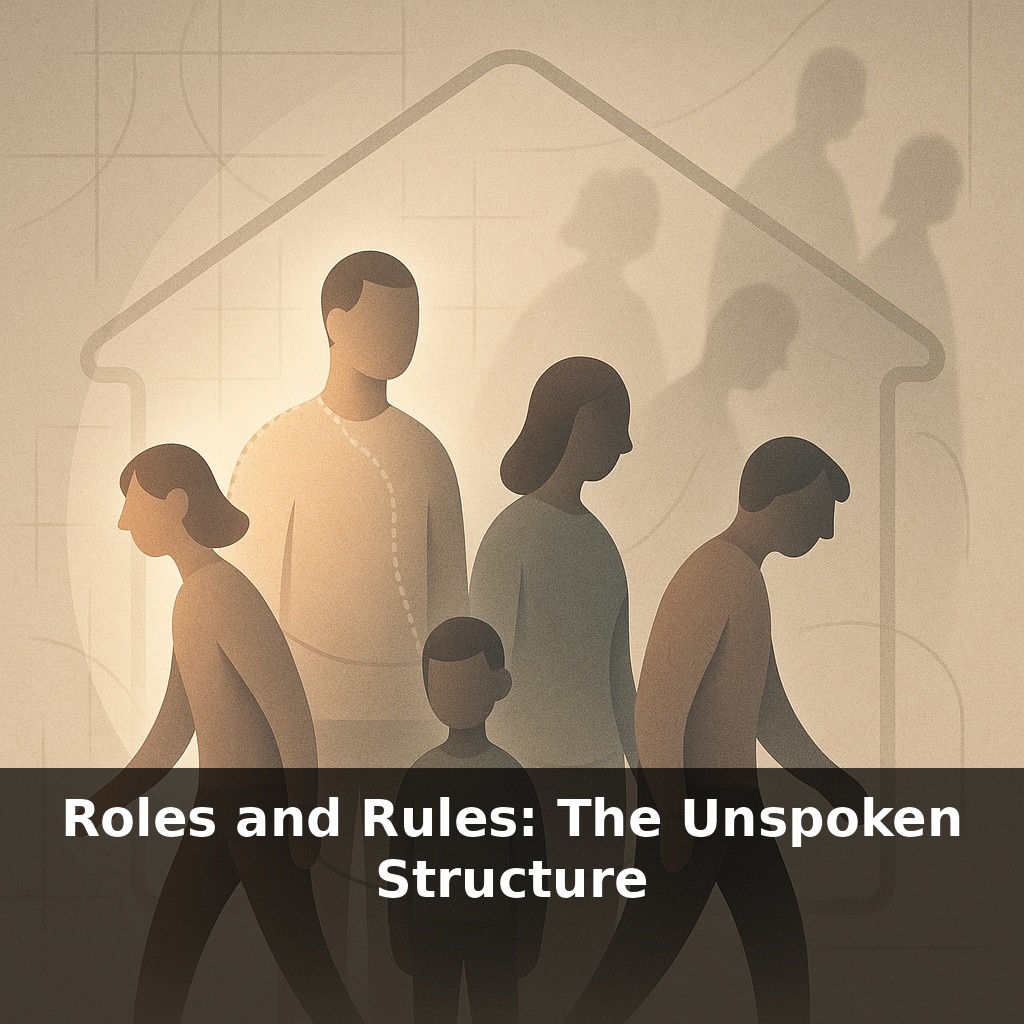
Some of the most powerful “rules” aren’t sentences anyone says out loud; they’re habits that settle in over years. Maybe everyone suddenly goes quiet when money comes up, or jokes replace any serious talk about health. These patterns often start as survival strategies during a tough season—a parent’s illness, migration, financial strain—and then keep running long after the crisis ends. Research on family systems shows that roles harden most when stress is high and nobody names what’s happening. The risk isn’t just tension; it’s that one person’s coping job slowly becomes their entire identity.
“Don’t talk about it, just study harder.” “Why are you making a big deal out of nothing?” “Stop crying or I’ll give you something to cry about.”
Those phrases don’t just sting in the moment; they quietly assign jobs. One child learns, “I must achieve, not feel.” Another learns, “My needs are a problem.” Over years, that becomes a pattern where certain emotions are simply not allowed to exist in the open. The 2019 study on adolescents and feeling-talk isn’t just about mood; it shows how a single family rule can funnel anxiety into one member’s body—through panic, insomnia, stomach pain—while everyone insists things are “fine.”
Notice how this plays out under stress. A parent loses a job, or a grandparent moves in needing care. In a flexible home, responsibilities shuffle: a quieter sibling might step up with practical support; the usually “tough” parent might say, “I’m scared too.” In a rigid one, everybody scrambles to keep their usual mask on. The caregiver keeps caregiving, the joker keeps joking, the rebel keeps rebelling—no matter how exhausted or miscast they feel. The system prioritises predictability over truth.
Sometimes the structure blurs instead of freezes. Think of a household where a child knows more about Mum’s marriage problems than Dad does, or where a teenager is routinely asked to “talk sense into” a drinking parent. Loyalty lines get crossed. That enmeshed closeness can feel like intimacy (“we tell each other everything”), but research on eating disorders and psychosomatic illness suggests the price: a young person’s body may carry the tension that no one is allowed to separate or say no.
Culture can add another layer of pressure. If you’re the eldest son in a context where 70% expect you to care for aging parents, saying, “I want a different life,” doesn’t just challenge your family; it challenges an entire social script. The question isn’t whether such expectations are good or bad, but whether they’re negotiable. Can they be talked about, adjusted, shared—or are they sacred, even when they’re crushing you?
Like a long-cooked stew, these arrangements absorb flavour from many ingredients—history, economics, migration, illness, religion. By adulthood, it can be hard to tell which “truths” about who you are were chosen, and which were assigned.
Think of a household where every Sunday runs like clockwork: one person always organises the meal, another entertains relatives, someone else quietly cleans up in the background. No one asks, “Who wants which job this week?”—it’s simply “known.” Now picture what happens when Grandma moves in with dementia, or a parent’s health suddenly changes. In some homes, there’s a quick, almost wordless reshuffle: the usual host steps back, a teenager starts driving Grandma to appointments, another relative takes over finances. In others, everyone clings to the old setup, even as it clearly stops working.
You can often spot this in small, ordinary moments. Who automatically answers when an unknown number rings? Who gets called first when there’s a minor crisis? Whose mood silently dictates whether plans go ahead or get cancelled? One subtle clue: notice who is allowed to have a “bad day” without consequences, and who seems to lose their place in the family whenever they struggle.
Stress-testing these patterns may soon be unavoidable. As more people live alone, co‑parent across households, or rely on online support, “who does what for whom” can’t just default to tradition. Digital traces—message logs, calendar edits, even who mutes group chats—quietly reveal whose needs bend first. Policies that assume a single caregiver or breadwinner start to misfit, like a coat that no longer closes as bodies and climates change.
You don’t have to blow up your life to test a different script. Start small, like moving a familiar piece of furniture and noticing what feels off. Swap a tiny duty with another person, or let a quieter voice choose the movie, the meal, the route home. The goal isn’t to blame the old pattern, but to gently ask: what else might be possible here, for all of us?
Before next week, ask yourself: Where in my life (at work, with friends, or at home) am I silently following an old “role” (the fixer, the quiet one, the responsible one) that no one actually asked me to keep playing anymore? In one specific relationship, what’s an “unspoken rule” I seem to be obeying (for example, “we don’t talk about money,” “I don’t say no to them,” or “they always decide”), and what’s one honest sentence I could say this week that would gently test that rule? If I imagine rewriting my role in that relationship just 10%—not a total overhaul—what would I do or say differently the very next time we interact?