About two thirds of adults say their childhood included at least one serious adversity—yet many insist, “I turned out fine.” A parent slams a door; a grandparent goes silent; a child clenches their jaw. Who’s reacting to today—and who’s carrying reactions from generations ago?
Sixty‑four percent of U.S. adults report at least one serious childhood adversity—and that’s just what people can name. Beneath the surface, families also pass down quieter things: tension around money, the “right” way to argue, who’s allowed to cry, who must stay strong. A joke your dad made about “lazy people” might echo a grandparent’s survival fear about wasting food. A sibling’s perfectionism can trace back to a parent who was punished for small mistakes.
What’s striking is how layered this transmission is. There are the stories your family tells at holidays—and the stories no one tells at all. There are rules you’ve heard out loud and rules you only discovered when you broke them. Over time, these unspoken patterns can feel like personality, or even “just how our family is,” when they’re actually learned responses that once served a purpose—but may now be hurting more than helping.
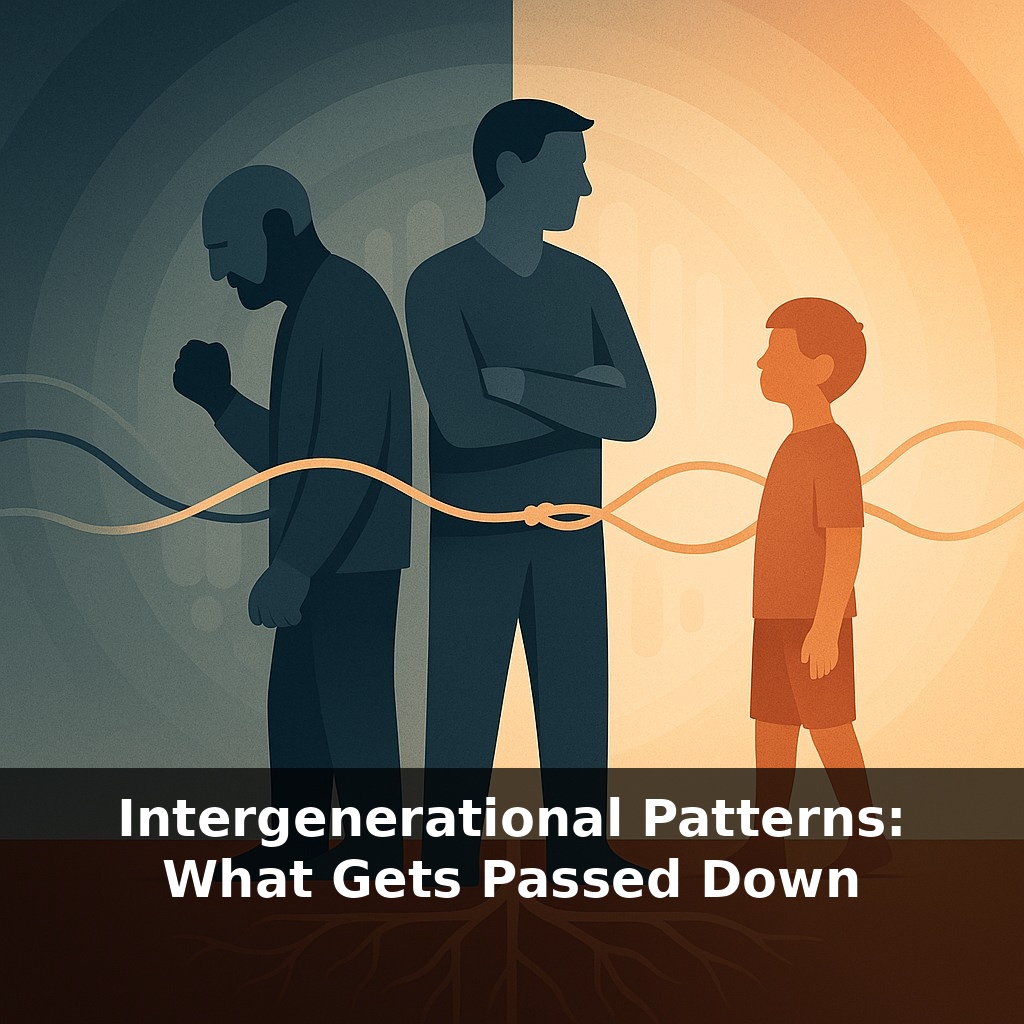
Some of what’s handed down is visible—eye color, height, a laugh you recognize in old videos. But research shows other inheritances operating quietly in the background. Stress in one generation can leave epigenetic “sticky notes” on genes that shape how the next generation’s body handles threat, hunger, or comfort. Family stories then layer on top: who is praised, who is shamed, which topics freeze the room. Over time, these create default settings for how you read danger, trust others, and soothe yourself—even when your current life is very different from your family’s past.
Some transmissions are straightforward: if both your parents have brown eyes, the odds are high you will too. Others are far less linear. A grandparent survives war or famine; decades later, a grandchild startles at sudden noises or feels strangely anxious when food runs low—despite never having gone hungry. Studies on events like the Dutch Hunger Winter and on descendants of Holocaust survivors hint at why: intense stress can leave molecular traces on how stress and metabolism genes get read, subtly shifting how bodies prepare for danger or shortage.
But biology is only one track. Side by side with these quiet shifts, children are constantly running “social experiments”: If I cry, what happens? If I say no, who gets angry? Over thousands of repetitions, a map forms. A child with a volatile parent may learn, “Stay invisible, stay safe.” Another with a depressed caregiver might become the family cheerleader, sensing that their role is to keep everyone’s mood up. These roles can follow people into adult relationships and parenting, even when the original conditions are long gone.
Culture adds another layer. Some families inherit collective stories—about race, gender, class, immigration—that shape what feels possible. A Black family might pass down both a deep sense of pride and an extra-vigilant stance toward authority. A family with a history of displacement may stress self-reliance and distrust of institutions. These aren’t just “opinions”; they organize how members interpret teachers, bosses, doctors, even partners.
Crucially, none of this means you’re a passive recipient. The same research that documents risk also highlights turning points. A teacher who believes in you, a partner who argues without belittling, a therapist who helps you name old patterns—all can introduce “micro‑mutations” in how you respond. When one person in a family starts pausing before reacting, or apologizing instead of doubling down, it’s like altering a single note in a song; over time, the whole melody of interaction can shift.
A parent who grew up with a financially anxious caregiver may triple‑check the bank account, flinch at “unnecessary” purchases, and talk about money in a tight, urgent voice. A child soaking this in might start hiding receipts or feeling guilty for wanting anything extra—even if the family is now stable. Another example: someone raised in a home where anger meant danger may automatically smile, soothe, or crack jokes the moment voices rise. Decades later, they might still defuse every disagreement with humor, then wonder why nothing ever gets resolved.
Think of it like cooking with a handed‑down recipe card where half the notes are smudged. You follow the instructions you can read—“never waste food,” “don’t rely on anyone,” “keep the peace at all costs”—without always knowing who first wrote them or why. Updating the recipe can mean questioning portions: Do I really need this much self‑sacrifice? Is this level of vigilance still necessary, or is it just familiar?
A family’s “settings” don’t just shape mood and health—they quietly steer careers, friendships, even where you choose to live. Noticing that pull is like spotting a familiar road you always take home. As policy, this lens shifts blame from “bad choices” to context: prevention programs can focus on safe housing, stable income, and mentoring, not just willpower. On a personal level, mapping your family’s patterns with siblings or elders can turn private burdens into shared projects for change.
You don’t have to decode everything at once. Start with one thread: how your family handles anger, money, or affection. Notice when you feel “pulled” to react a certain way, like a radio tuning to a familiar station. Each time you pause, you’re quietly editing the script your children, friends, or community may one day inherit.
Start with this tiny habit: When you notice yourself reacting in a familiar “family way” (like shutting down, people-pleasing, or snapping quickly), quietly say in your head, “This is an old pattern, not my personality.” Then, before you speak or act, take one slow breath in and out while asking yourself, “What would I choose here if I didn’t have to repeat this?” If you’re with someone you trust, add just three words out loud: “I’m noticing a pattern.”