About one in four adults is estranged from a family member—yet, at the very same time, most of us still feel pressured to be “the good son,” “the easy daughter,” or “the responsible one.” How do you stay loyal to your family without disappearing inside the role they gave you?
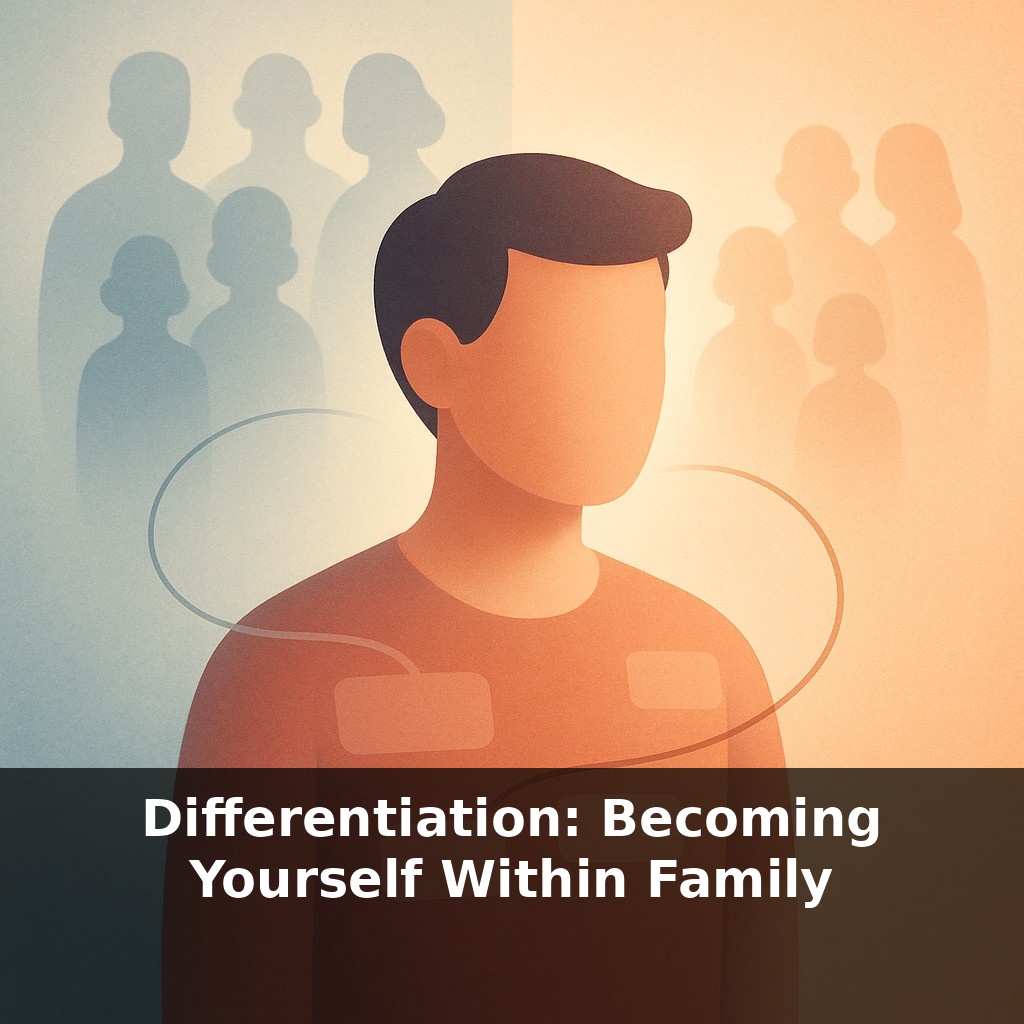
Psychologists call that middle path between vanishing into the family and cutting off from it “differentiation of self.” It’s not a personality type; it’s a skill set you develop over time. Research shows that people who grow this skill have noticeably lower anxiety, make clearer life decisions, and report more satisfying relationships—romantic and otherwise. In highly blended families or cultures that prize togetherness, this can feel almost like breaking a secret rule: you’re supposed to keep the peace, not rock the boat with your own thoughts and needs. But differentiation isn’t about rebellion. It’s the capacity to stay connected while staying honest—holding your ground at a tense holiday dinner, choosing a career your parents dislike, or setting limits with a sibling, without needing to prove anyone wrong or disappear to feel safe.
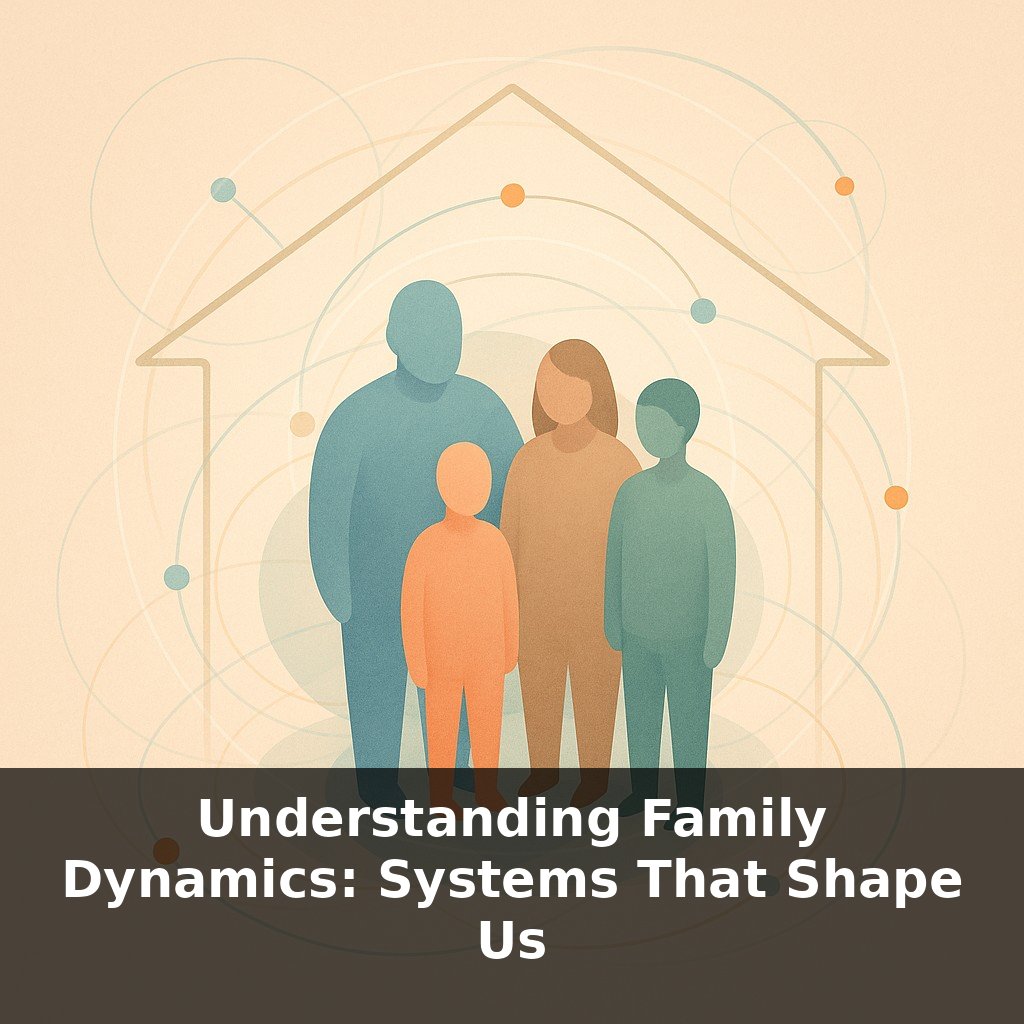
In many families, pressure shows up in tiny moments: a parent’s sigh when you disagree, a sibling’s joke about you being “too sensitive,” the quiet tension when you leave a group chat unread. Over time, those moments can train you to edit yourself—toning down your opinions, hiding parts of your life, or over-functioning so others don’t have to. Research on differentiation adds a twist here: it’s less about how intense your family is, and more about how you handle that intensity in your own mind and body. Two people in the same living room can experience completely different levels of inner freedom.
Psychologists break differentiation down into a few concrete abilities that show up in everyday family moments.
First, there’s the capacity to notice and name your own internal experience without immediately acting on it. Research on self-differentiation scales finds that people who can calmly observe their anxiety—“My chest is tight, my dad sounds disappointed, and part of me wants to say yes just to make this feeling stop”—are far less likely to cave, explode, or ghost the family group chat. They still feel pressure; they’re just not driven by it.
Second, there’s the skill of holding separate “channels” for thinking and feeling. In low-differentiation moments, feeling floods thinking: your brother’s “joke” lands, shame spikes, and suddenly you’re arguing about who helped your parents more last year. In higher-differentiation moments, you can feel the sting and still think: “That hurt. I want to respond, but I don’t have to defend my whole life right now.” This isn’t coldness; it’s emotional regulation under stress.
Third, differentiation shows up in how you handle disagreement. People with higher scores in studies don’t necessarily argue less; they argue differently. They speak from an “I” position (“I’m not comfortable sharing that”) instead of recruiting allies (“Everyone thinks you’re too controlling”). They’re more willing to let others be upset without rushing to fix it, and less likely to punish distance with distance.
There’s also a body-level piece. Family interaction studies using heart-rate monitors and cortisol swabs find that some people stay relatively steady in the same tense conversations that send others into a spike-and-crash pattern. Over time, practicing small acts of self-definition—saying what you actually prefer for dinner, admitting you’re not available this weekend—can shift those patterns, lowering chronic arousal around family contact.
Think of it a bit like adjusting medication dosage: the goal isn’t to eliminate all emotion, but to find a level where the “treatment” (closeness, loyalty, shared history) helps more than it harms, so you can tolerate side effects—disappointment, disagreement—without quitting the relationship altogether.
Your sibling asks, “So, when are you finally moving back home?” and everyone at the table looks up, waiting. In a less differentiated moment, you might laugh it off and promise “someday,” then stew later. In a more differentiated moment, you pause, feel the awkwardness, and say, “I’m actually planning to stay where I am. I get that’s disappointing,” then let the silence breathe without rushing to fill it.
Or your parents keep sharing details about your love life with relatives. Instead of either tolerating it or cutting them off, you might say, “I know you’re excited for me. I’m not okay with my relationship being a group topic. If it keeps happening, I’ll leave those conversations.” You’re not asking them to agree—only to hear you.
In another family, a grown child quietly stops answering calls every time money comes up. As they grow differentiation, they start answering and saying, “I can’t loan money this month,” while staying on the line to talk about everything else. The relationship stays on the table, even when the request doesn’t.
As families become more fluid—step-parents, co-parenting across continents, group chats instead of shared kitchens—differentiation turns into a kind of navigation skill. In politics, you’ll see it when relatives debate fiercely, then still share vacation photos the next day. In workplaces, managers who practiced it at home can hear dissent without shutting it down. Like learning to cook with stronger spices, we’ll need more tolerance for “strong flavors” of belief and identity without throwing out the whole dish.
Your challenge this week: run a quiet experiment. At your next family interaction—call, text thread, or visit—choose one tiny place to be 5% more yourself: a real opinion, a modest boundary, an honest “no,” or an authentic “yes.” Notice not just their reaction, but your body’s. Jot down what surprised you; that data is your personal map out of old patterns.