Right now, your brain is firing off tens of thousands of thoughts today—most of them leaning negative. Yet some of your greatest ideas may be hiding *behind* the voice that says, “Who do you think you are?” This episode explores why that bully exists—and how it can become your ally.
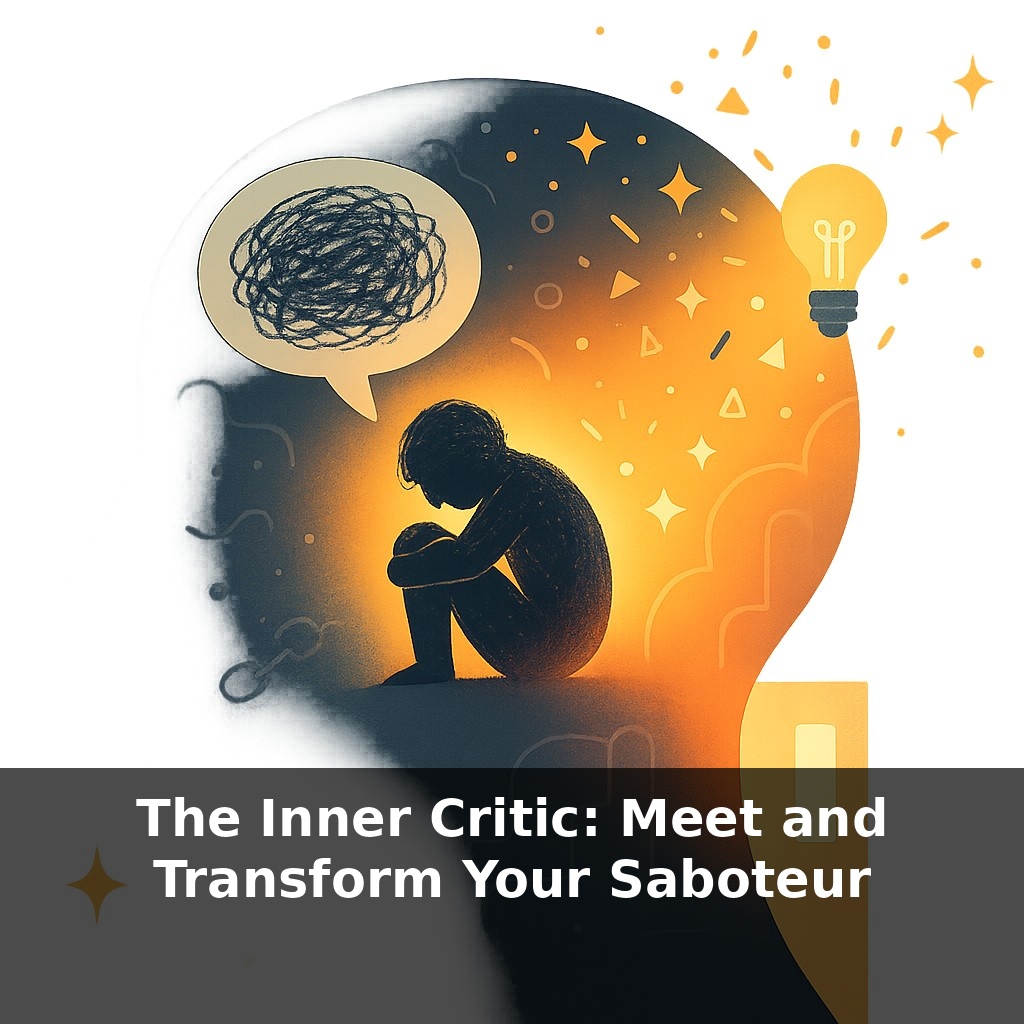
That voice isn’t just mean; it’s methodical. It has favorite scripts, go‑to insults, and specific moments it loves to hijack—right before you share an idea, send a proposal, or try something you’ve never done before. Think of it like an overzealous project manager who only tracks risks and never logs wins. It will highlight the one typo, not the 20 pages you finished. In this episode, we’ll get curious about its patterns: When does it get loud? What *exactly* does it say? Whose tone does it sound like? We’ll connect that to what science shows about stress, creativity, and performance, and you’ll learn how to answer it without a pep‑talk cliché or fake positivity. By the end, you’ll have a simple way to spot when your inner critic is running the show—and a first tool to gently take back the mic.
It helps to know: your brain isn’t only running *one* harsh voice. It’s more like a panel of commentators, each with a different agenda. One might attack your competence whenever you open a blank document. Another questions your worth the moment you price your work. A third panics about what “they” will think as soon as you hit publish. These voices borrow lines from old teachers, bosses, or family stories and replay them at high volume whenever you approach the edges of your comfort zone. Our job isn’t to mute the whole panel, but to figure out who’s talking, what they’re protecting, and when they tend to seize control.
Here’s the twist: those harsh lines in your head aren’t random insults—they’re usually organized around a few *jobs* they’re trying to do for you. When you can name the job, you stop taking every jab as “the truth” and start seeing it as a (very flawed) strategy.
Psychologists often find three recurring roles behind self‑sabotage:
1. **The Safety Officer** This one hates risk. It spikes right before you pitch, publish, or raise your prices. Its hidden mission: “If I scare you enough, you won’t do anything dangerous or embarrassing.” It catastrophizes outcomes, not because the disaster is real, but because *feeling afraid* has successfully kept you small—and therefore “safe”—before.
2. **The Standards Keeper** This voice shows up around performance and perfection. It never says “good enough”; it says “if it’s not exceptional, it’s worthless.” Underneath, it’s trying to guarantee belonging: “If you’re flawless, no one can reject you.” Research on impostor feelings in high achievers suggests this critic often *intensifies* as your responsibilities grow; more visibility, more pressure to never slip.
3. **The Historian** This one stores every past failure, awkward moment, or criticism and replays them just as you’re about to try again. Its mission is prediction: “If I remind you how bad it felt last time, you won’t repeat the same mistake.” From a neuro perspective, this maps onto the brain’s threat system flagging anything that faintly resembles old pain.
None of these roles are “bad” in themselves. Vigilance, high standards, and learning from history are *incredibly* useful for creative work—when they’re calibrated. The problem is the *method*: they rely on shame, exaggeration, and all‑or‑nothing thinking. That ramps up cortisol, pulls blood flow away from the parts of your brain you need for insight and play, and suddenly you’re scrolling, procrastinating, or endlessly “researching” instead of making the thing.
Here’s where modern tools come in. CBT would have you question: *Is what this voice saying accurate, helpful, and proportionate?* Mindfulness adds: *Can I notice this as a mental event, not a command?* And self‑compassion asks: *How would I talk to a friend in this exact situation?* Put together, you’re not fighting the critic head‑on; you’re updating its script so the Safety Officer becomes more like a thoughtful risk analyst, the Standards Keeper a fair editor, and the Historian a nuanced advisor instead of a relentless prosecutor.
When you can spot these roles, you can start experimenting with them in real situations. Say you’re drafting a bold proposal at work and suddenly feel an urge to “fine‑tune the deck” for the fifth time. Instead of assuming you’re just procrastinating, you might notice: *Oh, that’s the Standards Keeper, worried this isn’t airtight.* Now you can negotiate: “You get one more focused edit, then we send it.” Or you’re about to post your first product video and feel an outsized dread, like everyone will secretly mock you. That spike of anxiety might flag the Safety Officer. You can thank it for alerting you, then ask it for a *specific* risk to address—“What’s one concrete thing we can improve before going live?” Over time, this shifts you from being dragged around by moods to running a kind of internal stand‑up meeting: each part can raise concerns, but *you* decide what actually ships.
As tools and schools start tuning this mental “smoke alarm,” your own creative process will likely feel less like a courtroom and more like a studio. Drafts that once died in your head may actually reach the page. Teams that normalize talking about this stuff tend to ship bolder experiments, because risk feels calculated, not fatal. Over time, knowing these inner patterns is like having version control for your mindset: you can see what changed, roll back unhelpful updates, and keep iterating.
As you start noticing these voices, you might also spot who’s *missing* from the room: the part of you that’s curious, playful, quietly sure of your values. Let this episode be a first draft in learning their language. Over time, you’re not aiming for silence in your head, but for a roundtable where creativity actually gets a speaking slot.
Here’s your challenge this week: Every day for the next 7 days, when your inner critic pipes up (for example, saying “You’re not prepared enough” or “You always mess this up”), pause and out loud give it a playful name (like “The Drill Sergeant” or “Perfect Peggy”), then respond with one clear, compassionate rebuttal using facts from your actual life. Once per day, deliberately do one tiny thing your saboteur normally blocks—send the pitch email, share the idea in a meeting, or hit publish on a draft—while saying, “You can ride along, but you don’t get to drive today.” At the end of each day, quickly rate from 1–10 how loud your inner critic felt and how much it actually stopped you, so you can see in real numbers how its power shrinks when you engage it this way.