The Art of Cultural Storytelling
📝 Transcript
A single story can sway public opinion more than a stack of research papers. A child crossing a border, a grandmother sharing a myth, a song on your playlist—each quietly rewires what you believe about “us” and “them,” long before you ever decide what you think.
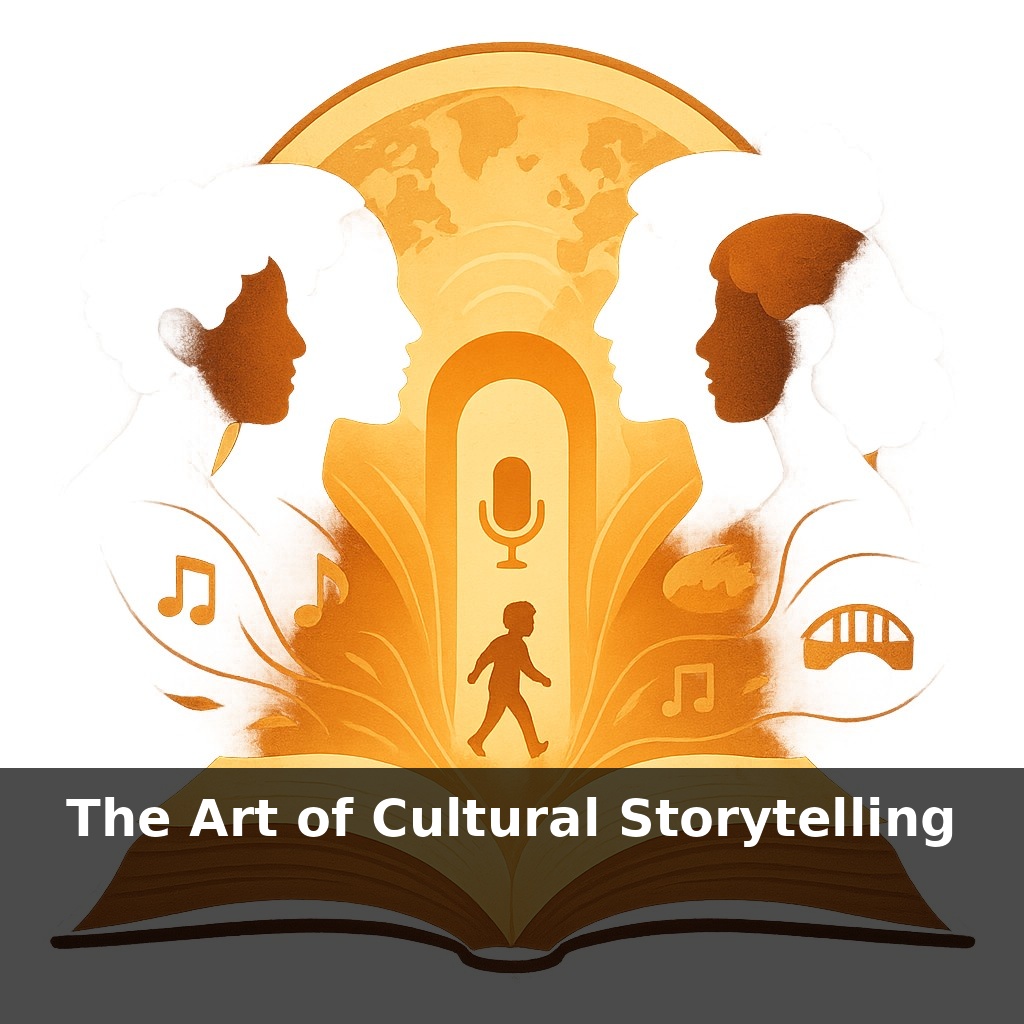
That quiet rewiring doesn’t happen by accident—it’s crafted. Cultural storytelling is the deliberate way communities choose which memories to spotlight and which to leave in the wings. Think of a neighborhood mural painted over years: each hand adds a detail, a symbol, a face, until the wall becomes a shared biography. A lullaby, a meme, a festival dance—these are narrative choices about what deserves to be remembered out loud.
Neuroscience tells us these choices matter in our bodies as much as in our opinions: specific rhythms, images, and character arcs light up emotional circuits and mirror neurons, nudging us to “feel with” people we’ve never met. In an era where a village proverb can become a film script or a hashtag within days, understanding how cultural stories are built—and who gets to build them—is fast becoming a civic skill, not just an artistic one.
UNESCO’s growing list of “Intangible Cultural Heritage” offers a clue to just how wide the canvas is: everything from Georgian polyphonic singing to Jamaican reggae to Mongolian calligraphy counts as narrative art in motion. These practices don’t just entertain; they pass on blueprints for how to mourn, celebrate, argue, or make decisions together. When a family recipe is guarded like treasure or a coming‑of‑age ceremony fills an entire weekend, what’s really being protected is a script for who belongs, what is sacred, and how power should circulate in daily life.
main_explanation From a distance, it’s tempting to talk about “culture” as if it were a museum exhibit—fixed behind glass, labeled once and for all. Up close, it looks more like a live rehearsal: lines are rewritten, roles are recast, and even the setting keeps changing as people migrate, age, and adapt.
You can see this most clearly in how a single narrative travels. The Mahābhārata was once recited in courts and village squares; now its themes surface in TV serials, graphic novels, and gaming storylines. Mexican Día de Muertos altars move from home tables into global cinema, inflected by animators, marketers, and fan art. None of these retellings is a carbon copy. Each carries traces of who is doing the telling, for whom, and under what pressures—political, commercial, or simply personal.
This is where power quietly enters the frame. Some voices can broadcast their stories through streaming platforms and publishing houses; others survive in smaller circuits—WhatsApp voice notes, kitchen gossip, niche podcasts. When a multinational brand borrows a festival or folktale for an ad campaign, it isn’t just “sharing” culture; it is deciding which fragments become globally recognizable and which remain local, or invisible. The same pattern shows up in diplomacy: a documentary about refugees might screen at the UN, while refugees’ own phone videos rarely do, even though both are forms of testimony.
Digital tools intensify this sorting. Algorithms privilege certain narrative formats—short, punchy, visually striking—over slower forms like epics or ritual speeches. That doesn’t erase older practices, but it pressures them to reformat: a ceremonial chant becomes a 30‑second clip; a complex migration history turns into a tweet‑length slogan. What spreads, and what gets trimmed away, gradually reshapes how a community appears to outsiders and to itself.
Yet communities push back. Diaspora artists splice grandparents’ oral histories with beats from their host cities; activists subtitle local protest songs into dozens of languages; youth revive nearly forgotten languages in video games and fan fiction. Cultural storytelling is less a single thread than a loom where many hands are constantly re‑weaving shared memory under unequal conditions.
When a K‑drama inspires fan‑subbed versions in dozens of languages within hours, that’s cultural storytelling being co‑produced in real time: viewers aren’t just consuming, they’re editing tone, jokes, even moral emphasis through their translation choices. A Navajo podcaster weaving clan histories into true‑crime formats reaches listeners who might never attend a ceremony, yet still absorb cues about kinship and accountability. In Nairobi, graffiti crews remix global street‑art styles with local political slogans, turning alley walls into serialized commentaries that commuters “read” daily on their route to work.
Think of a seed carried by wind to new soil: it keeps its genetic core but takes on the flavor of the land where it lands—spices from one kitchen, instruments from another, pacing borrowed from yet another medium. A Syrian chef on TikTok folds displacement memories into quick recipe videos; a queer ballroom collective in São Paulo reclaims fragments of U.S. drag culture, adding gestures and slang rooted in Afro‑Brazilian history. Each example shows how people tweak inherited plots to fit new stakes, audiences, and risks—often far from formal stages or official archives.
UNESCO’s list will expand, but the real archive may be your phone: AR overlays turning street corners into portals for elders’ memories, VR festivals where distant cousins dance “together,” AI co‑narrators translating lullabies into dozens of tongues. These tools can feel like handing everyone a portable stage—and a delicate heirloom at once. Expect new roles to emerge: community “story stewards” who audit code, curate consent, and decide which memories stay local, and which ones go planetary.
Each time you hit “share,” you’re also curating which futures feel possible. A meme can soften a classroom debate; a festival clip can reframe a workplace bias; a quiet podcast can travel farther than a loud rally. Your challenge this week: notice one small narrative you pass along, and ask whose dignity it expands—and whose silence it leaves untouched.
From this course
Unlocking Cultural Narratives Through Storytelling
7 episodesUnlock all episodes
Full access to 7 episodes and everything on OwlUp.
Subscribe — $1.99/monthLess than a coffee ☕ · Cancel anytime