A stranger on a New York sidewalk shares a two-minute story, and suddenly millions feel like they know them. Here’s the twist: the same brain circuits light up when we remember our past and when we picture our future. So whose story are you really living—and who taught you to tell it that way?
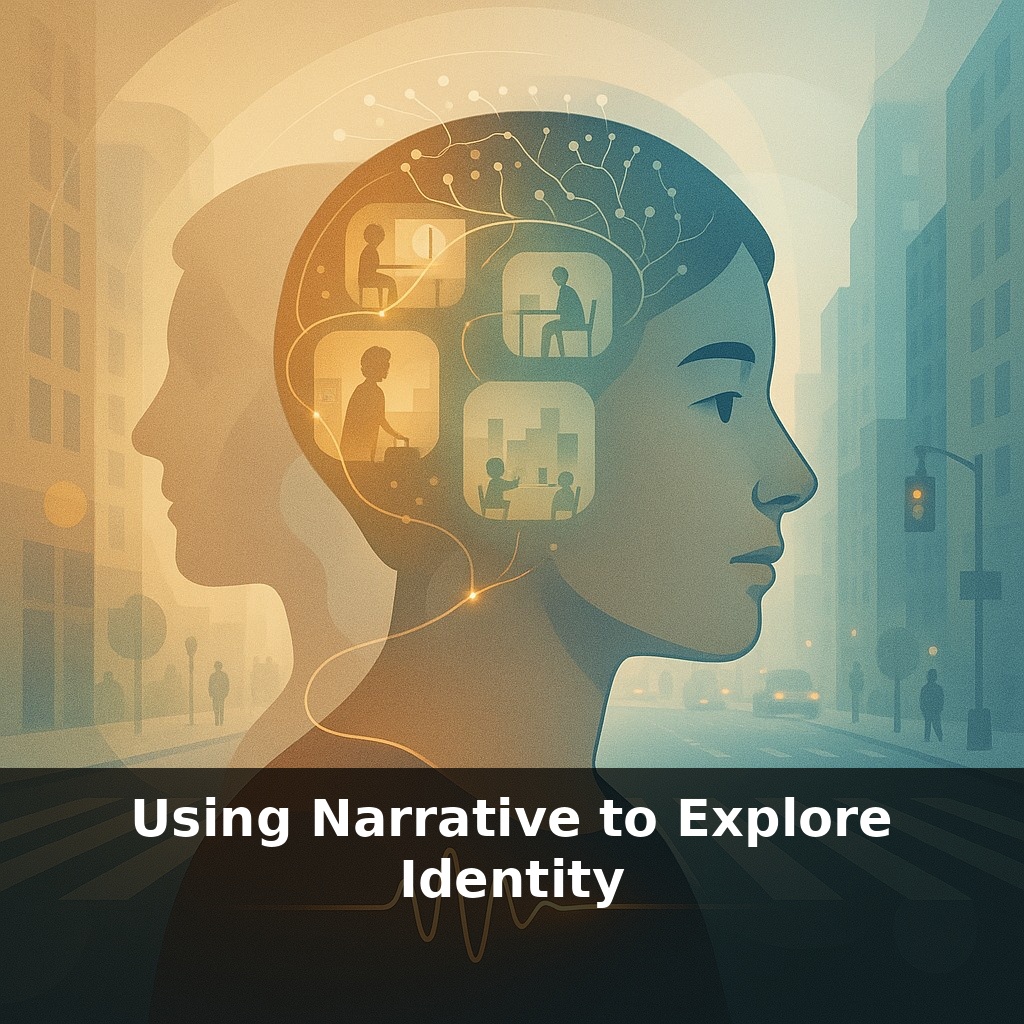
Maybe the most unsettling thing about “who you are” is how negotiable it turns out to be. Not fake, not made up—but revise‑able. Psychologists call this your *narrative identity*: the evolving story you tell about yourself that links “who I was,” “who I am,” and “who I’m becoming.” It isn’t just stored in your head; it’s co‑authored every day by family expectations, national myths, religious teachings, even the kinds of characters you grew up seeing on screen.
Think of a quiet kid who’s always described as “shy” at family gatherings. Over time, that label can harden into a whole plotline: the careful observer, the background supporter, the one who doesn’t cause trouble. Now place that same kid in a college club that celebrates debate or activism—the available roles, and thus the story, start to shift.
In this episode, we’ll unpack how those shifts happen—and how to participate in them on purpose.
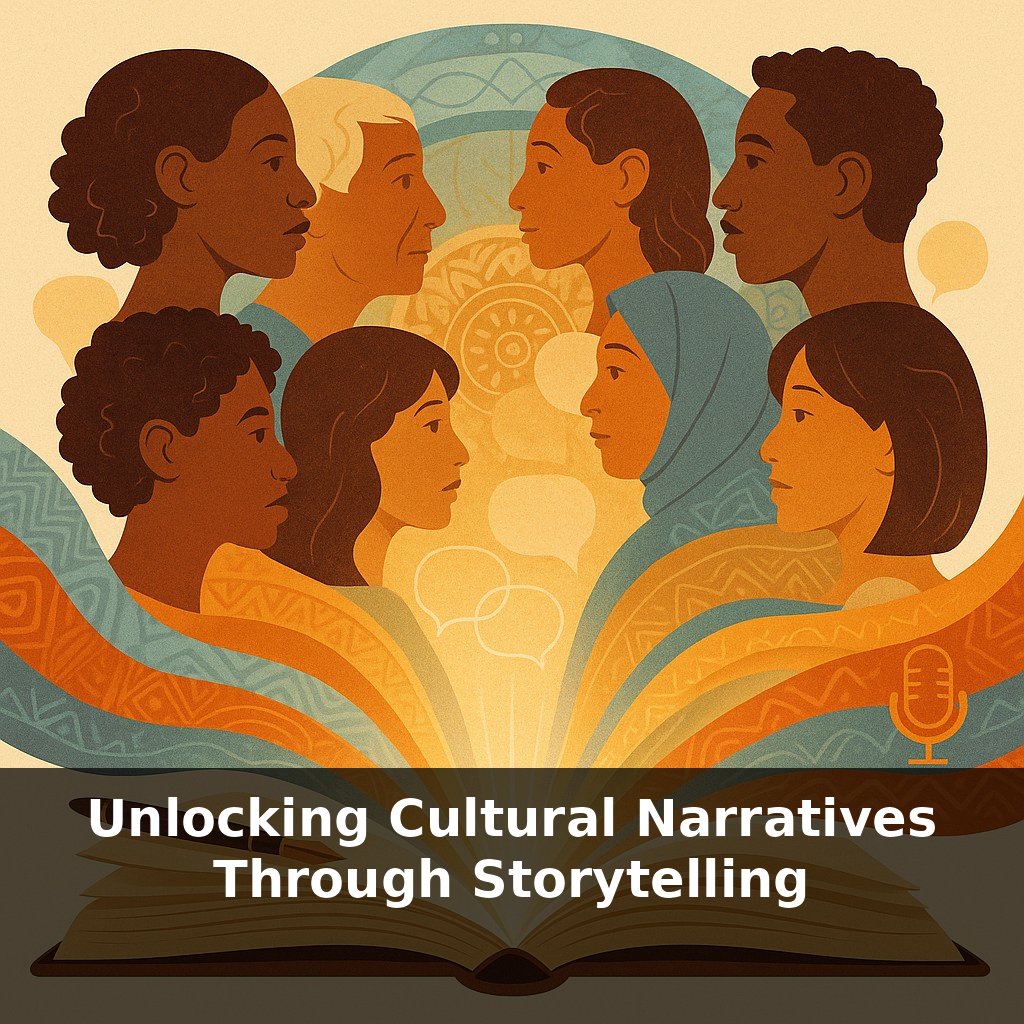
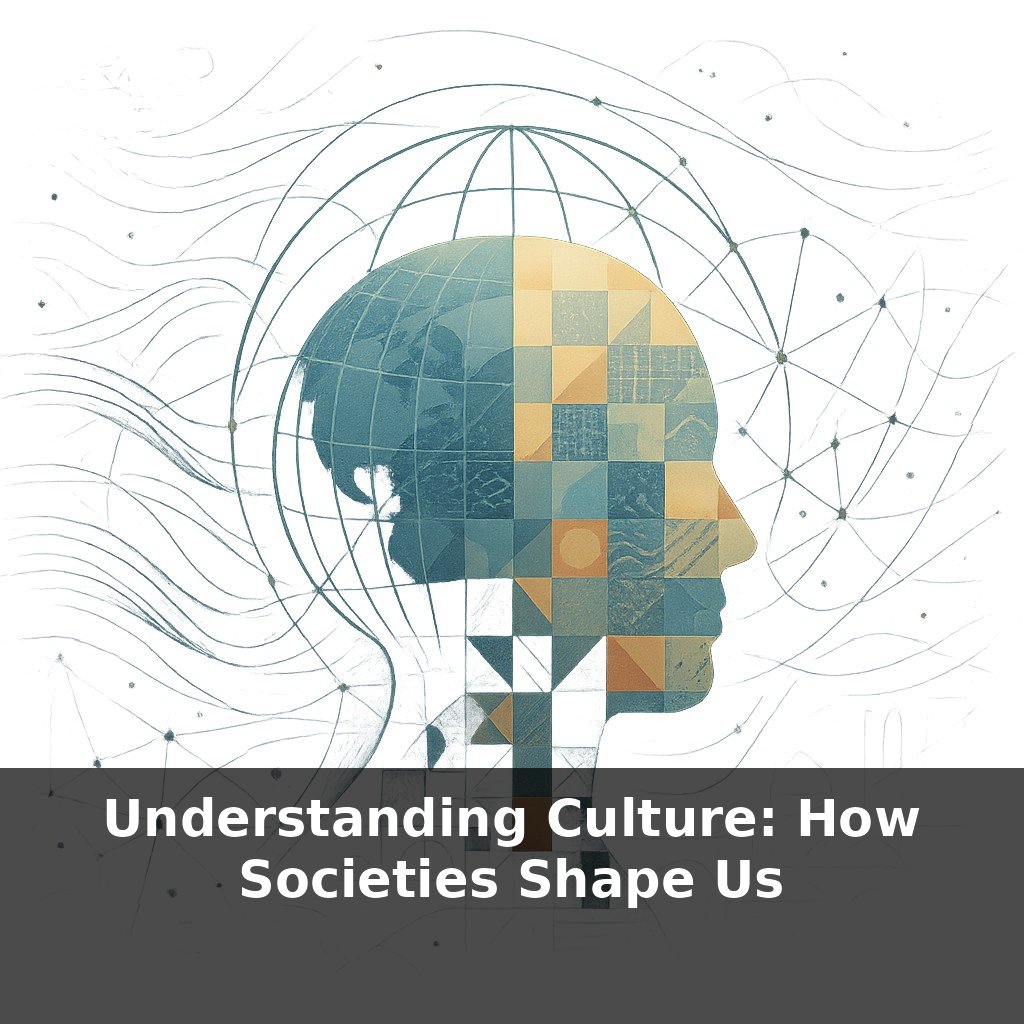
Zoom out for a moment: your story doesn’t float in a vacuum any more than a single line of melody exists without a song around it. The plots you reach for—“self‑made,” “black sheep,” “good daughter,” “late bloomer,” “survivor”—are all easier to tell because your culture already rehearses them in movies, news, songs, and rituals. Anthropologists note that each society keeps a kind of unofficial “menu” of life scripts, and most of us order from it without realizing. The catch is, that menu filters what feels possible. Some roles are spotlighted, others barely spoken aloud.
Pause on a smaller scale: before “who you are,” there’s “what *counts* as your story.” This is where personalization and contextualization quietly do their work.
Personalization is the shift from “Things were hard growing up” to “I remember hiding my report card in the kitchen drawer because I knew my dad would compare me to my cousin again.” It’s concrete, felt, and specific. Research on autobiographical memory shows that when you add sensory detail, emotion, and first‑person voice, you’re not just decorating the story—you’re strengthening the bridge between experience and meaning. In Adler’s studies, participants who framed past events as arcs of growth, not just incidents, didn’t change the facts; they changed the *function* of those facts in their identity, and their self‑efficacy jumped.
Contextualization, by contrast, zooms the camera out. Instead of “I’m bad with money,” the story might become “I’m the first in my family to navigate a financial system that wasn’t designed with us in mind.” Or “I’m not very assertive” becomes “I was raised in a community where harmony was survival, so direct confrontation still feels dangerous.” This doesn’t excuse everything; it *locates* it. Narrative therapists lean hard on this move—externalizing problems, naming social forces—not to erase responsibility, but to expand the plot options available.
Notice what happens when you combine both moves. A queer teenager in a conservative town might privately journal a highly personalized account of their first crush, then gradually place that story alongside larger histories of LGBTQ+ resistance, media representation, and legal change. The emotional charge stays intimate, but the frame widens: from “my secret shame” to “my chapter in a longer struggle for visibility.”
That’s also why seemingly tiny stories on platforms like Humans of New York or brand campaigns that mirror people’s values land so hard. They model these narrative skills in bite‑sized form: a vivid, local detail set against a recognizable social backdrop. When you consume enough of those, you start to internalize not just the content, but the *method* of telling.
A practical way to see this in action is to notice where your “default” plot breaks down. Say you’ve always told the story “I’m the responsible one” in your family. Then you burn out at work, miss deadlines, and feel ashamed. One option is to quietly edit the story to “I’m a fraud.” Another is to treat this moment like a new chapter: the season when the responsible one learned limits and started asking for help.
Or think of someone who’s long carried the line “People like me don’t lead.” They join a local tenants’ group, reluctantly speak up once, and neighbors start checking in with *them* about next steps. The facts—one meeting, a few conversations—are small. But if they’re narrated as “the first time my voice changed what happened,” that tiny episode can become a seed for a leadership story that didn’t exist on their cultural “menu” before.
Notice how both shifts don’t delete the old plot; they layer on an alternative that can coexist, then gradually compete, with the inherited version.
When these threads meet technology, identity work shifts scale. AI co‑authors might nudge you toward plots you never considered, like a friend who keeps asking, “And what else could this mean?” VR and AR could let you rehearse alternate roles—activist, elder, newcomer—before you grow into them offline. Even quiet tools, like encrypted “story vaults” controlled by communities, hint at a future where groups don’t just preserve history; they actively negotiate who gets to tell it, and when.
Your story work doesn’t end here; it seeps into small, ordinary choices. The next time you introduce yourself, notice which chapters you highlight—career wins, migrations, caregiving, losses—and which you leave in the attic. Treat each introduction like rearranging photos on a wall: a low‑stakes way to test new angles on who you’re becoming.
Before next week, ask yourself: 1) “If I told the ‘origin story’ of who I am today, which 2–3 scenes from my life would I choose—and what do those specific moments say about the kind of person I believe myself to be?” 2) “Where in my current life am I still living inside an old script—like ‘I’m the responsible one’ or ‘I’m the outsider’—and how is that script quietly steering my choices this week?” 3) “If I rewrote just one of those scenes with a slightly different role for myself (for example, from ‘supporting character’ to ‘protagonist’ or from ‘victim’ to ‘survivor’), what new possibility or next step would suddenly become available to me right now?”