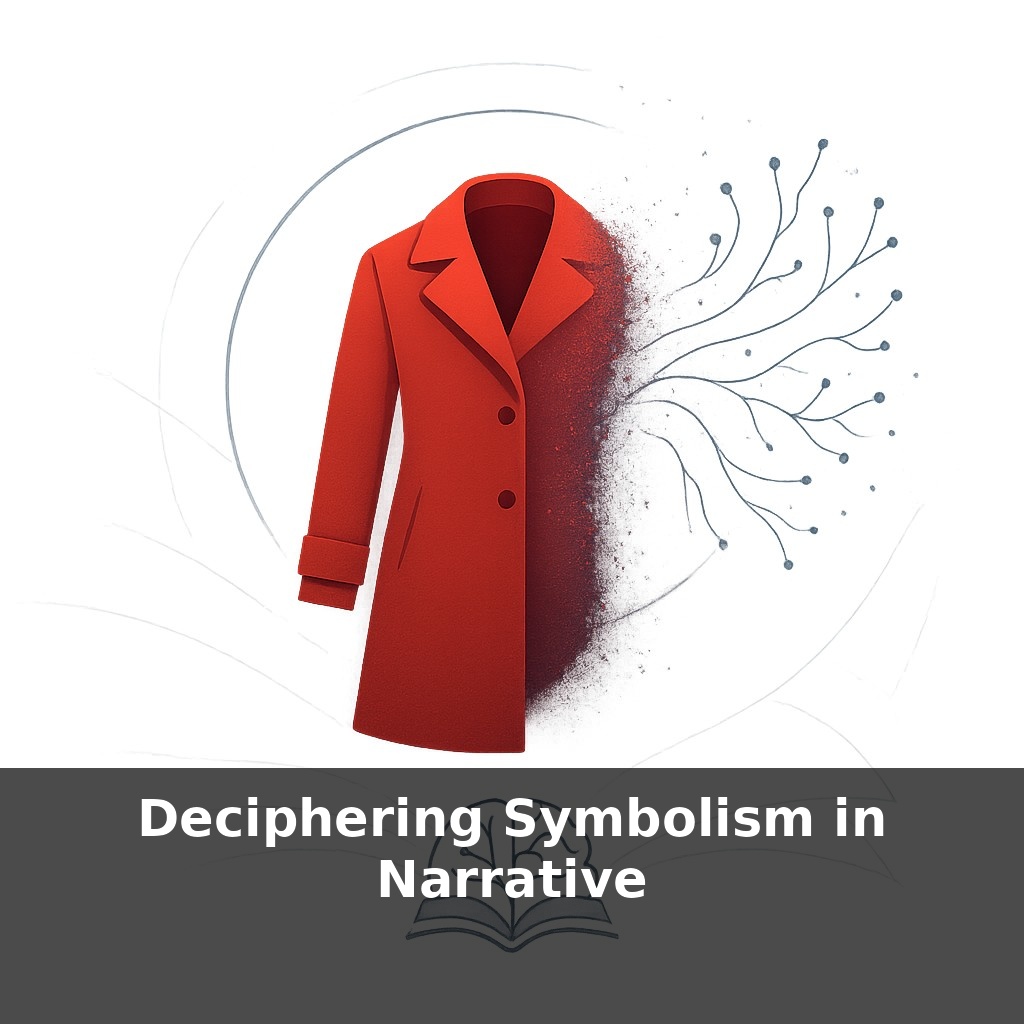
About three out of four prize‑winning novels quietly lean on a single recurring image. A red coat. A broken watch. A stray dog. Each shows up, slips away, then returns changed. The paradox is this: the more concrete the symbol, the more it seems to say about everything else.
Dr. Anjan Chatterjee’s scans hint at why these images hit so hard: when a story swaps a literal description for a metaphorical one, your brain’s emotional circuitry lights up more. That extra 12% isn’t trivia; it’s the difference between nodding at a scene and feeling caught inside it. But stories don’t rely on brain science alone. They lean on shared cultural codes—colors, gestures, everyday objects already loaded with meaning before the author ever touches them. A red umbrella in a rainstorm doesn’t arrive empty; it drags weather reports, childhood memories, and movie scenes in with it. Writers quietly exploit this. They choose objects that can “plug into” both personal memory and public culture, then let those objects evolve as the plot does—changing context, owner, or condition the way a melody shifts as it passes from piano to violin.
Writers also borrow from deeper reservoirs than personal memory or pop culture. Jung’s archetypes, religious rituals, even political slogans feed a kind of background library that stories quietly query. When a novelist chooses a doorway, a bridge, or a mirror, they’re not only staging a scene; they’re testing which associations you’ll bring to it. Some symbols surface loudly—a national flag in crisis—while others lurk in patterns of weather, architecture, or recurring minor characters. The artistry lies in deciding which ones stay submerged, like foundations under a city, shaping how you move without ever being named.
Some of the most revealing “symbols” in a story never look like props at all. They pass as weather reports, background noises, or habits. A character who only ever calls at night, a city that’s always under construction, a radio that drifts in and out of signal—none of these need a spotlight to start carrying weight. What makes them powerful is how they gradually sync up with the story’s deeper tensions. Once the reader unconsciously links “night calls” with bad news, every ringtone arrives pre‑charged.
This is where recognizability, resonance, and recurrence start to feel less like theory and more like craft choices. Recognizability isn’t just “do people know what this object is?” It’s “what patterns do they already expect here?” A hospital corridor, for instance, carries different narrative expectations than a kitchen table. If that corridor keeps appearing at moments when characters tell the truth, it may quietly become shorthand for honesty rather than illness.
Resonance grows when the concrete detail intersects with a character’s inner life. A garden in a novel about migration will hum differently than the same garden in a thriller about surveillance. The soil, the fences, the neighboring windows—each detail can bend toward belonging or exposure depending on what the character fears or wants.
Recurrence is not mere repetition; it’s variation. When the same element returns altered—darker lighting, different owner, new damage—the change itself becomes part of the meaning. Readers start to track the gap between first appearance and latest version: What happened in between? Who touched this? Why does it feel wrong now?
Writers often discover these patterns only in revision. Drafts reveal accidental echoes: a color that keeps reappearing, a side character who always shows up before a crisis. Leaning into those echoes—tightening them, dropping clashing details, placing them at structural turning points—can turn coincidence into design without pinning down a single “correct” interpretation.
The most enduring narratives tend to balance clarity with openness: enough pattern that readers sense deliberate design, enough ambiguity that different cultures, or even different rereadings, can keep finding new angles in the same recurring detail.
A novelist might start with a small, stubborn detail: a bus ticket folded into a wallet. At first, it’s just proof of travel. Later, we notice it appears whenever the protagonist lies about where they’ve been. By the final chapter, that crumpled ticket, now nearly illegible, surfaces in a courtroom scene—not explained, just present—quietly summing up a whole trail of evasions. Or take sound. In one story, the distant drone of airplanes might be background texture. In another, it flares up only when a character feels powerless, turning ambient noise into a barometer of control. Visual artists do something similar when they repeat a single color through a gallery show, letting it mean tenderness in one canvas and danger in the next. Over time, attentive viewers stop asking “what does this stand for?” and start noticing when it appears, what’s happening around it, and how their own reaction shifts—decoding pattern rather than hunting for a neat label.
Pulitzer‑caliber stories aren’t just well written; they’re symbol‑literate. As audiences meet more AI‑shaped narratives, your ability to notice patterns becomes a kind of cultural survival skill. Symbols will act like passports at a border: helping you cross between genres, eras, and cultures without losing nuance. In classrooms, clubs, even group chats, comparing how different people read the same recurring detail can surface bias, spark empathy, and turn passive consumption into active interpretation.
Treat stories like cities at dusk: lights flick on in certain windows before others. Follow those glows—the offhand color on a protest sign, the bird that only lands after arguments, the doorway people hesitate to cross. Each is a small experiment in meaning. The more you trace their paths, the more flexible your own thinking becomes.
Before next week, ask yourself: 1) “If I reread a favorite scene from this story, what concrete objects, colors, or recurring images jump out at me, and what might they quietly be suggesting about the character’s inner conflict or the story’s larger theme?” 2) “Where do I feel a sudden ‘shift’ in tone, setting, or weather in the narrative, and how could that shift be symbolically echoing what’s changing inside the protagonist at that exact moment?” 3) “If I picked just one recurring symbol from this episode’s examples—a door, a mirror, or a journey on a road—how might I reinterpret that symbol in my own life or writing so it reveals something I’ve been avoiding or only half-understanding?”